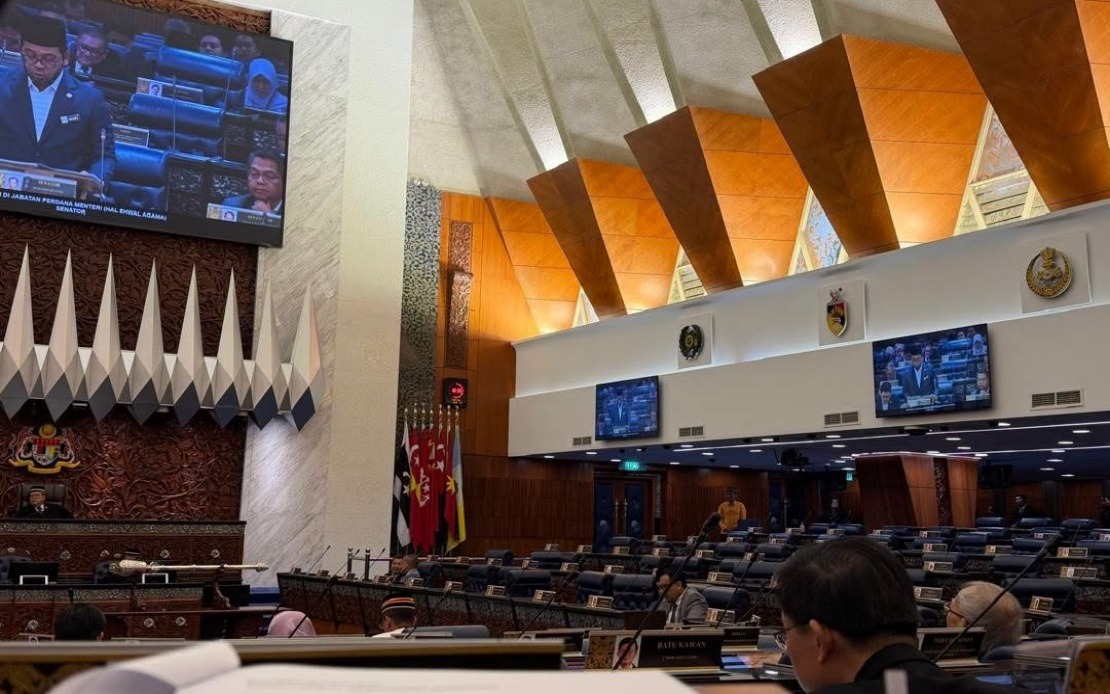
The opposition's decision to stage a walkout from a special sitting of Parliament has drawn sharp rebuke from government lawmakers, who contend the move reflects a lack of genuine commitment to scrutinizing one of Malaysia's most significant Islamic financial institutions. The boycott occurred during a ministerial briefing on the Royal Commission of Inquiry findings regarding Lembaga Tabung Haji, with opposition MPs departing after Speaker Tan Sri Johari Abdul proceeded without the Prime Minister present.
Datuk Seri Dr Zaliha Mustafa, chairman of the MADANI Government Backbenchers Club and member of Parliament for Sekijang, characterized the opposition's action as deeply disappointing and questioned whether their longstanding rhetoric about championing Islamic causes and Muslim welfare reflected genuine conviction. In a Facebook post, she argued that the opposition had repeatedly positioned itself as the strongest advocate for Islam and Muslim interests, yet when Parliament provided the formal platform to examine, challenge, and debate the RCI conclusions, they chose withdrawal over engagement.
The timing of the boycott carries particular significance in the Malaysian political context. Tabung Haji manages billions of ringgit in deposits from Muslim pilgrims preparing for the hajj pilgrimage, making the institution's governance and financial stewardship matters of profound importance to millions of Malaysian Muslim families. The Royal Commission of Inquiry was established to examine the management practices and investment decisions that have come under scrutiny in recent years, and the parliamentary session represented a critical moment for detailed public examination of the findings.
Zaliha argued that if opposition parliamentarians held genuine concerns about the RCI findings or disputed the government's proposed responses, they possessed a powerful forum within Parliament to articulate their positions with supporting evidence and reasoned arguments. Rather than utilizing the chamber to defend any party they wished to protect or to challenge specific conclusions, she contended, the opposition opted for a protest tactic that she characterized as a political maneuver rather than substantive engagement.
The core of the government backbenchers' criticism centers on what they perceive as a disconnect between opposition messaging outside Parliament and their conduct within it. Zaliha pointed out that opposition figures frequently invoke concepts of transparency, institutional trust, Islamic values, and Muslim welfare in public commentary, yet abandoned the opportunity to confront these issues directly when facts and arguments could be presented in the formal chamber. This inconsistency, she suggested, invites public skepticism about the opposition's true priorities and motivations.
The opposition's walkout was triggered specifically by the decision of Speaker Tan Sri Johari Abdul to proceed with the special sitting despite the absence of Prime Minister Datuk Seri Anwar Ibrahim and Deputy Prime Minister Datuk Seri Fadillah Yusof, both undergoing medical treatment. Perikatan Nasional's chief whip Datuk Seri Takiyuddin Hassan had proposed postponement on these grounds, but the Speaker ruled that the session should continue as scheduled. This disagreement over parliamentary procedure formed the immediate backdrop for the opposition's departure.
Zaliha's remarks reflect broader tensions within Malaysian Parliament regarding how opposition MPs balance parliamentary protocol with political activism. She emphasized that lawmakers genuinely concerned about Muslim interests should have remained in the chamber to perform their legislative responsibility of scrutinizing government action and examining detailed policy. By choosing to walk out, she asserted, the opposition surrendered the constitutional and democratic mechanisms available to them for exercising accountability.
The Tabung Haji issue carries particular resonance for Malaysian governance debates because it intersects multiple concerns: the management of public Islamic institutions, fiduciary responsibility for citizen savings, government oversight mechanisms, and the integrity of financial systems that serve religious purposes. The RCI was meant to provide comprehensive findings on these matters, and a full parliamentary debate would offer lawmakers and the public a detailed accounting of any management failures or governance shortcomings.
From a broader Southeast Asian perspective, this episode illustrates ongoing challenges within Malaysia's parliamentary democracy regarding the balance between opposition protest and legislative engagement. The decision to walkout rather than participate in substantive debate raises questions about how minority parties can most effectively serve their constituents' interests. In many Westminster-influenced systems, opposition strength derives partly from rigorous parliamentary scrutiny and the ability to articulate alternative positions within the chamber where media coverage and public attention concentrate.
Zaliha's closing rhetorical question—what the opposition actually wants—suggests that the government believes the walkout strategy backfires politically by making it appear that opposition MPs lack confidence in their ability to argue their case or lack substantive positions to defend. Whether framed as a principled stance against the Speaker's procedural decision or as a tactical protest, the boycott prevented the opposition from utilizing Parliament's investigative and debating functions regarding an issue of significant public importance.
The incident also highlights the operational challenges created by the absence of the Prime Minister and Deputy Prime Minister from such important parliamentary proceedings. While both leaders' medical treatment represents legitimate reasons for their absence, the government's decision to proceed without them nonetheless created procedural friction that opposition parties felt justified their boycott. This raises questions about how Parliament should schedule major policy briefings that require the presence of the most senior executives.
For Malaysian citizens who rely on Tabung Haji services and for the broader Muslim community concerned about Islamic institutional governance, the parliamentary debate represented an opportunity for public representatives to thoroughly examine findings and recommendations affecting their interests. The opposition's decision to boycott meant that their perspectives on the RCI conclusions were not formally presented and debated in Parliament's public record, potentially limiting the comprehensiveness of the legislative examination.

