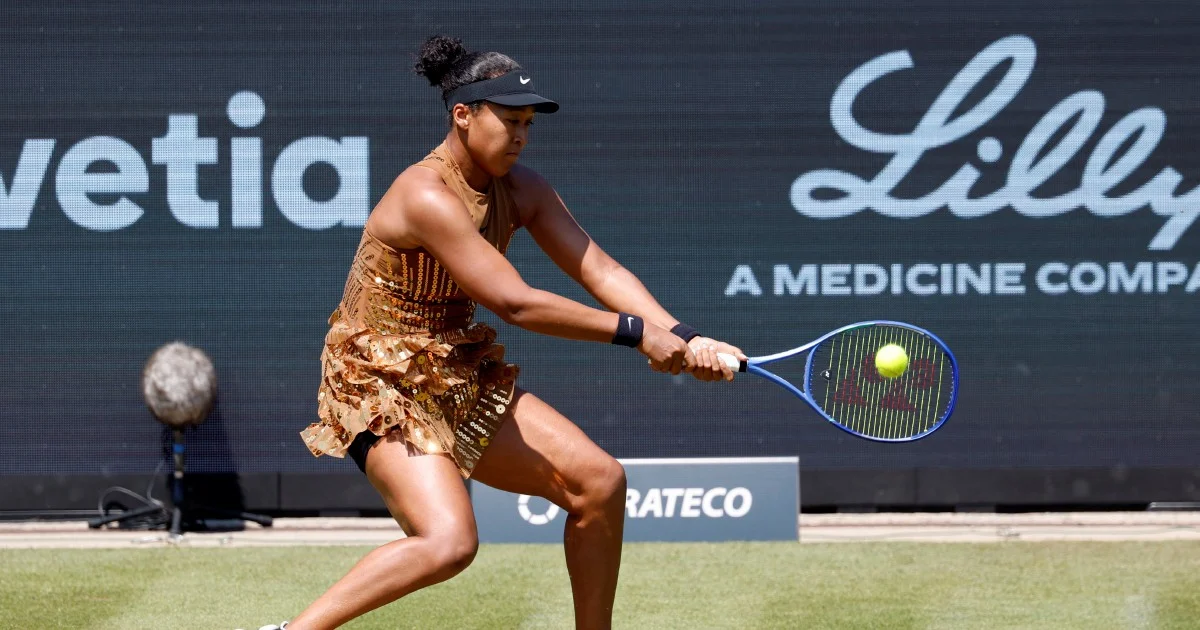
Naomi Osaka has achieved a significant milestone on the grass circuit, clinching a spot in her first grass court final after dispatching Wang Xinyu of China in a dominant display at Bad Homburg on Wednesday. The four-time Grand Slam champion, renowned for her prowess on hard courts, has long been considered a notable absentee from grass court tournament finals despite her stellar record across other surfaces.
Osaka's path to the final represents a notable shift in her competitive trajectory, as the Japanese star has primarily made her mark at the Australian Open, US Open, and during her tenure at other major championships. Her breakthrough on grass comes at a pivotal moment in the season, as Wimbledon preparations intensify and the traditional European grass swing gains momentum. The Bad Homburg tournament, officially known as the Sparkassen Boss Open, serves as a significant stepping stone for leading players seeking to build confidence on grass before the year's third Grand Slam.
Wang Xinyu, ranked among the ascending talents on the Women's Tennis Association tour, proved unable to mount a sustained challenge against Osaka's aggressive baseline game and precise shot-making. The Chinese player's attempt to establish herself as a challenger on the international stage was halted by an opponent whose record demonstrates exceptional consistency across different court surfaces. This victory underscores Osaka's capacity to adapt her game beyond the hard courts where she has enjoyed her greatest success.
The significance of reaching a grass court final extends beyond the immediate tournament context for Osaka and carries implications for her preparation strategy heading into the Wimbledon Championships. Grass court tennis demands distinct technical adjustments, including modified serve returns, reduced bounce heights, and altered baseline positioning. For a player who has predominantly competed on hard courts, this sudden adaptation has historically presented challenges that even the most accomplished athletes require time to address.
For Malaysian and broader Asian tennis enthusiasts, Osaka's grass court emergence holds particular resonance. Her success on diverse surfaces validates the notion that Asian players can excel across all competitive environments, challenging long-standing perceptions that dominance on grass courts remains an exclusively European or established Western phenomenon. This development may inspire emerging players across the region to invest in grass court preparation and technique refinement.
The Bad Homburg tournament itself occupies an important position within the women's professional calendar, attracting top-ranked players seeking valuable match practice immediately before Wimbledon. Osaka's progression through the draw demonstrates her competitive readiness during this compressed preparation phase. Many champions have historically used such tournaments as vital calibration sessions before major championship competition.
Wang's defeat highlights the competitive intensity at this level of professional tennis, where even talented players face considerable obstacles against established champions. The Chinese player's development trajectory nonetheless remains promising, as such matches provide valuable experience navigating high-pressure situations against accomplished opponents. For the broader Asian tennis community, Wang's participation and progression in such tournaments signals strengthening continental representation in elite competition.
Osaka's recent focus on grass court development aligns with broader strategic planning within professional tennis, where players increasingly recognise the importance of maintaining competitive options across all surface types. Her ability to compete effectively on grass expands her tournament options throughout the year and reduces vulnerability to drawn-out schedules on singular surface types. This adaptability ultimately strengthens her overall career competitiveness and longevity prospects.
The final at Bad Homburg represents an opportunity for Osaka to further consolidate her grass court credentials before the Wimbledon campaign. Winning the title would substantially bolster her confidence entering the championships and provide tangible evidence of capability on this specialised surface. Conversely, even reaching the final represents meaningful progress toward establishing herself as a genuine grass court competitor rather than exclusively a hard court specialist.
For regional Malaysian and Southeast Asian audiences, Osaka's breakthrough carries broader implications regarding competitive tennis development. Her success demonstrates that sustained excellence across multiple surfaces remains achievable for determined professionals willing to invest time and resources into specialised preparation. This message extends particularly to younger players developing their competitive profiles and considering which surfaces warrant dedicated attention during their career development phases.
The Bad Homburg tournament has historically served as a launching pad for Wimbledon success, with numerous champions utilising the tournament as their final preparatory venue. Osaka's appearance in the final places her within this distinguished lineage of players who have successfully translated grass court preparation into major championship performances. The coming weeks will reveal whether her maiden grass court final translates into sustained performance on the world's most prestigious grass court stage at the All England Club.

