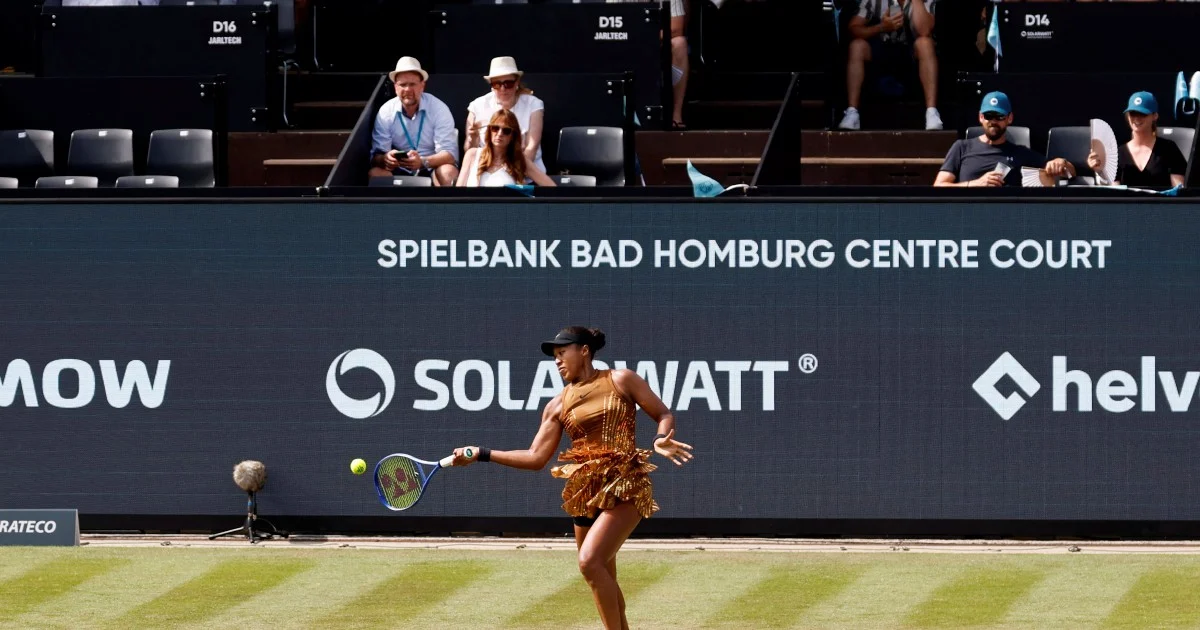
Naomi Osaka advanced to the quarterfinals of the Bad Homburg grass-court tournament on Tuesday, dispatching Belgian opponent Elise Mertens with a comfortable 6-3, 6-3 victory despite struggling with the sweltering conditions and a faltering start to the match.
Osaka's performance in the German resort town revealed the familiar pattern that has characterised her recent tournaments—an ability to shake off early-match jitters and impose her powerful game once she finds her rhythm. The Japanese star faced significant challenges from the outset, battling not only Mertens' competitive tennis but also the oppressive heat that settled over the Bad Homburg courts during the afternoon session. Yet by the time the second set commenced, Osaka had shifted decisively into commanding mode, leaving little doubt about which player would claim the victory.
The opening set proved tighter than the scoreline suggests, with Osaka needing to work through a tentative period before establishing her dominance. This pattern of slow starts has become something of a recurring theme in her recent matches, a vulnerability that opponents and analysts have begun to anticipate. However, Osaka demonstrated the mental resilience that defined her championship years, refusing to allow early hesitation to derail her tournament campaign. Rather than panic or make reckless adjustments, she methodically tightened her game as the set progressed, gradually wrestling the momentum away from Mertens.
Mertens, the Belgian veteran who has maintained a credible ranking despite being in the latter stages of her career, presented a formidable challenge. Known for her court craft and ability to construct points with patience, Mertens typically frustrates opponents with consistent baseline play and clever positioning. Yet against Osaka's raw power and improving grass-court technique, the Belgian found few openings. Osaka's serve, which had been problematic in previous tournaments, functioned more reliably in this encounter, allowing her to dominate the service games and reduce the frequency of break-point opportunities for her opponent.
The second set witnessed a notable shift in the trajectory of play. Osaka appeared increasingly confident and comfortable on the grass surface, employing her aggressive approach more liberally. Her willingness to attack the net and finish points at the first opportunity accelerated the match's pace, putting Mertens under considerable pressure. The Belgian could not match the intensity and precision that Osaka brought to bear, and the American-based Japanese star carved out an early break that essentially decided the encounter.
Conditions at Bad Homburg during this period were notably challenging. The German venue, traditionally held in June before major changes to the tennis calendar, sits in a region that can experience significant heat during summer play. Players reported difficulty managing hydration and physical exertion in such circumstances, factors that can disproportionately affect athletes who rely on sustained baseline rallies. For a power player like Osaka, however, quicker points sometimes work in her favour during extreme heat, as fewer extended exchanges mean less cumulative physical drain.
Osaka's progression to the quarterfinals carries meaningful implications for her ongoing recovery and confidence building. Following her return from mental health hiatus, the four-time Grand Slam champion has been gradually rebuilding her tournament schedule and match fitness. Victories over credible opposition on different surfaces provide crucial data about her physical condition and psychological readiness for sustained competition. A grass-court campaign leading into the All England Club represents a significant portion of her preparation schedule, making each advancement particularly valuable.
The Bad Homburg tournament itself holds historical importance for women's tennis in Germany. As a prominent grass-court event in the European calendar, it draws substantial international fields and serves as a important tuning opportunity for players preparing for Wimbledon. For Osaka specifically, grass courts have traditionally been challenging—her game, built on powerful groundstrokes and baseline dominance, fits more naturally on harder courts where pace is amplified. Accordingly, her steady progression through this tournament represents genuine progress in expanding her adaptability across different playing surfaces.
Looking ahead, Osaka faces further escalating competition in the quarterfinals stage. The field at Bad Homburg typically includes several top-ranked players and specialist grass-courters who will test her developing consistency on the surface. Her ability to manage first-set nerves while still emerging victorious suggests psychological fortitude that bodes well for deeper tournament runs. As she continues her measured reintegration into professional tennis, matches such as this one provide both concrete competitive benefits and confidence-building moments that extend beyond mere ranking points.

