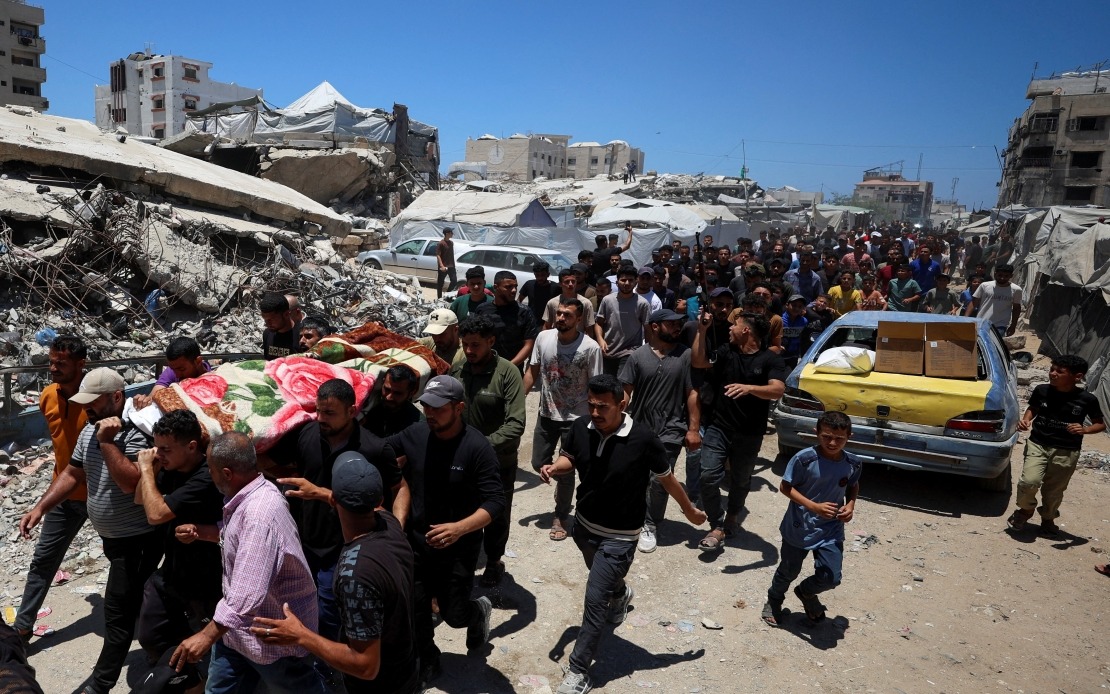
Continuing military operations in Gaza have claimed the lives of 1,021 Palestinians since the ceasefire came into effect, according to figures released by the Palestinian Prime Minister's Office this week. The grim tally raises the overall death count in the enclave to 73,032 since hostilities first escalated in October 2023, underscoring the scale of human suffering that persists even during periods of nominal truce. The latest Situation Report issued by the Government Communication Centre paints a picture of a territory locked in humanitarian emergency, where the announcement of ceasefire has failed to halt violence or meaningfully ease the dire circumstances facing civilians.
The deterioration of humanitarian conditions represents one of the gravest consequences of the extended conflict. Clean water scarcity has become so acute that the majority of Gaza's population now depends entirely on whatever limited relief supplies aid organisations manage to deliver into the territory. This dependency leaves residents extraordinarily vulnerable to disruptions in supply chains, disease outbreaks, and sudden fluctuations in aid availability. The constraint on aid delivery itself has become systematic, with Israeli restrictions continuing to block or severely impede the movement of humanitarian assistance across Gaza's boundaries and internal checkpoints.
The scale of housing destruction has displaced nearly one million Palestinians into temporary tent settlements, reflecting the catastrophic infrastructure damage inflicted during months of intensive military operations. Official records indicate that 76.6 per cent of Gaza's residential housing stock has been either completely destroyed or severely damaged, a proportion that exceeds destruction levels documented in many recent conflicts globally. This figure translates into entire neighbourhoods reduced to rubble, with families lacking any prospect of returning to permanent shelter or recovering possessions lost in bombardments. The tent cities now dotting Gaza serve as visual reminders of displacement and dispossession on an unprecedented scale.
Recent military operations have intensified across multiple population centres within Gaza. Airstrikes and drone attacks targeting Nuseirat, Al-Mawasi, Khan Younis, and Gaza City have generated additional civilian casualties and compounded already catastrophic living standards. These operations appear to occur systematically despite the ceasefire framework, suggesting either that the agreement permits certain Israeli military activities or that enforcement mechanisms have proven ineffective. The pattern of strikes indicates sustained military pressure on civilian areas, undermining any meaningful distinction between active conflict and ceasefire periods.
Children constitute a particularly vulnerable segment of the affected population. According to United Nations Children's Fund data, 265 Palestinian children have died and more than 400 have sustained injuries since the ceasefire announcement. These figures highlight how young lives remain imperiled even when broader conflict parameters have ostensibly shifted toward truce arrangements. The psychological and physical trauma sustained by Gaza's child population will likely cast long shadows across generations, affecting educational attainment, mental health, and social development prospects for years ahead. International organisations including Oxfam have repeatedly warned that restrictions on humanitarian access directly compromise the survival prospects of the region's most vulnerable inhabitants, particularly children dependent on medical care and nutrition support.
Beyond the Gaza Strip, Palestinian territories across the occupied West Bank face escalating displacement pressures driven by settler violence and military actions. The United Nations High Commissioner for Human Rights has documented a significant surge in forced displacement affecting Palestinians throughout the West Bank and East Jerusalem. Settler attacks, official home demolitions, movement restrictions imposed by Israeli authorities, and forced evictions have created an environment of instability and insecurity for Palestinian communities. This pattern of displacement operates alongside the broader conflict dynamic, creating multiple simultaneous humanitarian emergencies across Palestinian territories.
Agriculture has suffered devastating losses that will reverberate through Palestinian food security for seasons ahead. The Ministry of Agriculture documented destruction of 7,258 trees, including 1,270 olive trees that represent both economic assets and cultural heritage for Palestinian farming communities. Estimated financial losses reach approximately US$5.17 million from attacks conducted by Israeli settlers and occupation forces. Beyond these quantified losses, agricultural destruction undermines Palestinian self-sufficiency and economic resilience, forcing greater dependency on external humanitarian assistance. Arson attacks targeting mosques in Jiljilya and Mazra' al-Nubani add dimensions of cultural and religious targeting to the broader conflict.
Refugee camps in the northern West Bank have experienced particularly severe displacement. Israeli military operations concentrated in Jenin, Tulkarem, and Nour Shams refugee camps have displaced more than 33,000 Palestinians since January 2025 alone, suggesting intensifying military activity in these densely populated areas. Refugee camps historically represent sites of concentrated vulnerability, housing populations already displaced from their original homes and lacking secure property rights or formal protections. Fresh displacement from these camps compounds existing traumas and complicates humanitarian provision in already under-resourced areas.
Detention conditions have emerged as another critical humanitarian concern. Palestinian prisoners' institutions report deteriorating circumstances within Israeli detention facilities, with overcrowding becoming increasingly severe and infectious diseases spreading among confined populations. These conditions raise serious questions about compliance with international humanitarian law standards governing prisoner treatment. The combination of overcrowding, inadequate sanitation, limited medical care, and disease transmission risks creates a secondary humanitarian crisis affecting thousands of detainees with limited means to seek redress.
Geopolitical disputes over religious sites have added legal and symbolic dimensions to the conflict. Israeli control over planning and construction powers at the Ibrahimi Mosque in Hebron has prompted Palestinian claims that such authority arrangements violate the 1997 Hebron Agreement and breach international law. These disputes over governance of shared religious spaces reflect how the Israeli-Palestinian conflict extends beyond military and settlement dimensions into questions of religious access, symbolic control, and competing historical narratives regarding sacred sites.
Despite the cascading crises engulfing Palestinian territories, educational institutions have continued preparing students for examination cycles. The Palestinian government completed preparations for this year's General Secondary Education Examination involving approximately 91,000 students, including roughly 37,000 in Gaza. Students in Gaza sit for examinations electronically for the third consecutive year, representing both an adaptation to conflict conditions and potential erosion of educational equity. This educational persistence demonstrates Palestinian commitment to maintaining institutional continuity and youth development despite surrounding chaos, though questions remain regarding the quality and comprehensiveness of educational delivery under siege conditions.
For Malaysian observers and policymakers, the escalating humanitarian catastrophe in Gaza carries implications extending beyond Middle Eastern politics. Southeast Asian nations have consistently advocated for international law compliance and humanitarian principles in global forums. The documented patterns of civilian harm, displacement, and infrastructure destruction challenge the international community's capacity to enforce humanitarian standards during protracted conflicts. Malaysia's historical advocacy for Palestinian rights and opposition to occupation policies places these developments within frameworks of principle that resonate across diverse Muslim-majority nations and developing countries broadly concerned with protecting civilian populations from indiscriminate harm.

