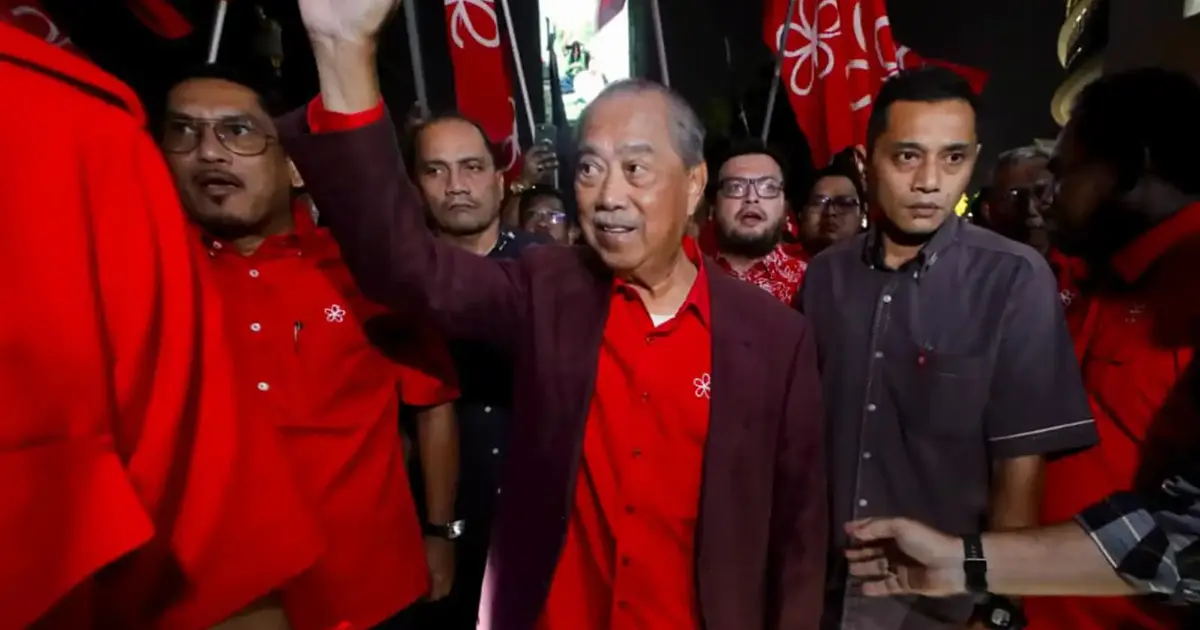
More than 200 Bersatu supporters gathered to back Muhyiddin Yassin ahead of an important party assembly that will chart the direction of Malaysia's third-largest political coalition. The show of strength reflects ongoing factional tensions within Bersatu as the party navigates a complex political landscape and prepares for multiple electoral contests that could reshape coalitions across key states.
The rally underscores the continued significance of Muhyiddin's leadership within Bersatu, which he founded in 2016 and has helmed through various permutations of Malaysian politics. His ability to mobilise grassroots support remains a crucial asset for the party, particularly as it confronts strategic decisions about its electoral positioning and partnership strategies in the coming months.
Bersatu's imminent meeting carries substantial weight for the party's future trajectory. The agenda reportedly encompasses preparations for simultaneous state elections in Johor and Negeri Sembilan, two economically significant states where political outcomes carry implications for federal dynamics. These contests will serve as a testing ground for the coalition's viability and voter appeal, especially given Malaysia's shifting political preferences following recent electoral cycles.
The question of Bersatu's relationship with PAS looms large in these discussions. The two parties have maintained a complex alliance that reflects both shared conservative Islamic credentials and divergent interests in representation and influence. How this partnership evolves will determine Bersatu's positioning within Malaysia's broader coalition landscape and its capacity to compete effectively across constituencies with varied demographic and ideological compositions.
For Malaysian observers, the internal dynamics of Bersatu matter considerably. The party holds marginal seats and punch above its numerical weight in coalition mathematics, making its strategic decisions consequential for federal stability and policy direction. A fractured or weakened Bersatu could alter the balance within ruling coalitions and potentially trigger broader realignments that affect governance across multiple policy domains.
The rally's timing suggests deliberate positioning ahead of the formal meeting. Such public shows of support serve multiple purposes: they reinforce leadership legitimacy, energise the party base, and signal strength to coalition partners and political rivals alike. In Malaysian politics, where perceptions of momentum and cohesion frequently translate into electoral performance, these symbolic displays carry genuine strategic importance.
Bersatu's trajectory intersects with broader regional trends within Southeast Asia. Malaysia's coalition politics, shaped by ethnic and religious considerations alongside class interests, has increasingly featured smaller parties punching above their weight. Bersatu exemplifies this phenomenon, leveraging its Malay-Muslim base and organisational capacity to secure disproportionate influence despite relatively modest electoral numbers.
The state elections assume particular importance given Malaysia's federal system. Johor, as the nation's southernmost peninsula state and a major economic contributor, has historically served as a bellwether for national political sentiment. Negeri Sembilan, meanwhile, holds significance as a transitional state bridging the Klang Valley's urban centres and the rural heartland, with voters who span multiple socioeconomic categories.
Bersatu's positioning in these contests reflects the party's broader identity challenge. Founded as a vehicle for Muhyiddin's political ambitions following his exit from the United Malays National Organisation, Bersatu has struggled to develop a distinctive ideological identity separate from existing alternatives. The party must therefore compete simultaneously for Malay-Muslim votes against UMNO and PAS while maintaining coalition viability and demonstrating relevance to non-Malay constituencies.
The PAS relationship requires careful calibration. While the Islamist party shares certain constituencies and voter demographics with Bersatu, competition for the same voter pool creates inherent tensions. Coalition cooperation requires both parties to demonstrate loyalty to shared objectives while managing internal pressures from activists and voters who view the other partner with suspicion or outright hostility.
For the Johor and Negeri Sembilan electoral contests, Bersatu faces pressures from multiple directions. The party must retain existing seats, expand into competitive constituencies, and do so while maintaining coalition discipline with partners who have divergent electoral interests. Overambitious campaigns risk destabilising alliances; overly cautious approaches risk appearing irrelevant to voters evaluating coalition performance.
The broader implications extend beyond immediate electoral outcomes. How Bersatu performs and positions itself in these contests will influence its negotiating capacity within federal coalitions and its ability to secure ministerial portfolios and policy influence. Conversely, poor performances could accelerate defections and trigger deeper questions about the party's viability as an independent political force rather than merely a vehicle for Muhyiddin's personal ambitions.
Muhyiddin's continued centrality to Bersatu raises succession questions that will eventually demand resolution. The large rally demonstrates his current mobilising capacity, yet Malaysian politics has repeatedly shown how quickly circumstances can shift. Building institutional strength beyond individual personalities remains a challenge for Bersatu as it matures beyond its founding phase and confronts the competitive dynamics of Malaysia's increasingly fluid political environment.