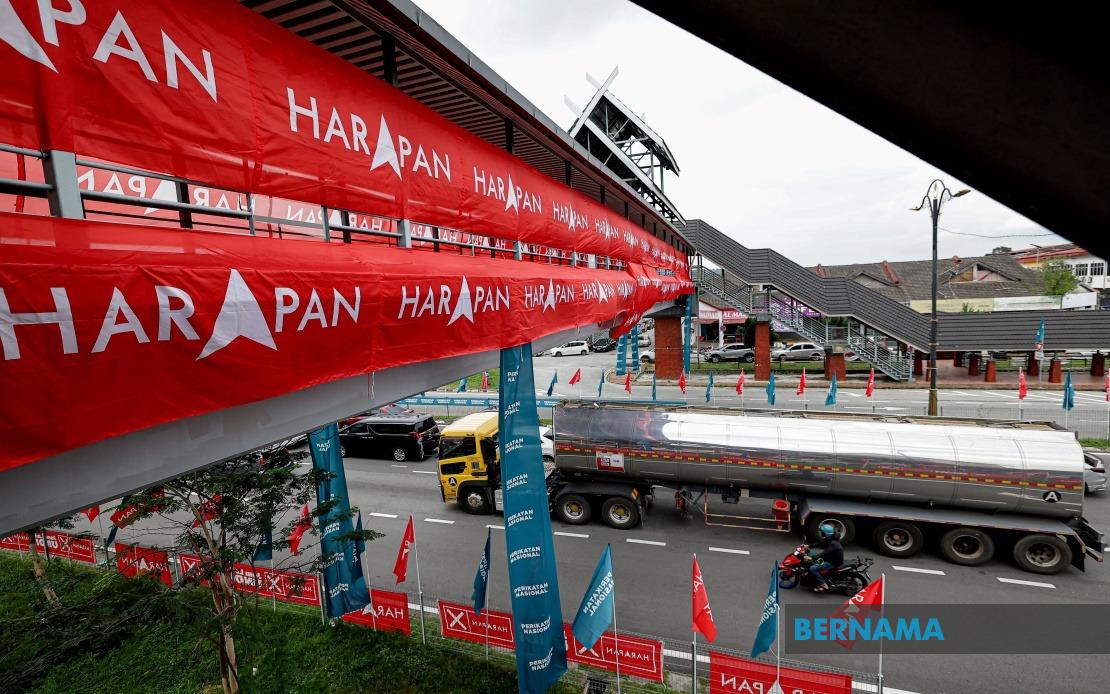
The Negeri Sembilan state election is ramping up with security sector participation, as the Election Commission prepares to facilitate early voting for 22,339 military and police personnel along with their spouses across the state. Tomorrow's early polling phase will see 16,884 armed forces members and their families, combined with 5,455 police officers and dependents, cast their ballots at specially designated centres throughout the region. This advance voting mechanism, scheduled four days before the official August 1 polling day, reflects the logistical complexities of conducting elections in a state where security personnel often face deployment challenges and operational demands that prevent standard voting participation.
The Election Commission has orchestrated what amounts to a parallel voting infrastructure, establishing 38 early polling centres distributed strategically across Negeri Sembilan to accommodate the security contingent. All centres will commence operations simultaneously at 8 am, though their closing times will vary depending on local operational requirements and geographical considerations. Key voting locations include the Army Basic Training Centre in Port Dickson, the Negeri Sembilan Contingent Police Headquarters at Sendayan Air Base in Seremban, and the Nilai District Police Headquarters. This dispersed approach aims to minimise disruption to both security operations and the broader electoral process, while ensuring eligible personnel can fulfil their democratic obligations without compromising state security readiness.
Weather conditions represent a complicating factor for tomorrow's proceedings. The Malaysian Meteorological Department forecasts predominantly clear skies across most of Negeri Sembilan during morning hours, providing a favourable window for early voting operations. However, Port Dickson faces an exceptional weather pattern, with heavy rainfall and thunderstorms anticipated throughout the morning period. The broader state is expected to experience widespread heavy rain in the afternoon, potentially affecting voter accessibility and logistics at some polling locations. These meteorological projections have implications for Electoral Commission contingency planning and may influence participation rates, particularly in coastal and lower-lying constituencies where drainage and accessibility become critical considerations.
The 16th Negeri Sembilan state election reflects the fragmented political landscape characterising Malaysian electoral competition in 2024. A total of 103 candidates will compete for all 36 state seats, representing a comprehensive political spectrum ranging from established coalitions to independent aspirants. Pakatan Harapan fields a unified slate across every constituency, deploying 16 PKR representatives, 11 from DAP, and nine from Amanah, presenting a cohesive opposition front. This comprehensive coverage suggests PH intends to contest for majority control rather than selective seat capture, indicating significant organisational mobilisation across urban and rural constituencies alike.
Barisan Nasional's participation encompasses 25 seats through a traditional component structure, fielding 16 UMNO candidates alongside seven MCA and two MIC representatives. This reduced footprint compared to PH's full slate suggests BN is concentrating resources on constituencies where it maintains traditional strongholds or perceives competitive advantage. The decision to contest fewer seats than available reflects both resource limitations and strategic calculations about winnable territory within Negeri Sembilan's political geography.
Perikatan Nasional's involvement introduces additional competitive complexity, contesting 11 seats through a diverse coalition including five PAS candidates, four from Parti Wawasan Negara, and single representatives from Gerakan and the Malaysian Indian People Party. This configuration demonstrates PN's attempt to establish multi-component legitimacy beyond its dominant PAS identity, though the overall seat count suggests a more cautious approach compared to PH's omnipresent candidacy. The inclusion of ethnic component parties signals PN's efforts to broaden appeal beyond its Islamist foundations.
Bersatu's independent participation adds a significant wild card element, fielding 24 candidates across the state. This figure represents a substantial commitment from the party and underscores its determination to establish independent electoral presence outside formal coalition structures. Bersatu's candidacy distribution suggests it views Negeri Sembilan as a territory where it can build standalone support and organisational capacity, potentially competing against all three major coalitions for swing voter support and protest votes.
Smaller political entities including Parti Orang Asli Malaysia, Parti Sosialis Malaysia, and Parti Barisan Jemaah Islamiah Se-Malaysia collectively field seven candidates, representing niche political ideologies and specific communal interests. These fringe participants, though electorally unlikely to achieve breakthrough results, contribute to the ideological diversity characterising Malaysian democratic competition and offer voters protest options beyond mainstream alternatives.
The legislative assembly's dissolution on June 5 initiated the electoral timeline culminating in the August 1 polling date. This approximately eight-week campaign period has enabled candidates, coalitions, and machinery to mobilise supporters, articulate policy platforms, and conduct ground operations. Negeri Sembilan's political culture, historically characterised by competitive two-coalition contests, now confronts fragmentation requiring candidates and parties to navigate more complex voter psychology and coalition dynamics.
The early voting arrangement for security personnel establishes operational precedent for managing a professional contingent with legitimate operational constraints on standard participation. The logistics of accommodating 22,339 voters across 38 centres demonstrates election management sophistication but also highlights the practical complexities of inclusive democratic participation when certain populations face institutional constraints. Tomorrow's early voting phase will test operational coordination and provide initial participation metrics before the broader August 1 polling day engages the general electorate.
For Malaysian and Southeast Asian observers, the Negeri Sembilan election reflects broader regional trends of political fragmentation, coalition experimentation, and the emergence of parties challenging traditional two-coalition dominance. The election's outcome will signal whether PH can consolidate opposition strength or whether BN maintains sufficient residual support for competitive contests. Critically, it will demonstrate whether newer political actors like Bersatu and PN can translate voter dissatisfaction into tangible seat gains, reshaping state-level political geometry and potentially foreshadowing national electoral trajectories.

