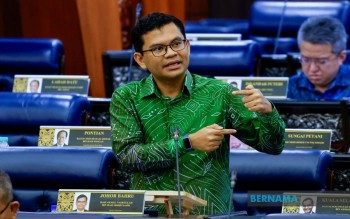
Bank Negara Malaysia's Small and Medium Enterprise Stabilisation Relief Facility has retained substantial untapped resources to support businesses navigating current economic headwinds, according to Economy Minister Akmal Nasrullah Mohd Nasir. With more than RM4 billion of the scheme's RM5 billion allocation still accessible, the facility represents a meaningful lifeline for cash-strapped companies seeking operational relief. The minister's disclosure, delivered during parliamentary questioning on June 25, underscores the government's determination to shield enterprises from mounting financial pressures stemming from global supply disruptions and economic uncertainty.
As of mid-June 2026, the financing scheme had already disbursed more than RM700 million to support over 1,000 small and medium enterprises navigating liquidity challenges. The relatively modest uptake compared to the total allocation suggests either insufficient awareness of the programme among eligible businesses, administrative processing delays, or a genuine mismatch between facility terms and actual business requirements. For Malaysian SMEs still grappling with operational constraints, Akmal emphasised that the availability of substantial unallocated funds provides genuine breathing room to address cash flow bottlenecks without depleting the scheme's reserves prematurely.
The SME Stabilisation Relief Facility operates within a broader ecosystem of government support mechanisms specifically designed to cushion enterprises against cyclical shocks. Complementing this central initiative, Syarikat Jaminan Pembiayaan Perniagaan Bhd has injected an additional RM5 billion in financing guarantees, creating a combined RM10 billion safety net for micro, small, and medium enterprises seeking institutional credit. These parallel schemes reflect a multi-layered approach acknowledging that businesses require not only direct financing assistance but also government-backed guarantees reducing lender risk perception and potentially lowering borrowing costs.
Access mechanisms have been deliberately streamlined to accelerate capital deployment. Akmal stressed that enterprises confronting cash flow constraints should approach their existing financial institutions directly, with banks and lending bodies committing to process applications within a seven-working-day window. This compressed timeline aims to eliminate bureaucratic drag that often characterises emergency financing, though the actual experience of applicants may vary depending on documentation completeness and institutional capacity. The emphasis on rapid processing suggests policymakers recognise that delayed capital injection defeats the purpose of emergency relief, particularly when businesses face immediate supplier payments or wage obligations.
Beyond direct financing mechanisms, the government has deployed the Progressive Acceleration for Capability and Employability (PACE) Economic Resilience Package, a RM710 million comprehensive intervention targeting employment preservation and business continuity simultaneously. This framework acknowledges that financial assistance alone proves insufficient when labour market disruption undermines consumer demand and worker productivity. The package's four foundational pillars—social protection, training with job placement, gig worker empowerment, and youth talent development—reflect integrated thinking about economic resilience extending beyond traditional credit provision.
Within PACE's architecture, over RM580 million flows through PERKESO to strengthen the Employment Insurance System, providing income support for displaced workers and reducing household debt accumulation during transition periods. Simultaneously, RM100 million allocated through HRD Corp funds training and job placement initiatives linked to the MYFutureJobs digital platform, attempting to create pathways from job loss to reskilled employment. These complementary initiatives recognise that modern economic resilience requires both income protection and labour market adaptability, particularly as technological disruption and global supply chain restructuring reshape sectoral employment profiles.
Gig economy and emerging workforce components receive targeted attention through RM20 million channelled via the Skills Education Fund Corporation specifically for gig worker training, alongside RM10 million from TalentCorp supporting industrial training within SME and start-up ecosystems. This granular allocation reflects policy awareness that traditional employment relationships increasingly coexist with platform-based and project-based work arrangements, requiring differentiated skill development approaches. The investment in emerging talent development signals official recognition that business continuity depends not merely on current operational stability but on institutional capacity building for future competitive positioning.
Supply chain and commodity price management occupy a parallel policy dimension, with government agencies intensifying monitoring of essential goods availability and raw material pricing across manufacturing, food production, agriculture, and service sectors. This supply-side intervention acknowledges that financing support achieves limited impact when underlying input costs spiral due to external shocks or market dysfunction. The emphasis on monitoring suggests policymakers understand that transparent price information and coordinated supply chain oversight can moderate inflationary pressures that would otherwise erode enterprise profitability despite capital injection.
The scale of available financing—more than RM4 billion in the core SME facility plus RM5 billion in guarantee schemes—reflects substantial government commitment, yet uptake patterns warrant closer examination. Relatively modest disbursement figures suggest that awareness campaigns may require intensification, or that facility terms, collateral requirements, or eligibility criteria present genuine barriers to affected businesses. Malaysian SMEs contemplating applications should investigate eligibility specifications and documentation requirements through financial institutions, as delays in capital access during crisis periods can trigger cascading operational failures even with bureaucratic approval ultimately granted.
Akmal's parliamentary response signals that supply chain crisis management extends beyond emergency financing into forward-looking institutional reform and labour market adaptation. The multi-billion-ringgit commitment across various schemes demonstrates fiscal capacity and policy intent, though successful impact ultimately depends on business uptake, effective targeting of support toward genuinely constrained enterprises, and timely capital deployment before operational crises become irreversible. Southeast Asian regional observers may note Malaysia's layered approach—combining direct financing, credit guarantees, employment insurance, skills development, and supply chain monitoring—as a comprehensive model, though execution effectiveness remains the ultimate determinant of economic resilience outcomes.
The minister indicated that a formal ministerial statement addressing global supply crisis dimensions would be tabled in parliament the following Monday, pending legislative approval. This forthcoming detailed explanation may provide additional context regarding supply disruption severity, anticipated duration, and sectoral differentiation, offering businesses more granular intelligence for operational planning. Simultaneously, the government's willingness to engage in parliamentary scrutiny of crisis response measures suggests confidence in implemented interventions, though ongoing economic uncertainty suggests that additional measures may require legislative consideration as conditions evolve throughout 2026.

