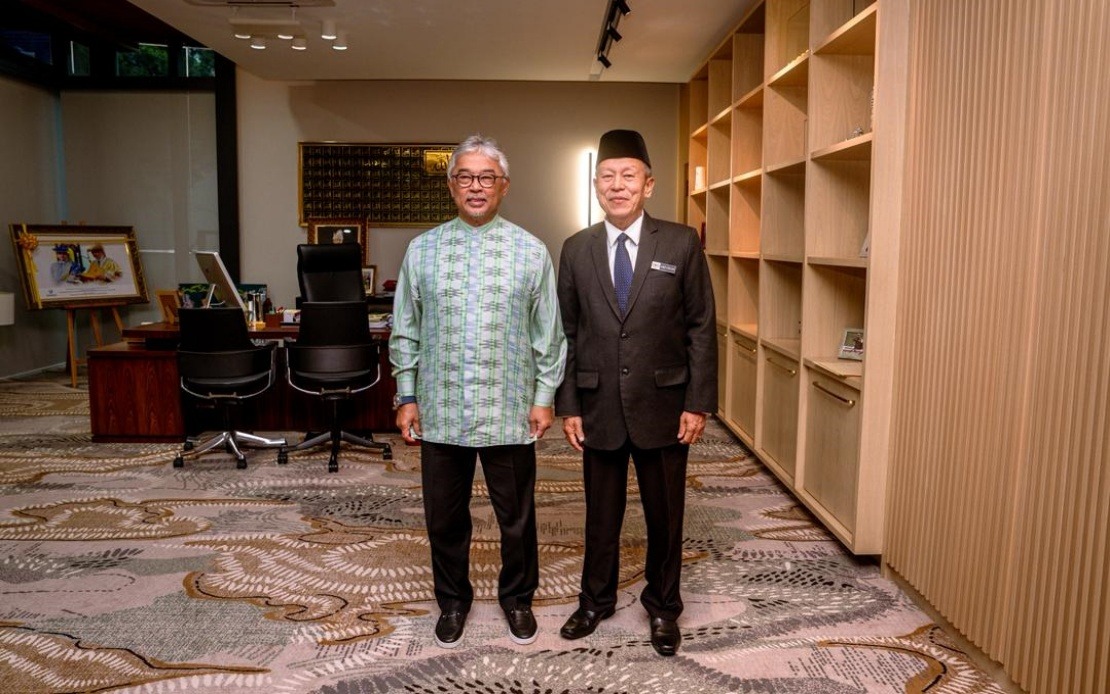
The Sultan of Pahang, Al-Sultan Abdullah Ri'ayatuddin Al-Mustafa Billah Shah, received Malaysian Anti-Corruption Commission (MACC) chief commissioner Datuk Seri Abd Halim Aman at Shahzan House in Ampang on June 18, marking a significant engagement between the royal institution and the nation's primary graft-fighting agency. The hour-long audience underscored the collaborative relationship between Malaysia's constitutional monarchy and key enforcement bodies tasked with maintaining public integrity.
During the meeting, the MACC presented Al-Sultan Abdullah with an overview of recent operational developments and strategic directions guiding the commission's anti-corruption mandate. This briefing-style encounter reflects a broader practice whereby senior constitutional figures maintain regular contact with heads of critical government institutions to stay apprised of their institutional health and operational challenges.
The scope of discussion extended beyond routine operational updates to encompass broader questions of governance, institutional accountability, and public sector ethics. The MACC seized the opportunity to highlight various initiatives designed to strengthen the country's integrity infrastructure, recognising that combating corruption requires sustained institutional effort across multiple fronts and stakeholder groups.
A central theme throughout the engagement involved the commission's ongoing efforts to rebuild public trust in enforcement mechanisms. This concern reflects a wider acknowledgement within Malaysia's anti-corruption ecosystem that effective law enforcement depends heavily on citizen confidence and cooperation. By briefing the Pahang Sultan directly, the MACC signalled its commitment to maintaining transparency about its operational priorities and achievements with influential figures across the country's institutional landscape.
Datuk Seri Abd Halim's remarks following the audience emphasised his personal gratitude for the royal engagement and highlighted the importance of high-level institutional support for the commission's work. His expressed appreciation for Al-Sultan Abdullah's backing signals the political value placed on visible endorsement from constitutional authorities, particularly given ongoing public scrutiny of anti-corruption agencies across Southeast Asia.
The MACC chief further underscored the commission's dedication to advancing transparent, accountable governance frameworks throughout Malaysia's public administration. This rhetorical positioning connects anti-corruption enforcement to broader developmental and institutional goals, framing graft-fighting not merely as a prosecutorial function but as essential infrastructure supporting economic competitiveness and public legitimacy.
For Malaysian stakeholders, such high-level engagements between royal institutions and enforcement agencies carry symbolic weight beyond their immediate procedural content. They demonstrate institutional interconnectedness and reinforce the notion that combating corruption remains a priority concern shared across multiple pillars of Malaysia's governance architecture. The Pahang Sultan's willingness to allocate time to this briefing sends subtle but meaningful signals about the importance accorded to anti-corruption efforts within the country's constitutional framework.
Regionally, Malaysia's visible institutional engagement with anti-corruption challenges reflects the prominence of governance and transparency issues across Southeast Asia. As ASEAN nations grapple with varying levels of institutional development and public sector reform, examples of high-level dialogue between constitutional authorities and anti-corruption agencies illustrate approaches to embedding integrity values within formal state structures.
The timing and nature of this audience also deserve consideration within Malaysia's broader political context. Maintaining visible engagement between the palace and enforcement institutions helps reinforce institutional autonomy and legitimacy, particularly important for bodies like the MACC that periodically face questions about their operational independence. The public announcement of such meetings serves to document the commission's access to influential stakeholders and its integration within formal channels of institutional communication.
Looking forward, such engagements likely constitute routine elements of institutional relationship-building rather than responses to specific operational crises. The MACC's regular dialogue with constitutional figures, senior politicians, and key stakeholders forms part of its broader strategy to embed anti-corruption consciousness throughout Malaysia's governance apparatus. These multifaceted relationships supplement the commission's formal enforcement powers with softer mechanisms for institutional influence and agenda-setting.
The broader implications extend to how Malaysia's anti-corruption machinery situates itself within the country's constitutional order. By cultivating relationships with palace officials, the MACC positions itself not as a narrow prosecutorial agency but as a guardian of institutional health whose concerns merit consideration at the highest levels of formal authority. This institutional positioning proves particularly valuable in contexts where anti-corruption agencies periodically face criticism regarding their selectivity or partisan orientation.
Ultimately, the June audience illustrates how Malaysia's anti-corruption infrastructure operates not in isolation but within a complex ecology of institutional relationships. The MACC's effectiveness depends not only on its investigative capabilities and prosecutorial resources but also on its capacity to maintain productive engagement with influential stakeholders including constitutional authorities, political leaders, and civil society actors. Such high-level interactions, while often underreported in routine coverage, constitute essential elements of institutional legitimacy and strategic influence.

