Pakatan Harapan is preparing for the 16th Johor State Election by deploying a comprehensive campaign strategy that fuses traditional community engagement with contemporary digital communication tools. The coalition's communications machinery will mobilize immediately after the nomination process concludes, with senior party figures positioning themselves across multiple constituencies to establish direct voter contact alongside rapid-fire social media dissemination of campaign materials.
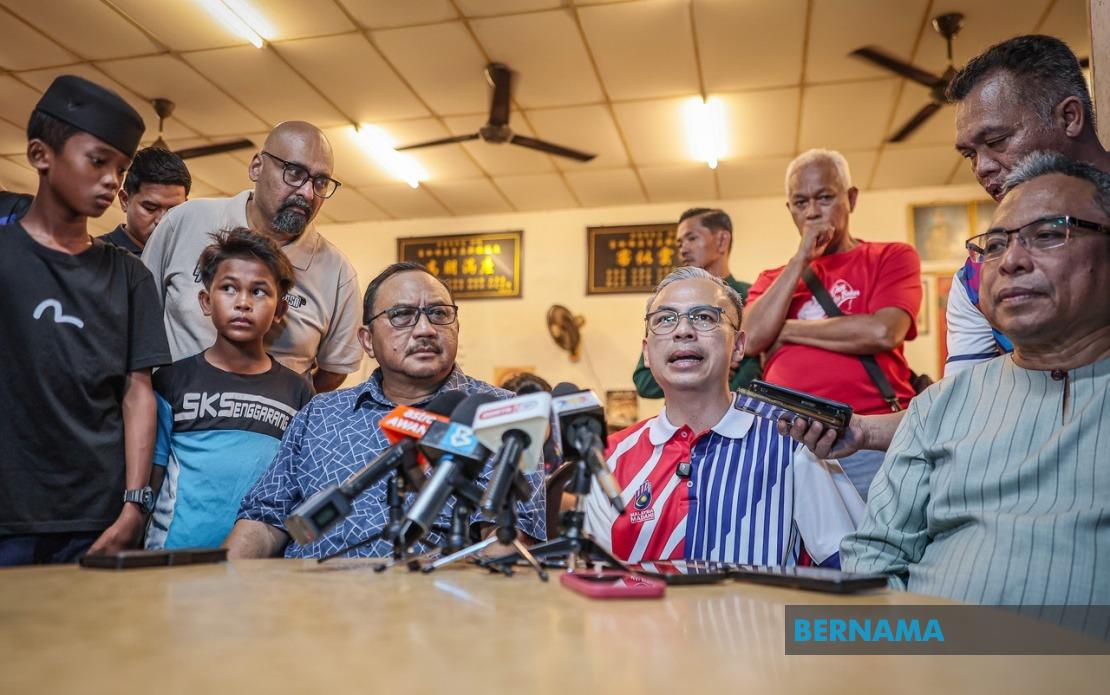
Datuk Fahmi Fadzil, the coalition's communications director and Minister of Communications, outlined the reasoning behind this integrated approach during remarks at a campaign event in Batu Pahat on 26 June. He stressed that reaching voters effectively across Malaysia's diverse demographic and geographic landscape requires simultaneous deployment of old and new media channels. The strategy reflects a recognition that while traditional door-to-door campaigning and public gatherings remain essential for building personal connections with constituents, the digital realm has become indispensable for amplifying messages and countering misinformation at scale.
PKR, the coalition's largest component party in Johor, will contest 20 seats and launch its campaign activities immediately following the conclusion of nomination proceedings. Fahmi personally committed to heading to Semerah to kickstart the effort, while PKR deputy president Nurul Izzah Anwar planned to accompany Senggarang candidate Onn Abu Bakar at the nomination centre. The coalition has established a dedicated official media group designed to disseminate information about PH candidates with minimal delay, effectively creating a rapid-response communications unit to manage the narrative throughout the election period.
A critical pillar of the campaign will emphasize factual accuracy and truth-based messaging to counter the proliferation of misleading information that has become endemic during electoral contests in Malaysia. Fahmi stressed that voters deserve access to reliable information to make informed decisions about their future representation, a particularly salient concern given the ease with which false claims spread through social media during campaigns. This commitment to fact-based communication distinguishes PH's approach from competitors and appeals to increasingly digitally savvy voters who are capable of distinguishing substantive policy discussion from mere sloganeering.
The coalition's messaging will heavily feature the development achievements that have flowed from federal-state cooperation in Johor, particularly infrastructure projects that Fahmi highlighted as catalysts for economic expansion. The Rapid Transit System Link and the Johor-Singapore Special Economic Zone represent flagship initiatives that the coalition will cite as evidence of its capacity to deliver tangible improvements in living standards and economic opportunity. By framing these projects as products of collaborative governance between federal and state levels, PH seeks to demonstrate that its stewardship benefits Johor residents materially and measurably.
Pakatan Harapan's track record in other Malaysian states provides the coalition with a comparative advantage in credibility arguments. In Selangor, Negeri Sembilan, and Penang, the coalition has administered state governments for sufficient periods to point toward concrete governance outcomes rather than merely theoretical policy commitments. Fahmi leveraged this advantage explicitly, asserting that PH's capabilities rest on proven performance in managing complex state administrations rather than rhetorical flourishes. This empirical grounding is particularly important in Johor, a state with significant economic importance and a population accustomed to stable governance.
The calibre of candidates fielded in key constituencies forms another element of PH's persuasive strategy. Dr Maszlee Malik's candidacy in Puteri Wangsa and Onn Abu Bakar's nomination in Senggarang represent the coalition's effort to field recognizable figures capable of attracting cross-cutting electoral support. The strategic placement of these candidates in constituencies judged winnable demonstrates a coordinated approach to seat allocation designed to maximize the coalition's overall seat tally in the 56-member Johor State Assembly.
PH has committed to unveiling a comprehensive manifesto specifically tailored to Johor's distinctive economic, social, and developmental priorities. This commitment to state-specific policy platforms indicates recognition that Malaysian voters increasingly expect parties to address localized concerns rather than simply applying national policy templates uniformly across all constituencies. A Johor-centric manifesto will afford the coalition opportunities to showcase sector-specific policy thinking relevant to the state's economy, demographics, and governance challenges.
The campaign environment includes institutional safeguards designed to maintain electoral integrity and prevent malicious disinformation from distorting the political conversation. The Malaysian Communications and Multimedia Commission has convened a special task force incorporating the Election Commission, Royal Malaysia Police, and Malaysian Media Council to monitor and suppress misinformation circulation throughout the electoral period. This coordinated government apparatus reflects an official commitment to combating false narratives, though observers note that government bodies' involvement in misinformation monitoring during electoral contests raises questions about the potential for regulatory capture or selective application.
Fahmi's engagement with Senggarang residents, including attendance at a community film screening, exemplified the grassroots dimension of PH's campaign architecture. These direct interactions with voters constitute essential relationship-building activities that digital platforms cannot fully replicate, particularly in constituencies where face-to-face contact remains central to electoral persuasion. The combination of high-level political presence and community-level cultural engagement demonstrates a sophisticated understanding of how political trust operates across different social contexts.
For Malaysian observers monitoring the Johor election, the campaign's strategic architecture reveals broader truths about contemporary electoral competition in the country. The 16th Johor State Election will serve as a significant test of whether integrated digital-grassroots campaigns can overcome entrenched political patterns in a state with distinct political history and demographics. The election's outcome will inform subsequent campaigns across Malaysia regarding the optimal balance between traditional community engagement and digital mobilization.

