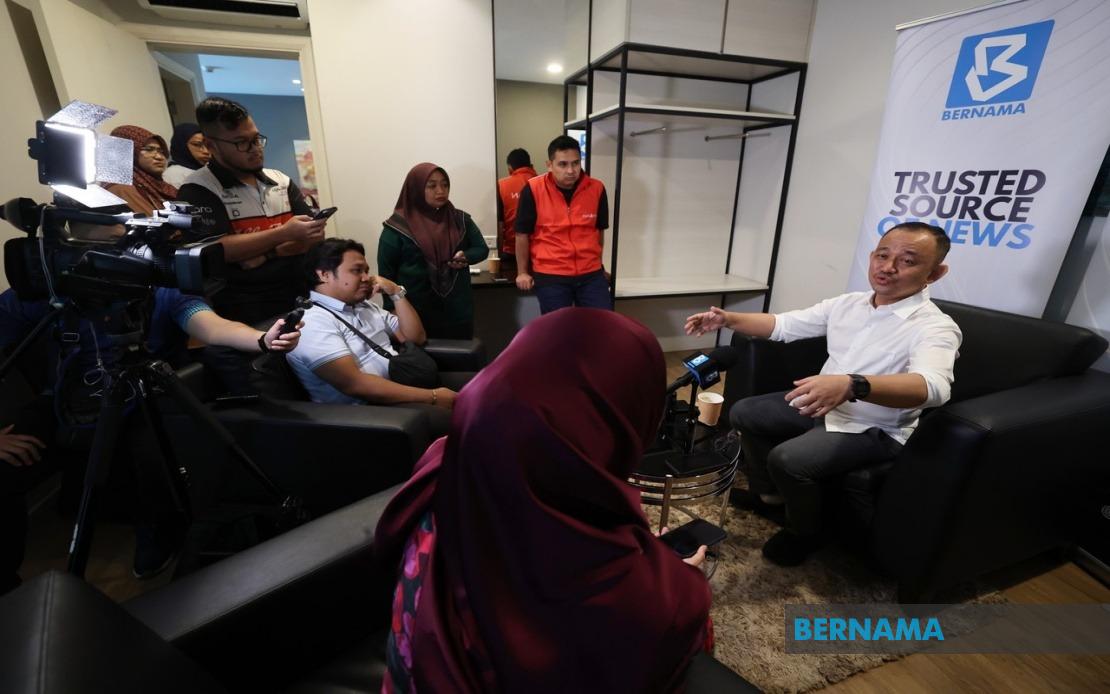
Pakatan Harapan has made clear that any decision regarding the appointment of Johor's next Menteri Besar rests entirely with the Sultan of Johor, should the coalition secure victory in the forthcoming state election. The stance represents a deliberate acknowledgment of constitutional boundaries and the ceremonial role played by the Johor palace in state governance. The assurance was delivered by Dr Maszlee Malik, PH's candidate for the Puteri Wangsa state seat, during an exclusive interview as the coalition prepares for the critical 16th Johor state polls scheduled for July 11, with early voting beginning on July 7.
The timing of this statement proves significant, as social media has been rife with speculation naming various figures as potential Menteri Besar candidates should Pakatan Harapan emerge victorious. Dr Maszlee's comments appear designed to address and defuse such rumours, which have periodically surfaced in recent months within political circles and public discourse. By explicitly stating that the coalition has not engaged in discussions about the position, PH signals its adherence to constitutional propriety and distances itself from potential accusations of pre-election power-brokering or palace interference.
From a constitutional perspective, the Sultan of Johor's prerogative to appoint the Menteri Besar derives from the State Constitution, a framework that differs somewhat from systems in other Malaysian states. This distinction underscores the unique position of the Johor monarchy within the state's political architecture and reflects the careful balance maintained between elected representatives and the institution of the sultans. For voters and observers, this clarification reinforces that whoever leads the state government will ultimately be the palace's choice, rather than a predetermined selection by the winning coalition's leadership.
Dr Maszlee's emphasis on the coalition's team-based approach rather than reliance on individual personalities marks a deliberate strategic shift in how PH presents itself to Johor's electorate. The statement that the coalition is "presenting a team" and that all 56 candidates constitute their collective strength suggests an effort to build confidence across a broader base rather than pinning electoral hopes on a single personality. This messaging strategy acknowledges ongoing public scrutiny of political leadership and attempts to position PH as committed to institutional governance rather than personality-driven politics.
The coalition's decision not to discuss the Menteri Besar position internally reflects either genuine restraint or calculated optics management ahead of the election. By maintaining silence on this matter, PH avoids the fractional squabbles that could undermine campaign momentum. The focus on delivering quality service through collective effort rather than engaging in leadership jockeying represents a response to historical criticisms that opposition coalitions sometimes collapse under their own internal contradictions once in power. For Malaysian observers familiar with previous coalition governments, such assurances carry particular weight.
The statement also carries implications for Johor's relationship with the broader Pakatan Harapan framework. Johor has long occupied a peculiar political position within Malaysia, historically resistant to federal-level opposition dominance while maintaining its own distinctive political culture. By deferring to the Sultan's prerogative, PH may be attempting to ease concerns among Johor's conservative electorate that a coalition victory would mean imposing external political arrangements on the state. This approach respects the sultanate's symbolic and practical authority, which remains deeply embedded in Johor's political consciousness.
For the broader Southeast Asian context, this situation illustrates the continued relevance of constitutional monarchy in contemporary Malaysian politics. Unlike purely republican systems, Malaysia's configuration requires political actors to navigate both electoral democracy and hereditary institutions. The careful language employed by Dr Maszlee demonstrates sophistication in managing this dual reality. His comments suggest that even opposition coalitions with national ambitions must respect state-level constitutional arrangements and the specific powers retained by individual sultanates.
The electoral significance of this positioning should not be underestimated. Johor voters who retain strong attachments to the institution of the sultanate may be reassured that their state's traditions will be preserved under a PH government. Conversely, those concerned about Pakatan Harapan's secular-leaning orientation might view the coalition's deference to palace authority as a positive signal. In a state where the sultanic institution commands genuine affection and respect across much of the population, such messaging proves tactically astute.
The campaign dynamics in Johor carry implications extending beyond state boundaries. Johor's 56 state assembly seats represent a significant prize in Malaysian politics, and its outcome could influence calculations in other states and federal politics. The coalition's emphasis on fielding quality candidates across all contested seats suggests confidence in its ground organisation and candidate selection process. Whether this translates into electoral success will become clear when voters cast their ballots on July 11, but the coalition's disciplined messaging and clear constitutional positioning suggest a campaign determined to avoid self-inflicted wounds during the crucial final campaign period.

