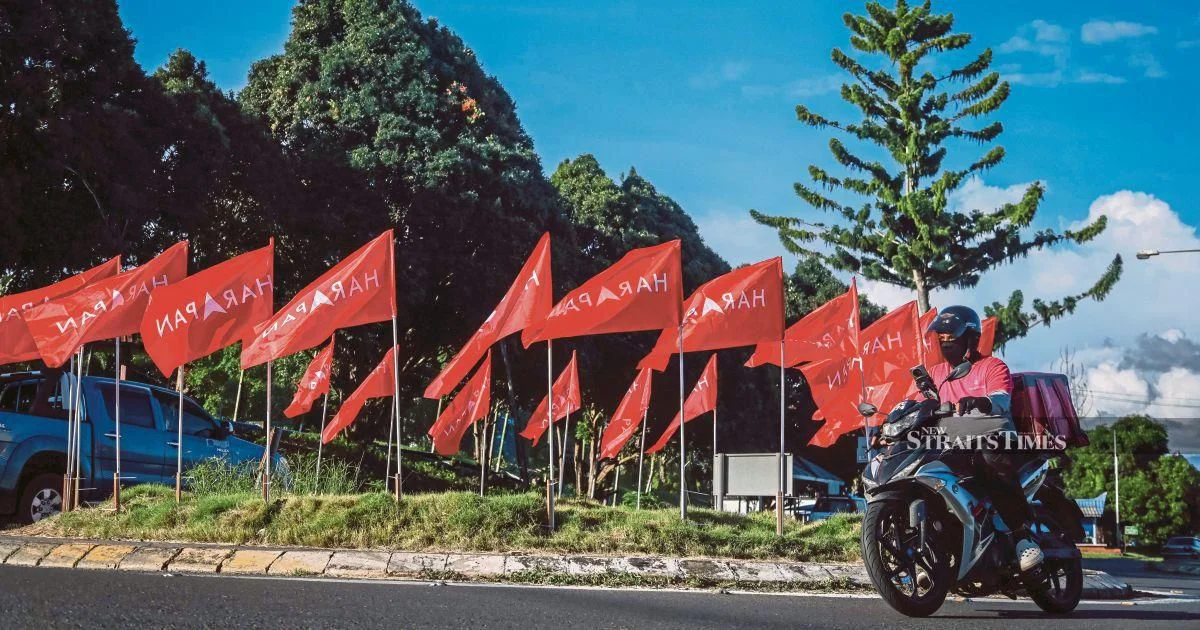
Pakatan Harapan has signalled that it will proceed with announcing its choice for the next Johor menteri besar strictly according to its own timeline, firmly rejecting what the coalition views as attempts by opposing parties to influence or accelerate such a decision.
The statement reflects a calculated strategy by the ruling federal coalition to control the narrative around the 16th Johor state election. Rather than succumbing to what analysts describe as psychological tactics from rivals, PH leadership has opted to maintain operational autonomy over one of the most critical political decisions heading into the electoral contest. This approach allows the coalition to maximise strategic flexibility, conduct thorough candidate vetting, and build internal consensus among its component parties before committing publicly.
Johor represents one of Southeast Asia's most economically significant state territories and a politically crucial battleground for Malaysian federal politics. The state has historically served as a bellwether for national electoral trends, making the selection of its chief minister an exercise laden with strategic implications. PH's refusal to be rushed suggests the coalition is carefully weighing not only individual candidates' merits but also broader coalition dynamics and electoral calculations specific to Johor's political landscape.
The coalition's position underscores a broader pattern in contemporary Malaysian politics where timing and information management have become sophisticated tools of political competition. By controlling when and how it announces its candidate, PH retains the ability to surprise opponents, maximise media momentum closer to polling day, and prevent extended periods during which rival parties can build counter-narratives around the chosen figure. This delay-and-control strategy has become standard practice among major coalitions seeking electoral advantage.
Internal coalition dynamics within PH also warrant consideration when assessing the announcement delay. The coalition comprises multiple parties with distinct interests and organisational cultures—the Democratic Action Party, Amanah, Bersatu, and others—each potentially having preferred candidates or positions on the mentri besar selection. Navigating these internal preferences requires extensive negotiation and consensus-building, processes that simply cannot be rushed without risking factional friction or public perception of unfair treatment within the coalition.
The pressure PH references almost certainly originates from Barisan Nasional and Perikatan Nasional components, who may believe that forcing PH into an early announcement could expose vulnerabilities or allow them additional time to campaign against a known opponent. By declining to engage with this tacit pressure, PH denies its rivals this tactical advantage while simultaneously signalling confidence in its electoral positioning. The coalition's stance essentially communicates that it is not anxious about its candidacy and remains assured of its competitive position regardless of timing.
For Malaysian voters, particularly those in Johor, this deliberate postponement of the announcement serves a practical function: it extends the period during which the incumbent menteri besar or other PH figures can campaign on their administration's record without being overshadowed by internal candidate politics. This allows the coalition to frame the election around governance achievements and policy platforms rather than allowing the contest to devolve into personality-driven competition prematurely.
The regional context amplifies Johor's electoral significance. As Malaysia's southernmost state, Johor's economic performance and political stability influence broader Southeast Asian economic dynamics and bilateral relations, particularly with Singapore. An orderly, PH-controlled transition that reflects careful planning and coalition unity sends a positive signal to regional observers about political maturity and institutional stability, in contrast to what external observers might perceive as chaotic or fractious electoral processes.
Historically, Johor has experienced periods of political instability and defections that complicated governance and undermined public confidence in institutions. By taking time to select a menteri besar who enjoys broad coalition support and possesses genuine qualifications, PH can attempt to project an image of purposeful, deliberate leadership rather than reactive or emotionally-driven decision-making. Such an approach, though it may frustrate media observers and political commentators seeking immediate clarity, ultimately serves PH's long-term interests in establishing durable political arrangements.
The refusal to be pressured also reflects evolving sophistication in how Malaysian political coalitions manage information and expectations. Rather than viewing early candidate announcements as advantageous, PH leadership apparently calculates that maintaining strategic ambiguity until closer to the election date maximises its ability to respond to changing circumstances, incorporate late-breaking intelligence, and control the electoral narrative at its most influential moment.
Opposition parties attempting to force PH's hand may fundamentally misunderstand the current balance of political forces in Johor and Malaysia more broadly. PH's confidence in maintaining its position without being bullied into premature announcements suggests the coalition believes its electoral fundamentals are sound, its internal cohesion remains adequate for coherent campaigning, and rushing does not serve its interests. Until PH determines that the strategic benefits of announcing its candidate outweigh the advantages of delay, observers should expect the coalition to maintain its current posture of firm resistance to external pressure.

