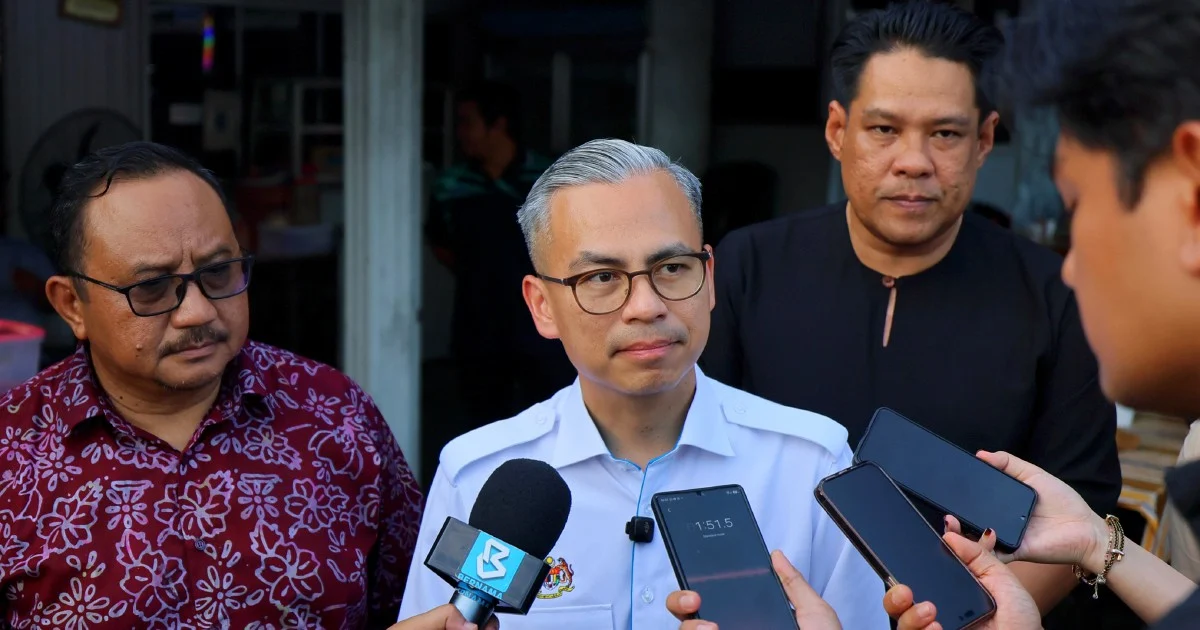
Pakatan Harapan has committed to pursuing a comprehensive dual-channel campaign strategy for the forthcoming Johor state election, designed to reach voters through both digital platforms and face-to-face community engagement. The coalition leadership outlined this integrated approach at an event in Batu Pahat, signalling recognition that modern electoral competition demands simultaneous operation across multiple communication channels to effectively penetrate different voter segments.
The strategic pivot represents a calculated response to the evolving media consumption patterns evident in Malaysian politics. Where campaigns once relied predominantly on town halls, door-to-door canvassing, and traditional broadcast media, the contemporary electorate is increasingly fragmented across social media ecosystems, streaming services, and messaging applications. By allocating resources to both spheres simultaneously, Pakatan Harapan aims to ensure no substantial voter demographic remains untouched by its messaging, whether elderly voters still primarily engaged with offline networks or younger constituents who conduct their political research and opinion formation almost exclusively online.
Digital campaigning offers Pakatan Harapan distinct operational advantages within Johor's diverse landscape. Social media platforms enable rapid message dissemination across geographically dispersed constituencies without the logistical constraints that traditionally limited campaign mobility. Targeted advertising capabilities allow the coalition to tailor messaging to specific demographic groups, while the shareable nature of digital content amplifies reach through organic user engagement. Additionally, online platforms provide measurable metrics through which campaign effectiveness can be assessed in real time, permitting tactical adjustments during the campaign period rather than retrospective analysis after voting concludes.
Conversely, ground-based campaigning maintains irreplaceable advantages that remain central to Malaysian electoral tradition. Personal interactions generate deeper emotional connections and trust than impersonal digital broadcasts. When coalition representatives engage directly with constituents in their communities, they gather qualitative intelligence about local concerns that algorithm-driven social media analytics cannot provide. Such engagements also permit Pakatan Harapan to directly counter misinformation circulating within communities and establish the coalition's authenticity through visible commitment to appearing among voters rather than maintaining distant digital presence.
Johor presents particular complications that justify the resource commitment to parallel campaign tracks. The state encompasses urban centres like Johor Bahru with sophisticated digital infrastructure and connectivity alongside rural areas where internet penetration remains incomplete and traditional communication methods retain dominance. Coastal and interior communities also maintain distinct social structures and information ecosystems. A unified single-channel approach would necessarily leave substantial portions of the Johor electorate inadequately engaged. The hybrid strategy acknowledges this granular reality.
The coalition's choice reflects lessons drawn from previous electoral contests across Malaysia and internationally. Electoral analysts have increasingly documented the insufficient effectiveness of exclusively online or exclusively offline campaigns in competitive races. Voters respond most robustly when campaigns establish presence across their natural communication channels rather than forcing engagement through unfamiliar mediums. Communities in which coalition representatives appear physically, whose local leaders share party messaging on social media, and whose residents encounter consistent messaging across multiple platforms demonstrate higher propensity toward supporting such parties compared to areas receiving unidimensional campaign attention.
Financial considerations also influence this strategic determination. While digital campaigning requires significant capital investment in content creation, platform advertising, and data analytics infrastructure, ground operations demand substantial spending on transport, venue rental, signage, and volunteer coordination. Concentrating resources exclusively on one approach necessarily means accepting inefficiency in the other channel. By deliberately allocating budgets across both spheres, Pakatan Harapan distributes financial risk while ensuring capability across all communication vectors available to modern campaigns.
The timing of this strategic announcement also carries political significance. Johor represents traditional Barisan Nasional stronghold territory, making this an especially challenging environment for Pakatan Harapan. The coalition presumably recognizes that victory requires mobilizing every available tactical advantage and leveraging all communication tools at its disposal. Appearing unprepared or operating at technological disadvantage relative to better-resourced opponents could prove electorally fatal in competitive constituencies. By publicly committing to comprehensive integrated campaigning, Pakatan Harapan signals confidence and organizational sophistication to the Johor electorate.
Implementing coordinated hybrid campaigns does present operational complexities. Message discipline becomes critical when communications flow through diverse channels without centralized quality control. Conflicting signals emerging from social media accounts, ground representatives, or local party chapters can undermine campaign coherence. Timing coordination matters greatly—messaging distributed online should align temporally with ground events, while ground encounters should reference online campaign narratives. Failure at these coordination points multiplies campaign vulnerability rather than strengthening it.
The broader implication for Malaysian politics involves increasing expectations that serious electoral contestants will operate across both digital and traditional channels simultaneously. Campaigns operating primarily through one avenue risk appearing technologically obsolete or organizationally inefficient to different voter segments. This development reshapes campaign funding requirements and volunteer skill expectations across the political spectrum. Smaller parties and independent candidates may struggle to resource such comprehensive approaches, potentially widening electoral advantages for well-funded coalitions like Pakatan Harapan and Barisan Nasional that possess existing organizational infrastructure and fundraising capacity.
Regionally, this Johor campaign approach reflects broader Southeast Asian political trends as countries throughout the region grapple with integrating digital innovation into traditional electoral processes. Thailand, Indonesia, and the Philippines have observed similar shifts toward hybrid campaigning as election authorities and political parties recognize that demographic fragmentation requires simultaneous engagement across communication channels. Malaysia's adoption of such integrated strategies positions it within this regional pattern.

