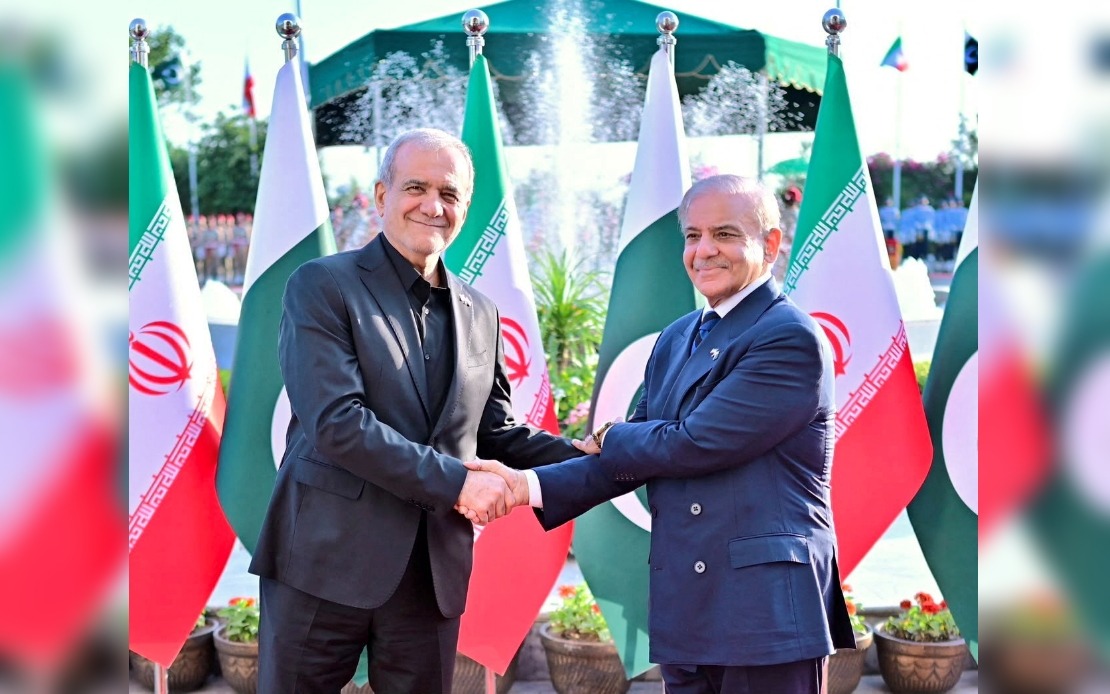
Pakistan's Prime Minister Shehbaz Sharif has emerged as a staunch defender of Iran's ballistic missile capabilities, rejecting what he characterises as discriminatory standards applied to Tehran's defence posture. During talks with visiting Iranian President Masoud Pezeshkian and his delegation in Islamabad, Sharif forcefully articulated Pakistan's position that Iran should face no restrictions on missile development that are not similarly imposed on other nations. His remarks represent a significant diplomatic statement from an influential regional player, coming mere weeks after Pakistan had brokered the memorandum of understanding between the United States and Iran that was finalised on June 17.
The Pakistan premier's key argument rested on the premise that missile capabilities were deliberately excluded from the recent understanding between Washington and Tehran. Sharif repeatedly stressed that ballistic weapons had never been part of the negotiating framework, were never discussed seriously by either party, and were specifically something the Iranian delegation chose not to raise during mediation efforts. This clarification appears designed to establish that Iran's continued missile development neither violates nor contravenes the newly signed accord. By framing the issue this way, Sharif sought to insulate Iran from international pressure whilst simultaneously legitimising Pakistan's role as an honest broker in the agreement.
The principle of equal treatment underpinned Sharif's reasoning. He articulated frustration with what he termed "double standards" whereby certain nations maintained extensive ballistic arsenals without scrutiny whilst Iran faced constant international criticism and sanctions pressure for developing similar capabilities. This argument carries particular resonance in Pakistan itself, a nation that has long maintained ballistic missile programmes as integral to its security doctrine. The position reflects broader South Asian and developing world grievances about Western-imposed restrictions on military technology that are selectively enforced based on geopolitical preferences rather than consistent international law.
Iran's own defensive calculations have been shaped fundamentally by recent military confrontations with Israel and the United States. Following significant Israeli and American strikes on Iranian territory on February 28, Tehran has consistently framed its missile programme as essential insurance against existential threats. President Pezeshkian reiterated this perspective during the joint appearance with Sharif, warning that without these defensive capabilities, Iran would face the fate suffered by Gaza and occupied Palestine—implying that Israeli and American forces would operate with impunity against Iranian targets and civilians. This stark articulation underscores how security concerns in the region remain deeply intertwined with regional military balance and historical precedent.
Pakistan's mediation role has substantially elevated its profile as a geopolitical actor capable of bridging deep divides between global and regional powers. The facilitation of the June peace understanding followed Pakistan's earlier efforts to negotiate a temporary ceasefire in April. These diplomatic achievements involved high-level Pakistani officials, including Deputy Prime Minister and Foreign Minister Ishaq Dar and Chief of Army Staff Field Marshal Syed Asim Munir, lending institutional weight to the mediation process. Sharif's public gratitude toward Iranian leadership for trusting Pakistan's intermediation efforts signals Islamabad's investment in maintaining strong bilateral ties with Tehran whilst simultaneously managing its complex relationship with Washington.
The ceremonial grandeur surrounding Pezeshkian's visit underscored the significance both nations attach to their bilateral relationship. The Iranian president received an honour befitting a major ally, with his aircraft escorted by six Pakistani Air Force fighter jets upon arrival and welcomed by Prime Minister Sharif and President Asif Ali Zardari. A 21-gun salute marked his reception, reflecting protocol typically extended only to heads of state of particular strategic importance. Such pageantry communicates to international observers that the Pakistan-Iran relationship transcends routine diplomatic courtesy and reflects genuine strategic alignment on key regional questions.
Sharif's acknowledgment that "spoilers" exist globally who seek to undermine the US-Iran accord suggests awareness that significant international actors remain invested in perpetuating US-Iranian hostility. The Pakistan leader did not identify specific countries, but his reference implicitly acknowledged that powerful actors view the peace understanding as contrary to their interests. Israel has indeed objected to the accord and continues military operations across Lebanon and Gaza, actions that complicate the diplomatic framework even as it was being finalised. These tensions indicate that the June agreement, whilst significant, represents only one development within a broader regional security architecture characterised by multiple overlapping conflicts and competing strategic objectives.
US President Donald Trump's public concession that Iran should be permitted ballistic missiles provided unexpected international legitimacy to the Pakistani position. Trump's statement from Paris on June 17—asserting that denying Iran missiles whilst permitting other nations to possess them constituted unfairness—aligned remarkably with Pakistan's rhetorical framing. This convergence between American and Pakistani statements, mediated through the accord, suggests the agreement created rhetorical space for defending previously contentious aspects of Iranian military capabilities. However, Trump's endorsement likely reflects his transactional approach to foreign policy rather than any fundamental American shift toward accepting Iranian military strength.
For Malaysian and Southeast Asian observers, these developments carry implications for broader questions about how regional powers navigate superpower competition and manage their own security concerns. Pakistan's defence of Iran's missile rights mirrors similar arguments made by other nations seeking to resist externally-imposed limitations on their military autonomy. The successful negotiation of the US-Iran accord demonstrates that major disputes can be mediated through persistent diplomatic engagement, even when underlying security concerns remain acute. Conversely, the persistence of Israeli military operations and American-Iranian tensions despite the agreement illustrates how formal accords may establish frameworks without resolving the deep conflicts that generated them initially.
The question of whether this peace understanding will produce durable reduction in tensions remains uncertain. Pakistan's investment in maintaining the agreement's integrity through continued diplomatic affirmation of Iran's security concerns suggests Islamabad views the accord as serving crucial Pakistani interests, likely related to regional stability, energy security, and managing the China-Pakistan Economic Corridor that runs through territory affected by regional conflicts. Pakistani policymakers appear to believe that supporting Iran's security demands strengthens the accord's legitimacy and makes Iranian compliance with non-proliferation aspects more likely. This logic reflects sophisticated understanding that security agreements succeeding when all parties believe their fundamental interests have been respected and protected by the negotiated framework.

