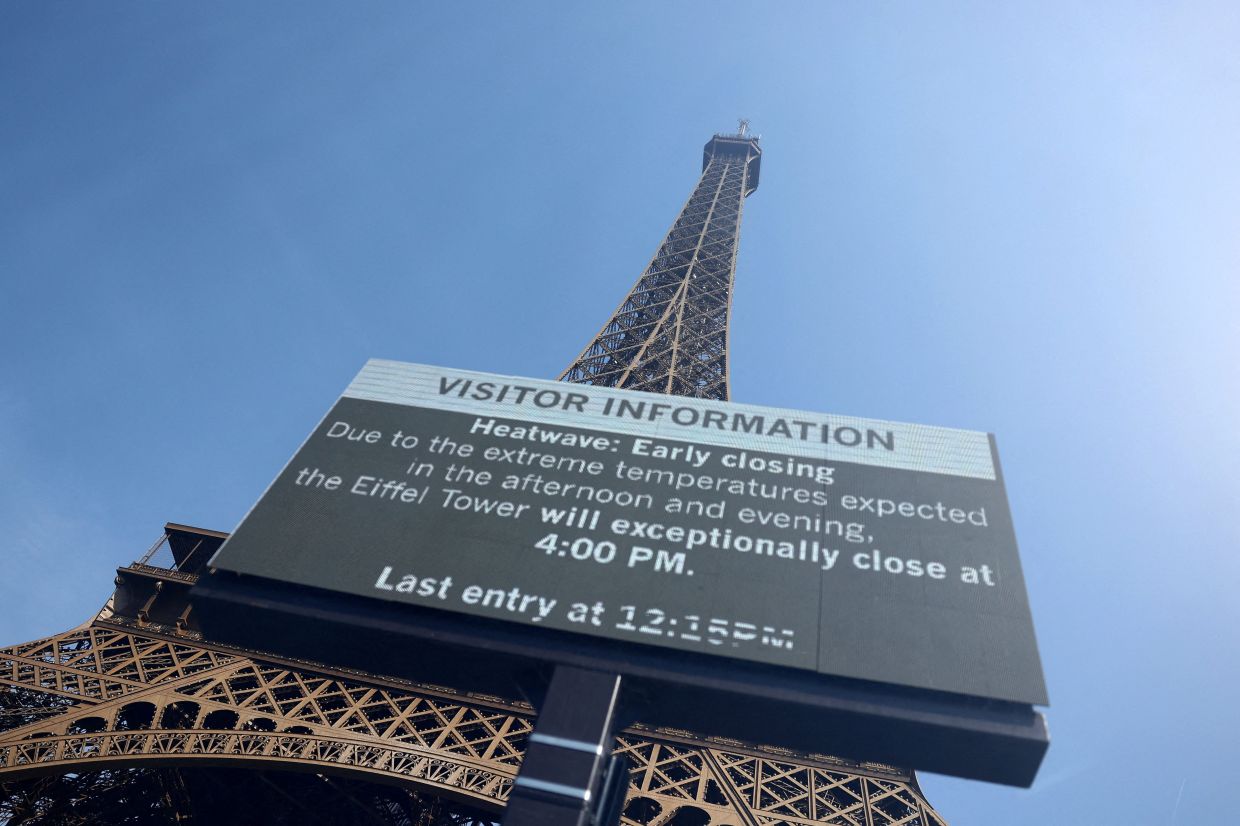
A punishing heatwave swept across France this week, forcing two of Europe's most iconic tourist attractions to shut their doors earlier than scheduled. The Eiffel Tower ceased operations at 4pm on June 23, while the Louvre also implemented shortened hours as temperatures reached record-breaking levels. The disruption left international visitors stranded, forcing hasty changes to carefully planned itineraries and raising fresh questions about how major cultural institutions will cope as extreme weather becomes increasingly common across Europe.
For many tourists, the timing could hardly have been worse. Maite Blazques, a 35-year-old nurse from Madrid, had spent months saving to bring her six-year-old son to Paris for what was meant to be a dream holiday. Instead, she found herself completely reworking the entire trip around the oppressive heat. The closure of key landmarks meant cancelling a guided tour through the historic Marais district, forgoing a scenic river cruise, and abandoning plans to ascend the Eiffel Tower. "We had to change our whole trip," she explained, her disappointment evident as she held her son's hand. The timing coincided with June 23, when France experienced its hottest day since official temperature measurements began in 1947—a milestone that underscores the unprecedented nature of the conditions gripping the nation.
The Eiffel Tower's early closure proved particularly disruptive. Normally operating past midnight during the busy summer season, this iconic monument attracts around seven million visitors annually. The 324-metre structure's decision to "exceptionally close" signalled just how severe conditions had become, with management indicating it was "very likely" further shortened hours would follow. American tourist Tamara Dancer found her scheduled guided tour cancelled without warning on Tuesday afternoon, leaving her to grapple with rearranged plans and lost time. For many international visitors, the tower's unavailability transformed a bucket-list experience into a missed opportunity.
The strain extended far beyond the Eiffel Tower. The Louvre, world's most visited museum with approximately nine million annual visitors, also faced pressure from the extreme temperatures. Management acknowledged that the sprawling palace, which has been constructed and expanded over centuries by successive French monarchs and presidents, was "not sufficiently adapted to climate change." This candid assessment hints at deeper structural vulnerabilities that museums across Europe may need to confront as heatwaves become more frequent and intense. The Louvre has already weathered numerous crises over the past year, including a brazen US$100 million jewellery heist, significant water leaks, and assorted maintenance problems—making these additional climate-related challenges particularly burdensome.
Tourists elsewhere in the capital improvised ways to endure the scorching conditions. Armed with umbrellas, hats, and portable fans, visitors attempted to navigate Paris's pavements, which seemed to radiate heat back at them with every step. John Beeler, a 45-year-old American engineer, expressed his frustration plainly: the experience of visiting Paris in such extreme heat was simply awful. Despite wearing protective gear—a fisherman's hat and small fan—he and his wife felt overwhelmed by the inescapable warmth. "We're suffocating in the streets, we're suffocating in the subway and we're even suffocating in our rental," he said, before deciding to relocate to an air-conditioned hotel room for some relief.
Drake Winners, a 66-year-old retired visitor from London, articulated a sentiment many seasoned travellers share: Paris's true magic lies in exploring the city on foot, wandering through neighbourhoods at a leisurely pace. Yet the extreme heat rendered this fundamental experience nearly impossible. Instead of enjoying the streets, he retreated into museums and churches—the few sanctuaries where cooling remained available. This strategy allowed him to explore the Louvre's world-renowned collections, but it fundamentally altered his Paris experience, reducing it from dynamic urban exploration to refuge-seeking in air-conditioned spaces.
The crisis extends well beyond Paris. More than half of mainland France remains under the weather service's highest alert level, prompting numerous tourist sites to announce early closures or issue warnings. Mont Saint-Michel, the spectacular island fortress in Normandy and France's most visited tourist attraction outside the capital region, issued explicit guidance to potential visitors. The site urged people to "put off your visit during the red alert," acknowledging that conditions posed genuine risks to visitor safety and wellbeing. Such recommendations, while responsible, inevitably ripple through Europe's tourism economy as travellers cancel bookings and shift their plans.
For Malaysia and Southeast Asia, this situation carries important implications. Many regional tourists—whether from Malaysia, Singapore, Thailand, or Indonesia—plan European trips during their own winter months, often inadvertently selecting periods that increasingly align with European summer heatwaves. The closures and disruptions in Paris provide a cautionary tale for travel planning. Tour operators and travel agencies across Southeast Asia should consider how climate variability is reshaping the traditional European tourism calendar, potentially forcing clients to choose between accepting shortened itineraries or shifting travel dates entirely.
The broader challenge confronting heritage institutions like the Louvre and the Eiffel Tower speaks to a global phenomenon. These monuments were designed and constructed in eras when extreme heat presented less frequent challenges. Adapting 19th-century buildings and systems to 21st-century climate realities requires substantial investment—infrastructure upgrades, ventilation improvements, and potentially limiting visitor numbers during peak heat events. The Louvre's frank admission about insufficient climate adaptation suggests other major cultural venues face similar vulnerabilities, particularly across Mediterranean and continental Europe.
From a tourism industry perspective, the heatwave exposes the fragility of business models dependent on consistent operations and predictable weather patterns. Hotels, restaurants, transport services, and attractions all rely on stable conditions. When extreme events force closures, they trigger cascading economic losses—disappointed tourists spend less, cancel activities, and leave negative reviews that influence future visitations. For France's tourism sector, which generates substantial revenue and employment, such disruptions carry real financial consequences beyond the immediate inconvenience to individual visitors.
Looking ahead, the incidents in Paris during late June 2023 may represent a preview of future summers across Europe. If climate projections hold—and current evidence suggests they will—extreme heat events may become regular rather than exceptional occurrences. This trajectory challenges the fundamental viability of existing tourism models, the design assumptions underlying major attractions, and visitors' ability to experience Europe's cultural treasures as they have historically done. The question is no longer whether climate change will impact tourism, but rather how quickly the industry will adapt.

