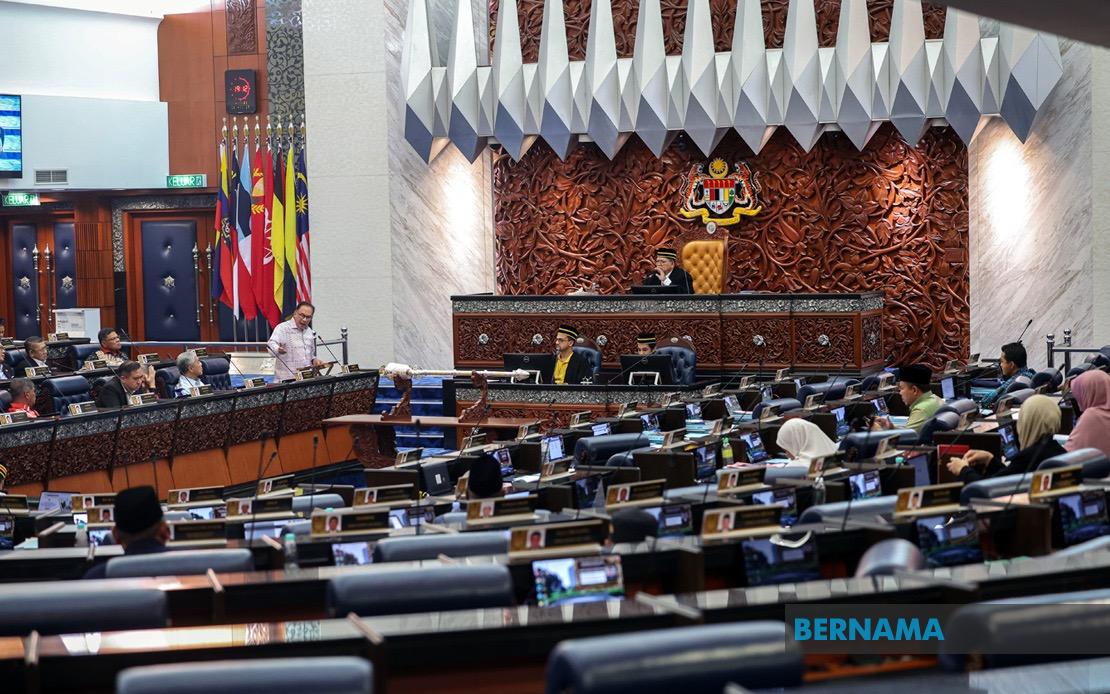
Parliament has formally approved the channelling of RM14.5 billion from remaining Malaysian Government Investment Issues (MGII) into the Development Fund, completing a key financing mechanism for the nation's infrastructure and development spending. The motion passed through a voice vote in the Dewan Rakyat on July 15, following remarks from Datuk Seri Ismail Abd Muttalib and Datuk Zulkafperi Hanapi, underscoring the legislative commitment to sustaining development expenditure despite fiscal pressures.
Deputy Finance Minister Liew Chin Tong provided detailed insight into how the Development Fund operates within Malaysia's budgetary architecture. The fund receives revenue through multiple channels: transfers from the Consolidated Revenue Account, which comprises tax and non-tax income; repayments of previous loans; and proceeds earmarked specifically for development initiatives. This diversified funding approach allows the government to maintain separation between operating costs—which must be covered through conventional taxation—and capital expenditure, which can be financed through borrowing.
The broader context reveals that the RM14.5 billion represents only the net proceeds from MGII issuances between January and May 2026. The government issued RM40 billion in gross MGII during this five-month window, but RM25.5 billion was immediately redeployed to refinance maturing MGII obligations, leaving the RM14.5 billion available for fresh allocation to development purposes. This refinancing component highlights the rolling nature of government debt management, where maturing securities must be renewed to avoid disruption to the government's financing capacity.
The total MGII programme for 2026 is substantially larger, with Liew confirming estimated total issuance of RM95 billion across the full year. This vast borrowing operation serves three distinct purposes: RM55 billion addresses the refinancing of earlier MGII debt coming due, RM2 billion partially funds the redemption of Malaysian Islamic Treasury Bills, and the remaining RM38 billion contributes to covering the fiscal deficit expected in 2026. The allocation reveals the government's reliance on debt markets to bridge the gap between revenues and total expenditure commitments.
Under Malaysia's constitutional and legal framework, the government faces strict borrowing constraints that separate development from operating finances. Development expenditure enjoys borrowing privileges since infrastructure and capital assets theoretically generate future returns and economic growth. Operating expenditure—covering civil service salaries, pensions, and recurrent administrative costs—must rely entirely on tax revenue and other non-debt income. Liew's emphasis on this distinction underscores the government's adherence to fiscal rules designed to prevent unsustainable debt accumulation driven by day-to-day spending.
The pace of MGII issuance and the scale of the overall borrowing programme prompt questions about debt sustainability, particularly given Malaysia's existing commitments. Liew addressed concerns about potential crowding out in the domestic financial market, where substantial government security issuances could absorb savings that might otherwise flow to private enterprises. He noted that the government has been moderating its borrowing growth year-on-year, suggesting a conscious effort to manage debt trajectory. However, the RM95 billion MGII issuance for a single year remains substantial, reflecting ongoing fiscal pressures from pandemic-era commitments, social spending, and infrastructure investment.
The Deputy Finance Minister reframed the crowding-out concern by highlighting the symbiotic relationship between government borrowing and domestic institutional investors. The Employees Provident Fund, the Retirement Fund Incorporated, and other Malaysian financial institutions require reliable, secure investment vehicles that offer competitive returns. Government securities provide exactly this function, allowing these institutions to deploy member contributions and pension assets while earning returns that support long-term benefit obligations. Without such domestic investment opportunities, capital might flow overseas, potentially weakening the ringgit and raising foreign borrowing costs for both government and private sector.
The announcement that additional MGII issuances covering June through December 2026 will require parliament approval at the next sitting maintains legislative oversight of government borrowing. This staged approach prevents any single parliamentary session from becoming excessively burdened by financing motions while ensuring regular parliamentary scrutiny of debt accumulation. It also allows adjustment if economic conditions or revenue performance change materially between approval sessions.
For Malaysian investors and asset managers, these MGII transfers carry implications for market liquidity and investment returns. Continued large-scale government security issuances typically support bond market depth and pricing transparency, benefiting both institutional and retail investors. However, they also compete for attention with private sector debt instruments, potentially affecting corporate bond spreads and private capital availability. The government's messaging about moderating future borrowing growth will be closely watched by markets assessing long-term debt sustainability and ringgit strength.
Regionally, Malaysia's approach to separating development and operating borrowing reflects broader Asian governance practices, though implementation rigor varies significantly across the region. The parliamentary approval process and transparent explanation of fund allocation mechanisms demonstrate institutional mechanisms for fiscal accountability, distinguishing Malaysia from less formally constrained borrowing regimes. As Southeast Asian nations navigate post-pandemic fiscal recovery and infrastructure ambitions, Malaysia's experience with balancing development financing against debt concerns offers relevant lessons.
The RM14.5 billion transfer, though technical in nature, exemplifies how modern governments operationalise fiscal policy within constitutional constraints. The money does not represent new debt creation—it merely redirects already-issued MGII proceeds from the Consolidated Loan Account to the Development Fund—but its approval confirms parliament's control over development spending priorities. This distinction matters because it shows that while the government can borrow extensively for development, how those borrowed funds are ultimately deployed remains subject to legislative determination.
Looking ahead, the government's willingness to present regular MGII transfer motions suggests confidence in parliament's appetite for approving development financing, at least under current economic conditions. However, if debt-to-GDP ratios rise significantly or ringgit weakness accelerates, pressure may mount to moderate borrowing ambitions. The July 2026 approval thus represents not just a financing decision for immediate development needs, but an implicit statement about the government's medium-term fiscal trajectory and its assumption that parliament will continue supporting development borrowing at substantial levels.

