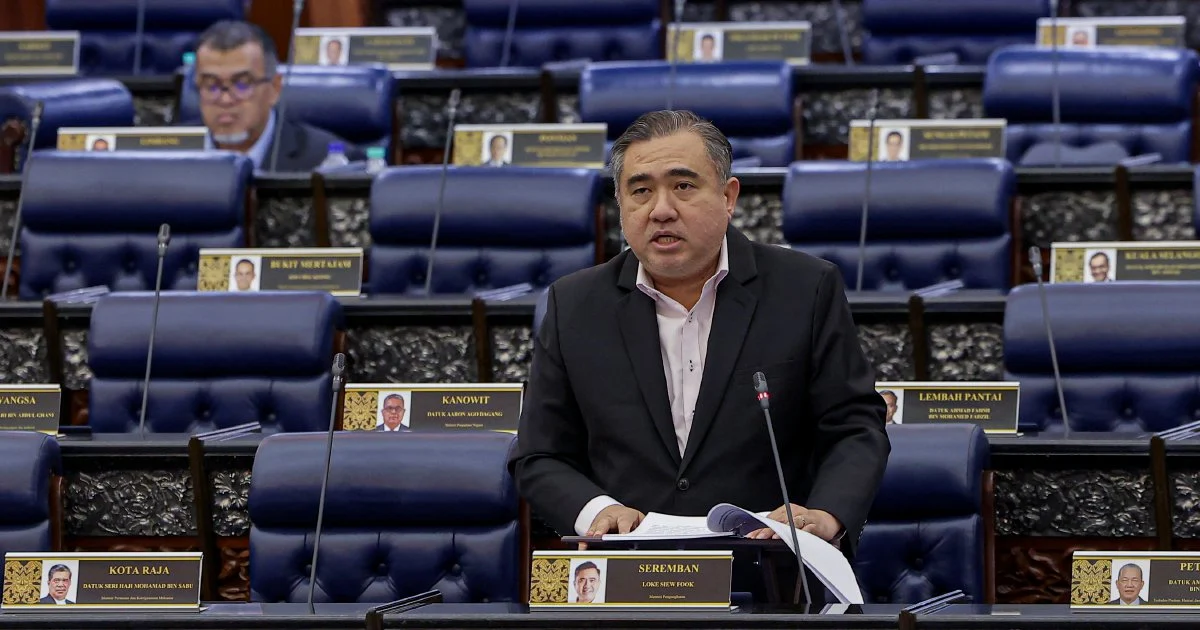
Malaysia's Parliament has given its blessing to the Road Transport (Amendment) Act 2026, a legislative step that represents a significant expansion of government authority in managing the nation's increasingly complex transportation landscape. The measure cleared the Dewan Rakyat following debate among lawmakers, setting the stage for more stringent controls over vehicle operations and road transport service providers operating across the country.
The amendments to the foundational Road Transport Act 1987 come at a critical moment for Malaysia's road safety agenda. Over the past decade, vehicular transport has transformed dramatically with the proliferation of ride-hailing services, increased commercial logistics operations, and evolving vehicle technologies. The 1987 legislation, while historically robust, required updating to address contemporary challenges that simply did not exist when the original Act was drafted. This amendment directly responds to those contemporary realities, granting the authorities enhanced tools to manage modern transportation dynamics.
Enhanced regulatory powers represent the legislation's cornerstone benefit. Under the amended framework, transport authorities will gain expanded capacity to impose conditions on operators, demand compliance with updated safety standards, and institute oversight mechanisms that reflect current industry practices. This proves particularly relevant for ride-hailing operators and logistics companies that have operated in ambiguous regulatory spaces, often navigating frameworks designed for traditional taxi and bus services. The clearer authority structure should eliminate grey areas that previously allowed some operators to function with minimal accountability.
Enforcement mechanisms stand to improve substantially under the new provisions. The amendments equip authorities with strengthened investigative powers and clearer pathways to penalise non-compliance. This could manifest through enhanced capacity to conduct roadside checks, demand documentation from operators, and take swift action against violations. For consumers and legitimate businesses alike, robust enforcement creates a more level playing field where corners cannot be cut with impunity, ultimately protecting public safety and fair competition.
The timing of this legislation carries significance for Southeast Asia's transport sector. As regional integration accelerates and cross-border vehicle movements increase, harmonising Malaysia's regulatory framework with international standards becomes increasingly important. The amendment positions Malaysia to better align with ASEAN transport protocols and international vehicle safety conventions, facilitating smoother operations for legitimate operators while maintaining the regulatory oversight necessary for a developing nation managing dense urban traffic and extensive intercity transport networks.
The implications extend beyond mere bureaucratic oversight. Road safety remains a persistent concern in Malaysia, with accident rates continuing to impose substantial costs on the healthcare system, insurance industry, and families affected by tragedies. Stronger regulatory powers targeting vehicle maintenance standards, driver qualifications, and operational safety protocols directly support Malaysia's long-term vision of reducing road fatalities and injuries. When properly implemented, enhanced regulation typically correlates with improved safety outcomes, though execution and resource allocation will determine real-world effectiveness.
For operators in Malaysia's transport sector, the amendment signals a shift toward more formalised operations. Those who have already invested in compliance infrastructure will benefit from a level playing field, as competitors cannot undercut through regulatory arbitrage. However, smaller operators and informal service providers may face adjustment costs as they adapt to new compliance requirements. The government will likely need to implement transition periods and support mechanisms for legitimate operators caught between the old and new regulatory regimes.
Consumer protection dimensions also factor prominently in the legislative design. Ride-hailing users, passengers on commercial buses, and freight customers benefit from clearer accountability structures. When regulatory authorities possess explicit enforcement powers, companies operating in these spaces face stronger incentives to maintain service standards, vehicle cleanliness, driver professionalism, and safety protocols. This potentially elevates consumer experience across the transport sector while reducing instances of predatory pricing or unsafe practices.
The amendment's passage through Parliament suggests broad political consensus on transport regulation, despite the legislative landscape's often contentious nature. This bipartisan support reflects a growing recognition that transport infrastructure and regulatory frameworks constitute essential public goods requiring government intervention. The smooth passage likely also reflects pressure from safety advocates, consumer organisations, and transport workers seeking clearer working conditions and stronger protections.
Looking forward, implementation will prove crucial to determining whether the amendment delivers meaningful improvements. Authorities will require adequate funding, well-trained personnel, and clear implementation guidelines to translate legislative authority into practical enforcement. The Ministry of Transport will need to develop detailed regulations specifying how enhanced powers function operationally, what compliance deadlines apply, and how different operator categories integrate into the new framework.
For Malaysian businesses and citizens, the Road Transport (Amendment) Act 2026 represents government acknowledgment that transport regulation demands modernisation. As the nation develops and urbanises further, the tools available to manage transport safely and fairly must evolve alongside that development. This legislation takes a meaningful step in that direction, though realising its potential will depend on conscientious implementation and sustained commitment to public safety objectives.

