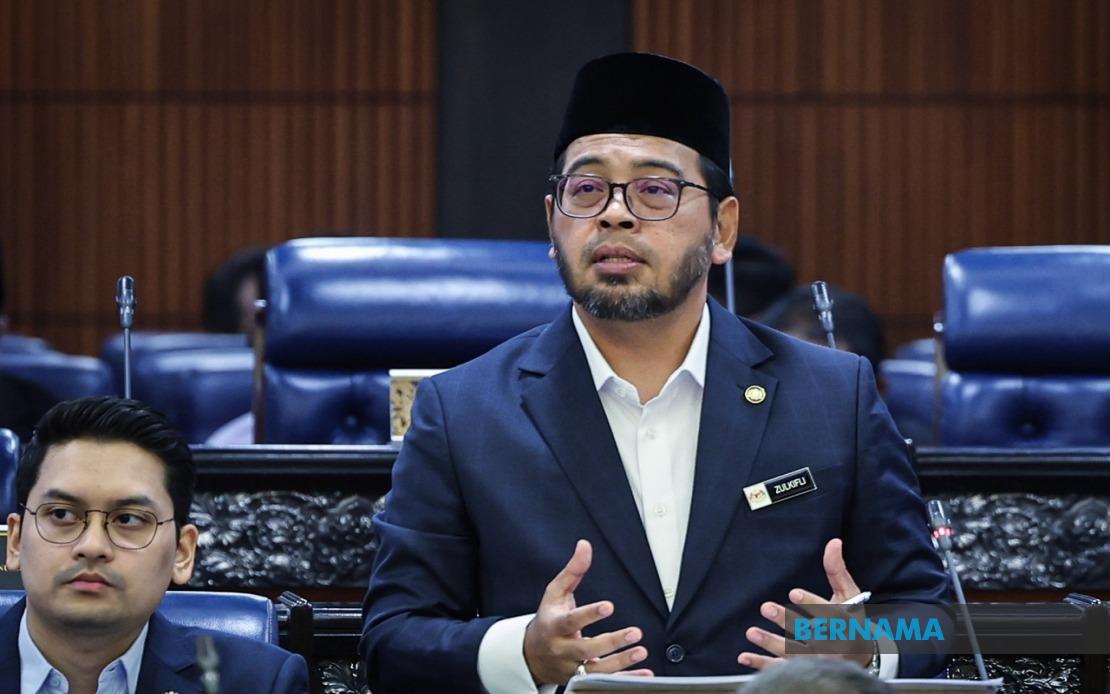
Parliament undertook an extensive examination of the Tabung Haji crisis on August 11, with lawmakers unanimously demanding systemic overhauls to prevent future scandals at the institution entrusted with managing pilgrimage affairs for millions of Malaysian Muslims. The special Dewan Rakyat sitting stretched beyond ten hours as 39 MPs wrestled with the implications of a Royal Commission of Inquiry report that exposed serious governance failures spanning the 2014-2020 period. The proceedings revealed a institution that had accumulated staggering losses while inadequate oversight mechanisms allowed questionable investment decisions to flourish unchecked.
The scale of Tabung Haji's financial deterioration emerged through detailed ministerial briefings documenting nearly RM13 billion in aggregate losses across 14 problematic investment ventures. Of this total, the government absorbed RM10.2 billion through an emergency bailout executed in 2018 involving the establishment of Urusharta Jamaah Sdn Bhd as a holding vehicle for troubled assets. The remaining RM2.6 billion represented additional impairment charges that Tabung Haji itself absorbed between 2018 and 2025 as investments under its continued management deteriorated further. This bifurcated loss-sharing arrangement underscores the depths of mismanagement that preceded intervention, with taxpayers ultimately bearing the larger burden while depositors' savings faced ongoing erosion.
One particularly egregious example highlighted during proceedings involved the Al-Rawda Real Estates Development scheme, where intermediaries received 1.4 billion Saudi riyals—approximately RM1.5 billion—ostensibly to secure hotel leases in Makkah and Madinah for pilgrims. The arrangement collapsed spectacularly when the counterparty failed to remit lease payments, forcing Tabung Haji to recognize a full RM1 billion impairment in 2024. Such transactions exemplify the absence of adequate due diligence, contractual safeguards, and independent verification that should characterize institutional investment protocols. The willingness of management to channel such sums through intermediaries without demonstrable accountability mechanisms suggests a troubling culture of discretionary decision-making divorced from fiduciary responsibility.
Parliamentarians directed particular emphasis toward legislative remedies, with sustained calls for expedited amendments to the Tabung Haji Act 1995. The existing statutory framework, built during a different era of regulatory expectations, lacks provisions sufficiently robust to prevent the concentration of decision-making authority that enabled past abuses. MPs stressed that legal reform must establish clearer investment parameters, mandatory independent auditing protocols, and enhanced reporting requirements that provide real-time visibility into portfolio performance and counterparty creditworthiness. Beyond legislative architecture, lawmakers emphasised the necessity for structural separation between political leadership and operational management, recognising that governance weaknesses frequently originate when institutional autonomy becomes subordinated to external political considerations.
Accountability mechanisms emerged as another focal concern, with parliamentarians insisting that the RCI's 25 recommendations must trigger thorough criminal and administrative investigations into individuals responsible for losses and governance breaches. Multiple MPs explicitly referenced instances where detained individuals faced allegations involving bribery, abuse of authority, and systematic governance violations. The government's acknowledgment that investigations had commenced provided limited reassurance to legislators frustrated by historical patterns where institutional failures resulted in minimal personal consequences for decision-makers. Lawmakers argued that credible accountability serves not merely punitive purposes but functions as an essential deterrent mechanism, signalling that fiduciary violations carry genuine consequences rather than remaining abstract institutional failings absorbed by depositors and taxpayers.
The protection of depositor interests dominated parliamentary discourse throughout the extended sitting, reflecting widespread recognition that over 10 million Malaysians depend upon Tabung Haji as their primary savings vehicle for fulfilling the haj obligation. Minister in the Prime Minister's Department (Religious Affairs) Dr Zulkifli Hasan articulated the government's philosophy that institutional strength cannot depend upon particular individuals but must derive from comprehensive systems embodying transparent processes, multilayered controls, and robust governance structures. He emphasised that decisions should reflect legal frameworks, established policies, procedural requirements, and system-based checks rather than personality-driven judgments, ensuring institutional stability through generational transitions. This philosophical repositioning represents an implicit acknowledgment that past governance culture permitted excessive discretion concentrated in particular hands, creating vulnerability whenever those individuals departed or proved compromised.
Finance Minister II Datuk Seri Amir Hamzah Azizan provided additional reassurance regarding the government's recovery strategy by highlighting that the decision to initially defer public release of the RCI report was deliberately timed to permit Tabung Haji implementation of recommended remedial measures. By July 30, the institution had already operationalised 75 percent of the Commission's recommendations, suggesting meaningful progress in responding to identified weaknesses. The government further welcomed a parliamentary proposal establishing a multi-agency task force specifically dedicated to investigating investments demonstrating heightened loss potential, recognising that informal coordination mechanisms prove insufficient for managing cross-institutional financial risks. This taskforce represents an institutional innovation responsive to parliamentary pressure, though questions remained regarding resource adequacy, investigative authority, and coordination mechanisms with existing regulatory bodies.
The haj cost structure provided tangible evidence of Tabung Haji's recovery trajectory, with the government maintaining the pilgrimage fee at RM33,300 for three consecutive seasons spanning 2024 through 2026 despite inflation pressures and currency fluctuations. This pricing stability emerged through deliberate government subsidisation and cost management discipline, demonstrating that reform efforts had yielded concrete benefits for ordinary Malaysian pilgrims. The ability to sustain affordable access to the haj despite historical financial stress affirms that governmental intervention, while expensive, successfully prevented catastrophic institutional collapse that would have compromised millions of Malaysians' religious aspirations and life savings simultaneously. Yet this pricing achievement also creates political expectations that continued stability and affordability must accompany enhanced governance, creating dual imperatives for management transformation.
Parliamentary proceedings were notably complicated by the strategic absence of several opposition MPs who boycotted the special sitting, prompting criticism that they had abdicated their constitutional responsibility to scrutinise executive action and provide checks upon governmental power. Critics characterised the boycott as particularly inappropriate given that Tabung Haji's depositor base transcends partisan political divisions, with millions of ordinary Malaysians from all communities depending upon institutional integrity regardless of governmental political complexion. The walkout suggested that some legislators privileged partisan positioning over substantive parliamentary engagement with crisis management, a dynamic that parliamentary defenders of the sitting highlighted as undermining institutional accountability frameworks essential for public confidence. This tension between boycott strategies and fiduciary responsibility obligations illustrated deeper polarisation within Malaysian parliamentary culture, where institutional crises sometimes become obscured by political theatre.
The RCI's documentation of systematic governance weaknesses between 2014 and 2020 fundamentally reframed how Malaysian policymakers and the public conceptualise institutional oversight of religiously-significant organisations handling community savings. The 25 recommendations reflected technical and procedural deficiencies but also implicated broader questions regarding how religiously-motivated organisations should balance accessibility, affordability, and fiduciary responsibility when mobilising communal resources at scale. The parliamentary debate thus transcended narrow institutional reform discussions, engaging fundamental questions about governance culture within Malaysian religious institutions, appropriate balance between professional management autonomy and political accountability, and mechanisms ensuring that community-serving institutions remain responsive to beneficiary interests rather than becoming vehicles for individual advancement or political patronage.

