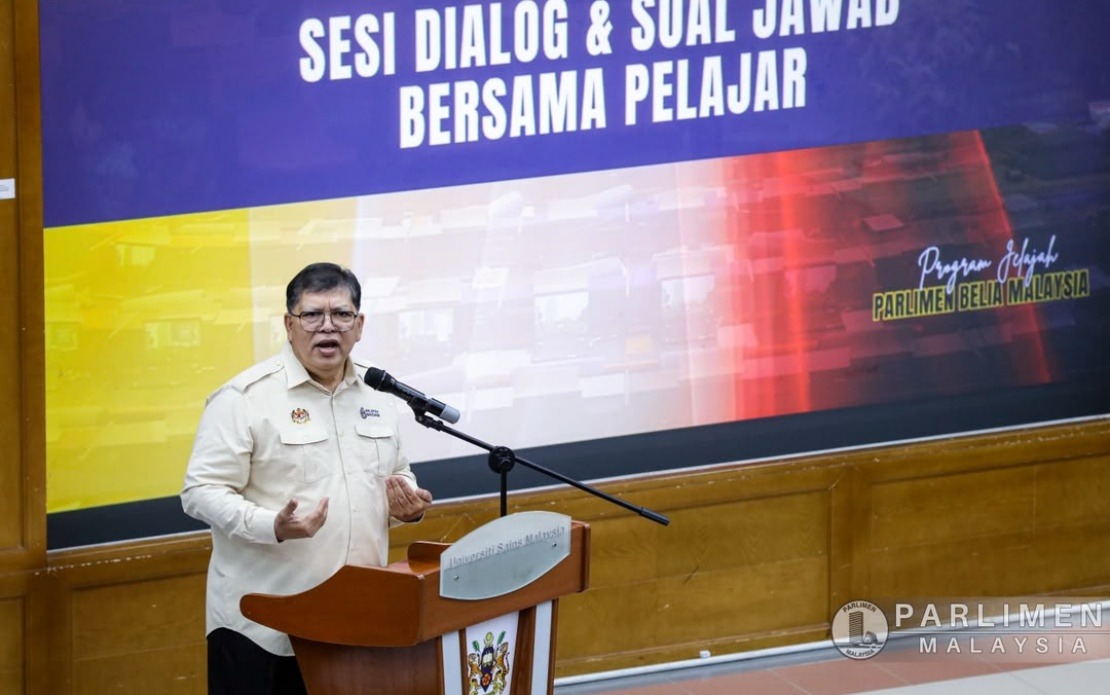
As Malaysia prepares for the Malaysian Youth Parliament (PBMy) to convene this September, the institution's leadership has issued a pointed reminder about the responsibility Parliament bears in shaping the democratic values of the nation's rising generation. Dewan Rakyat Speaker Tan Sri Johari Abdul has articulated a clear vision: the lower house must transcend its traditional function as a forum for legislative debate and instead serve as a living classroom demonstrating how democracy ought to operate. With the Youth Parliament's opening ceremony scheduled for September 11, the timing of this exhortation underscores a recognition that young Malaysians will be watching closely to see whether Parliament's members practise what the institution professes about democratic values.
Johari's remarks reflect a deeper concern about institutional credibility at a moment when trust in political institutions faces mounting scrutiny globally and within Southeast Asia. The Speaker emphasised that Parliament is not simply a workplace for Members of Parliament to advance their arguments, but rather the nation's paramount legislative authority and a benchmark against which society, particularly younger citizens, measures democratic health. This framing acknowledges an uncomfortable truth: that parliamentary conduct observed through social media and live broadcasts creates immediate, unfiltered impressions that shape how future voters and leaders understand democratic practice. The Speaker's call for MPs to "preserve the dignity of the House" carries implicit recognition that recent parliamentary sessions have, at times, fallen short of the decorum and substantive engagement expected from legislators.
The emphasis on setting a proper example takes on particular significance given the composition and purpose of the Youth Parliament. The Malaysian Youth Parliament operates as a scaled replica of the actual Parliament, with 222 seats mirroring the country's parliamentary constituencies. Critically, the youth body comprises parties that are explicitly non-partisan and separate from Malaysia's formal political structure. This distinction is important: the Youth Parliament functions as an educational and developmental platform rather than an extension of party politics. More than ten such youth-led parties have already been established within the framework, creating distinct political groupings that allow young Malaysians to experience coalition-building, internal party dynamics, and parliamentary procedure without the high stakes and entrenched partisan divisions of actual elections.
Parliament Malaysia has been conducting targeted outreach campaigns aimed at engaging 300,000 Malaysians aged between 18 and 30, the demographic eligible to participate in the Youth Parliament structure. This ambitious recruitment goal reflects the government's investment in creating a pipeline of civically engaged young people who understand parliamentary mechanics from direct experience. The electoral timeline for Youth Parliament is compressed but comprehensive: nominations opened on July 8, with official candidate lists announced on July 11. A 27-day campaign period running from July 12 through August 7 allows contenders to mobilise support before online voting commences on August 8 and 9. This accelerated schedule means that young participants gain exposure to the full cycle of electoral activity—campaigning, debate, and voting—within a concentrated timeframe.
The significance of Parliament's direct stewardship of the Youth Parliament programme cannot be overstated in the Malaysian context. Until October 2023, the initiative remained under the purview of the Ministry of Youth and Sports (KBS), operating as a youth-oriented outreach programme. The transfer of full management and implementation responsibility to Parliament Malaysia represents a strategic shift that elevates the Youth Parliament's status and integrates it more deeply into the parliamentary ecosystem. By bringing the programme in-house, Parliament has signalled its commitment to youth engagement while simultaneously accepting accountability for the quality of democratic education the initiative provides. The first full Youth Parliament session under Parliament Malaysia's management this September represents the maturation of an experiment that began in 2015.
Operational details reveal a structure designed for sustained engagement rather than one-off participation. Youth Parliament members will serve two-year terms, creating continuity and allowing participants to develop deeper understanding of legislative processes and develop longer-term relationships across party and factional lines. Sittings are scheduled three times annually, with each session spanning two days. This frequency ensures that the Youth Parliament remains a living institution rather than an occasional ceremonial gathering. Young members will thus accumulate genuine legislative experience: drafting motions, participating in debates, navigating procedural rules, and negotiating with peers across different viewpoints. For many participants, this hands-on exposure will far exceed what civics education alone can provide.
Speaker Johari's implicit message to sitting MPs carries particular weight: the behaviour they display in the Dewan Rakyat—the language they use, the respect or disrespect shown to opposing viewpoints, the focus on substantive policy or on personal attacks—will be directly observed and internalised by young people participating in the Youth Parliament. If parliamentary debates are characterised by point-scoring and inflammatory rhetoric, youth participants will absorb these norms and replicate them. Conversely, if the Dewan Rakyat demonstrates how mature democracies engage in vigorous but fact-based disagreement, where evidence and argument triumph over personal invective, young leaders will carry these standards into their future political careers. The Speaker's call for "courteous and solution-oriented" debate is not merely aspirational; it amounts to a pedagogical necessity.
For Malaysian readers, the implications extend beyond symbolic institutional renewal. Youth Parliament participants represent a cohort that will shape Malaysia's political landscape over the next two decades. Their formative experience of democracy—whether as one characterised by dignity and substantive engagement or by partisan rancour and personal assault—will influence how they vote, the standards they demand of future legislators, and the tone they set should they themselves enter electoral politics. This generational effect means that parliamentary conduct today carries downstream consequences stretching well into the future. The Speaker's warnings, then, are not sentimental appeals to institutional nostalgia but pragmatic observations about how parliamentary behaviour seeds expectations that reverberate across time.
The Youth Parliament also addresses a governance challenge common across Southeast Asia: how to deepen democratic participation and institutional trust among younger populations who have grown sceptical of traditional politics. Malaysia's approach—creating a structured, parliamentary-style institution that allows youth to experience democratic processes firsthand—represents a conscious effort to build legitimacy for democratic institutions from within. Rather than expecting young Malaysians to embrace Parliament as an abstract principle, the Youth Parliament invites them to inhabit parliamentary roles, understand the complexity of legislating, and appreciate the compromises inherent in democratic governance. This embodied learning differs fundamentally from passive citizenship education.
Registration and participation details are now public, with the official Malaysian Youth Parliament portal at https://pbmy.parlimen.gov.my/my/ providing comprehensive information for interested youth. The accessibility of this platform, combined with Parliament's outreach targeting 300,000 eligible participants, suggests determination to reach beyond traditional civic-minded cohorts into broader demographics. Success will be measured partly in registration numbers but more fundamentally in whether young participants emerge from the experience with strengthened commitment to democratic participation and elevated standards for institutional accountability. Speaker Johari has essentially declared that Parliament's own conduct will be the ultimate measure by which the Youth Parliament's educational mission succeeds or fails. That acknowledgment of institutional responsibility, made publicly and with clarity, establishes a standard against which the coming months of parliamentary proceedings will be assessed.

