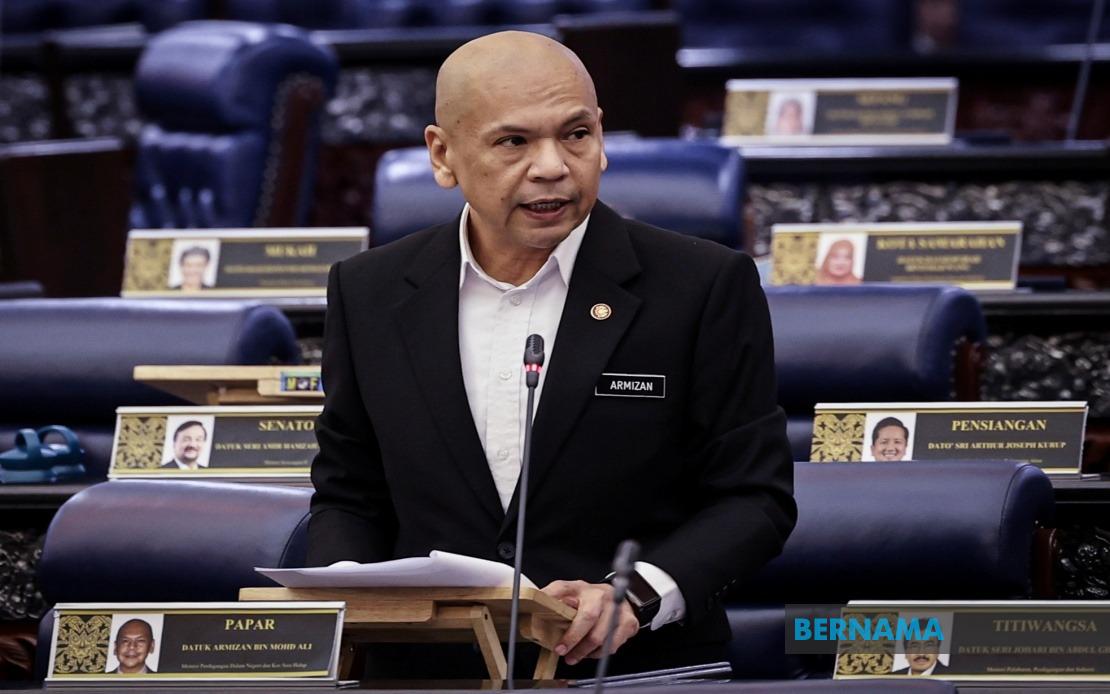
The parliamentary debate on Lembaga Tabung Haji's future has crystallized around a central demand: any formal investigation into the Royal Commission of Inquiry report must operate with absolute transparency and independence. Minister Armizan Mohd Ali articulated this consensus during the recent special sitting of Dewan Rakyat, warning that the current environment of competing accusations and public confusion threatens the credibility of whatever accountability measures follow. The underlying concern reflects a deeper anxiety about Malaysian public institutions—that without clear, impartial investigative processes, even legitimate findings risk becoming weaponized in partisan disputes rather than serving as a genuine mechanism for reform.
The Tabung Haji controversy represents a watershed moment for how Malaysia's government addresses institutional failures affecting ordinary Malaysians. The pilgrim fund manages savings from nearly a million depositors, many of them ordinary workers and retirees planning their religious obligations. When governance lapses emerge, the reputational damage extends beyond balance sheets to questions about whether institutional safeguards protect citizens' life savings. Armizan's emphasis on professional, fact-based investigation rather than finger-pointing signals recognition that public confidence cannot be restored through blame assignment alone—it requires demonstrable competence and integrity in the investigative process itself.
The parliamentary record reveals genuine division over how to interpret and act on the RCI's findings. Rather than dismissing criticism of the inquiry process, government figures are acknowledging that the proliferation of accusations across the political and bureaucratic landscape has muddied accountability. This acknowledgment matters because it suggests policymakers recognize that investigation conducted within a fog of mutual recrimination will yield diminished public confidence regardless of its technical quality. Armizan's point about the difficulty in distinguishing victims from accusers captures a legitimate institutional problem: when multiple parties claim defamation and slander, the public loses the ability to weigh evidence objectively.
The government's response indicates parallel tracks of action. Beyond investigation, the RCI's 25 recommendations demand systematic implementation and rigorous follow-up. As of late July, Tabung Haji had implemented approximately 75 percent of these recommendations, a pace that suggests operational momentum but also leaves material gaps. These recommendations touch governance structures, investment protocols, risk management, and board composition—the operational sinews that prevent future crises. The challenge lies in ensuring these improvements reflect genuine institutional learning rather than cosmetic adjustments designed to satisfy parliamentary scrutiny.
Minister Nancy Shukri's contribution to the debate illuminated a second governance question: the appropriate institutional home for Tabung Haji's operations. The proposal to divide responsibilities between the Prime Minister's Department (handling religious affairs) and the Finance Ministry reflects a specialized division-of-labor approach. This model assumes that separating religious administration from financial management prevents mission creep and ensures each domain receives appropriate expertise. For Malaysian depositors and policymakers, the merit of such restructuring depends on whether institutional boundaries actually improve oversight or create coordination gaps that sophisticated operators might exploit.
The appointment of board members emerged as a particular flashpoint in the parliamentary discussion. Shukri's framing advanced a performance-based argument: political background matters less than demonstrated competence, integrity, and relevant expertise. This represents a sophisticated attempt to acknowledge the reality of political appointments in Malaysia's governance ecosystem while establishing merit-based guardrails. However, the underlying tension persists: political appointments to institutional boards, whatever their individual qualifications, create structural incentives that may diverge from pure institutional interest. The question of how to operationalize Shukri's proposed criteria—establishing clear selection methods and expertise requirements—remains unresolved in the parliamentary record.
For Malaysian savers and the broader public, the RCI process itself has generated important insights into how major institutions can drift from their stated missions. The period between 2014 and 2020 witnessed management and operational weaknesses sufficiently serious to justify a formal royal inquiry. This history suggests that even well-intentioned institutional leadership can encounter mission creep, governance capture, or simply the organizational drift that accumulates when oversight mechanisms weaken. The RCI's emergence from shadow to public report represents a shift toward transparency that depositors should welcome, though implementation of its recommendations will ultimately determine whether the inquiry catalyzes genuine reform.
The special parliamentary sitting provided an opportunity for lawmakers to position themselves on institutional accountability and reform. Contributions from multiple members and ministers suggest broad consensus that Tabung Haji requires both investigative action and structural improvement. This alignment across the political spectrum may reflect genuine concern about protecting depositors and public institutions, or it may represent political consensus around low-controversy positions. Either way, the parliamentary record establishes political accountability for implementation of the RCI recommendations and investigation of its findings.
Looking forward, the investigation's transparency will become the crucial test of whether Malaysia's institutional accountability mechanisms function adequately. Enforcement agencies must operate with demonstrated independence from political pressure, releasing findings that reflect evidence rather than convenience. The investigation's scope—whether it focuses narrowly on potential legal violations or encompasses broader governance questions—will shape its utility as a deterrent against future institutional failures. Malaysian policymakers and depositors have legitimate interest in understanding how institutional failures occurred and what structural changes reduce their recurrence.
The Tabung Haji affair carries implications extending beyond this single institution. Malaysian governance structures, from government-linked companies to statutory bodies managing public funds, operate under similar incentive structures and governance frameworks. The RCI's findings and the subsequent investigation will establish precedents—both explicitly in terms of recommendations and implicitly in terms of how seriously Malaysia takes institutional accountability. For depositors and taxpayers whose life savings or tax contributions flow through such institutions, the rigor of the investigative response will signal whether Malaysia's governance ecosystem is genuinely committed to transparency and accountability or whether such commitments dissolve when serious questions arise.

