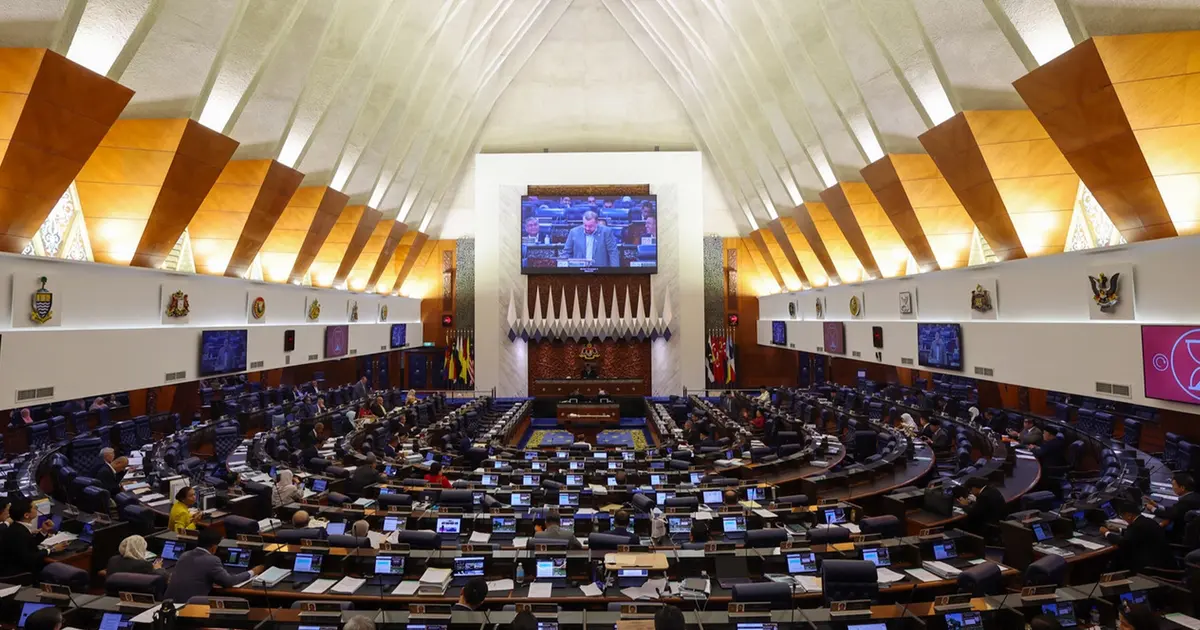
The Malaysian parliament is set to reconvene on Monday with an ambitious legislative agenda featuring four major bills, most notably a renewed push to constitutionally restrict the prime minister's time in office to a single decade. The proposal to cap the nation's highest executive position at ten years returns to the floor after an earlier attempt fell short of the supermajority support required to amend the Federal Constitution, underscoring the persistent divisions within the Dewan Rakyat on this contentious matter.
The prime minister tenure limitation proposal carries significant implications for Malaysia's political framework and the balance of power between branches of government. Constitutional amendments in Malaysia require endorsement from at least two-thirds of all members present and voting in the Dewan Rakyat, a threshold that has proven difficult to breach on this particular issue. The previous failure to secure this majority indicates that despite backing from some quarters, opposition or abstention from multiple parliamentary blocs prevented the measure from advancing, reflecting deeper ideological splits regarding executive authority and democratic safeguards.
Proponents of the ten-year tenure cap argue the restriction would prevent excessive concentration of power in a single individual, establish clearer succession planning, and encourage institutional strengthening independent of any single leader's personality or agenda. They contend that term limits create predictability for governance and allow more regular renewal of political direction through the democratic process. This perspective aligns with arguments made in other democracies where similar limits exist, particularly in presidential systems across Asia and beyond where term restrictions serve as constitutional checks on executive authority.
Opponents raise concerns about the practical implications of such measures, questioning whether artificial timeframes serve Malaysia's specific context and governance needs. Some worry that knowing their tenure is capped might paradoxically alter prime ministerial incentives in unintended ways, while others argue that Malaysian voters already possess the ultimate term-limiting power through elections and can remove sitting governments at any time. The debate reflects broader philosophical disagreements about whether constitutional codification or electoral accountability provides superior democratic protection.
The reintroduction of this bill demonstrates the government's determination to pursue institutional reforms despite previous setbacks. Success in the upcoming session would require either attracting additional parliamentary support since the last vote or demonstrating that the coalition commanding government formation has consolidated sufficient backing. The sensitivity surrounding the measure means debate is likely to be spirited, with opposition parties scrutinizing the timing, motivations, and practical consequences of the proposed amendment.
Beyond the tenure limit measure, the four-bill package addresses other significant governance questions, though details of these companion pieces remain subject to parliamentary processes and media reporting. Malaysian legislators will be balancing competing interests as they consider these proposals—the desire for democratic safeguards and constitutional clarity against concerns about operational stability and institutional continuity. The session therefore serves as a crucial barometer of parliamentary coalitions and the government's ability to translate its policy agenda into constitutional reality.
For Malaysian observers and regional analysts, this parliamentary sitting represents a telling moment regarding how the country's democratic institutions are evolving. Malaysia's constitutional framework, inherited from the immediate post-independence era, continues to be refined through amendment and reinterpretation as the nation grapples with contemporary political challenges. Successive governments have undertaken piecemeal constitutional adjustments to address specific grievances or institutional concerns, yet comprehensive reform remains elusive and often contentious.
The international dimension deserves note as well. Malaysia's decisions regarding executive power concentration and democratic institutional design carry subtle significance for the region, where questions of governance legitimacy and constitutional development occupy prominent positions in policy discourse. The outcome of Monday's session will likely influence how regional observers assess Malaysia's commitment to deepening democratic practices and constitutional restraint on executive authority.
Parliamentary dynamics have shifted considerably since the initial failed vote on the tenure limit provision. Coalition realignments, seat changes through by-elections, and shifts in party positions may have altered the mathematical calculus around achieving two-thirds support. The government would not likely reintroduce the measure without reasonable confidence in its prospects, suggesting behind-the-scenes negotiations have secured or consolidated the necessary parliamentary backing. Conversely, opposition parties may have refined their counter-arguments and consolidated their own positions regarding the measure.
The upcoming sitting also reflects broader patterns in Malaysian governance where constitutional amendments increasingly become battlegrounds for competing political visions rather than technical housekeeping matters. Whether this trend strengthens or weakens democratic institutions depends substantially on how these debates are conducted and which principles ultimately prevail in the Dewan Rakyat's deliberations.

