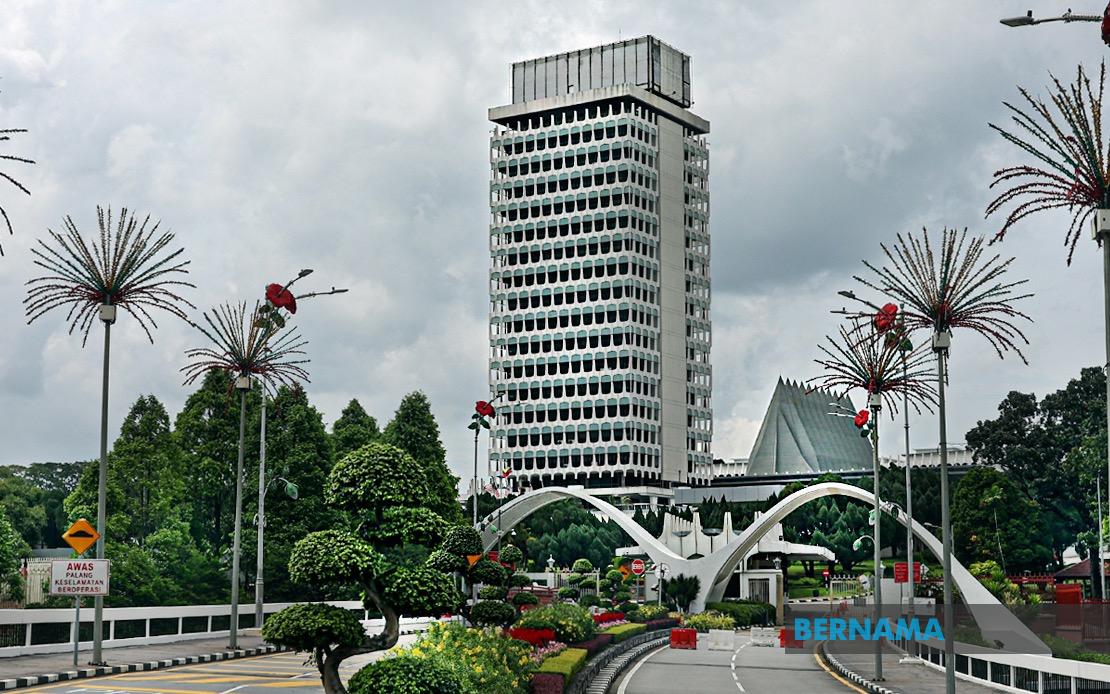
Parliament's first week of sitting this term has exposed the challenges facing the 15th legislature, with a meagre legislative output that underscores the ongoing tensions between government business and the work of securing parliamentary consensus. The Road Transport (Amendment) Bill 2026 emerged as the sole legislation passed during the week ending June 26, signalling a deliberate pace that may concern those anticipating swift action on the administration's reform agenda.
Transport Minister Anthony Loke framed the passage as a meaningful step forward despite the thin legislative menu. The amendment introduces Section 42A, a provision designed to arm enforcement agencies with tools to address illegal racing before tragedy strikes. Previously, authorities faced a frustrating legal constraint: they could only act against street racers once accidents occurred, injuries materialised, or fatalities mounted. This reactive posture effectively licensed dangerous behaviour until consequences became inevitable, creating what the minister characterised as a critical loophole in road safety legislation. The new provision allows the authorities to intervene at the planning stage, targeting the conduct itself rather than waiting for measurable harm.
The amendment also signals the government's broader commitment to road safety reform. Minister Loke flagged additional modifications to the Road Transport Act that will feature in Parliament later this year, particularly a compensation framework for victims of drink- and drug-impaired drivers. This two-stage approach reflects the complex task of constructing robust protections while navigating Parliamentary sensitivities. The existing penalties—fines and imprisonment—have proven insufficient deterrents for some offenders, particularly given that compensating accident victims remains haphazard under current law. Adding a mandatory compensation element would place financial consequences directly on impaired drivers, creating a more comprehensive penalty structure that balances punishment with restitution.
The legislative momentum stalled elsewhere, however, with the Prison (Amendment) Bill 2026 shelved before second reading. This legislation sought to introduce electronic monitoring for prisoners and formalise volunteer-led rehabilitation programmes—measures that carry significance for Malaysia's notoriously overcrowded correctional system. The decision to refer it back to the Parliamentary Select Committee signals either substantive concerns requiring deeper examination or tactical positioning ahead of more contentious debates. Other measures tabled for first reading, including the Sexual Offences Against Children (Amendment) Act 2026, Competition amendments, and the new Cybercrime Act 2026, remain in early stages, suggesting weeks of parliamentary attention before reaching conclusion.
Parliamentary administration registered significant personnel changes. The Speaker confirmed the reinstatement of Larut MP Datuk Seri Hamzah Zainudin as opposition leader effective June 18, a symbolic moment reflecting broader political realignments. Simultaneously, casual vacancies for Pandan and Setiawangsa seats—triggered by the May 18 resignations of Datuk Seri Rafizi Ramli and Nik Nazmi Nik Ahmad—now move toward by-election processes. The Election Commission's formal notification initiates constitutional machinery, potentially creating flash points for political competition in constituencies with distinct demographic and electoral characteristics.
Prime Minister Datuk Seri Anwar Ibrahim's absence from Question Time, delegated to relevant ministers due to other commitments, reflected the traditional flexibility of parliamentary scheduling but also illustrated the competing demands on the chief executive's attention. The shift toward allowing Parliamentary Select Committees presentation and debate time signalled an institutional emphasis on committee work, potentially compensating for the thin legislative agenda by strengthening oversight functions. This redistribution of parliamentary focus aligns with growing international recognition that committees often perform more substantive work than floor debates, particularly in scrutinising executive action.
Unemployment emerged as the week's dominant concern, with Human Resources Minister Datuk Seri R. Ramanan reporting that 42,807 workers faced retrenchment between January and mid-June. Company closures and workforce downsizing drove these losses, painting a labour market under stress. The figures assume particular significance for Malaysian readers given the economy's historical dependence on manufacturing and services sectors vulnerable to both domestic and global pressures. However, Economy Minister Akmal Nasrullah Mohd Nasir offered a counterpoint, highlighting that June job losses dropped 20 per cent from May and the labour force participation rate remained steady at 70.9 per cent. This divergence between the raw retrenchment numbers and broader labour market indicators suggests an economy in transition rather than free fall, though the underlying churn affecting workers warrants sustained attention.
Border security captured parliamentary focus as Home Minister Datuk Seri Saifuddin Nasution Ismail announced RM22 million in approved funding for the Malaysia Border Control and Protection Agency. This injection targets firearms and essential equipment, addressing longstanding concerns about Malaysia's maritime and land borders. For a nation hosting one of Southeast Asia's busiest maritime corridors and sharing extensive land boundaries, border management capacity directly impacts regional stability and domestic security. The funding allocation signals recognition that effective enforcement requires investment beyond personnel, particularly as smuggling routes and transnational criminal networks grow increasingly sophisticated.
Commodities and energy supply featured prominently in parliamentary discourse, with the Ministry of Plantation and Commodities signalling hesitation toward B50 biodiesel rollout pending viability assessments. The analysis reflects the genuine complexity of biodiesel expansion, as existing blending infrastructure would require substantial upgrades. For Malaysia, a biodiversity-rich nation facing global pressure to reduce emissions while maintaining agricultural competitiveness, biodiesel policy sits at the intersection of environmental responsibility and economic pragmatism. The Ministry's cautious approach suggests concern about premature commitment to infrastructure investments that may prove uneconomical if global energy markets continue their volatile trajectory.
Online safety legislation dominated communications debates, with Minister Datuk Fahmi Fadzil highlighting the June 1 implementation of the Child Protection Code and Risk Mitigation Code under the Online Safety Act 2025. These measures mandate age-verification systems on social media platforms, reflecting global acknowledgment that digital environments pose particular risks for children. The potential penalties—up to RM10 million for non-compliance—aim to ensure platform accountability. For Malaysian readers, this development represents a tangible shift toward consumer protection in digital spaces, though implementation will test both regulatory capacity and platform cooperation. The emphasis on age verification addresses a genuine gap in current safeguards, though questions persist about balancing privacy protections with verification mechanisms.
The 16-day parliamentary sitting extending to July 16 provides substantial time for further debate and legislative progress, yet the sluggish opening week suggests a Parliament focused on deliberation rather than rapid output. This measured pace reflects the reality of governing with a diverse coalition, where consensus-building consumes time before legislative momentum builds. For Malaysian observers, the week encapsulated contemporary parliamentary reality: modest legislative achievement balanced against substantive engagement with unemployment, security, and digital safety—issues affecting millions directly. Whether the pace accelerates in subsequent weeks will indicate whether the opening week represented cautious beginning or portended a term marked by limited legislative accomplishment.

