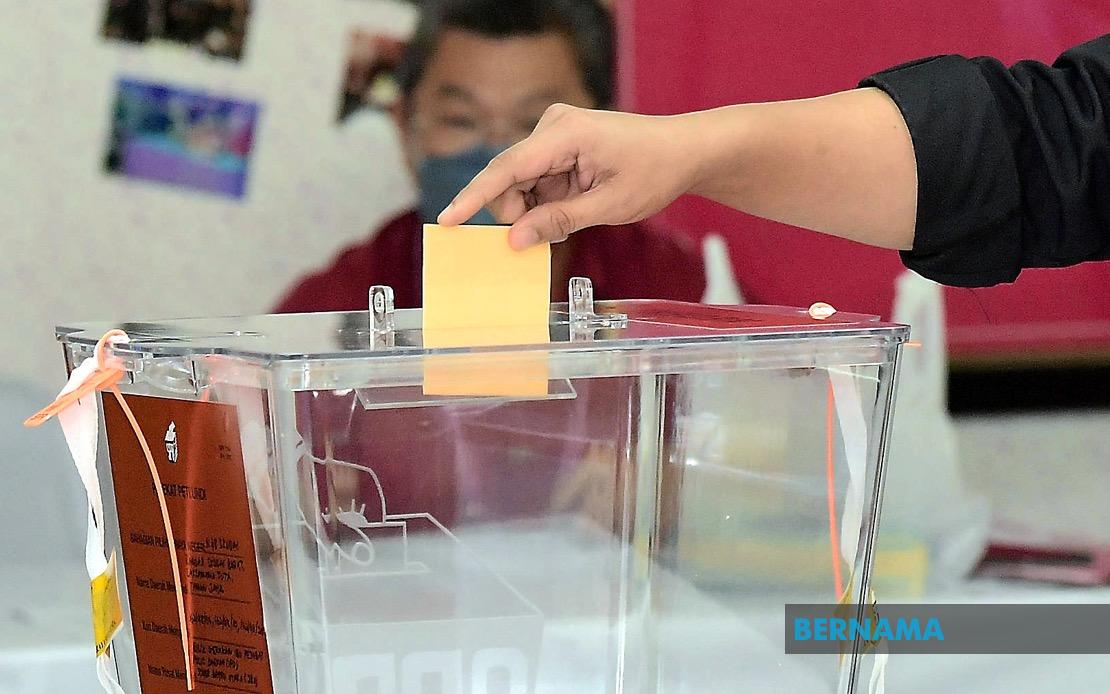
The Johor state election held on July 11 has concluded with Barisan Nasional consolidating power through a decisive majority, prompting swift declarations of acceptance from the broader political landscape whilst signalling deeper strategic recalibrations among less successful contenders. The outcome, which saw BN claim 29 of the 56 contested seats, reflects the continued electoral dominance of the historically dominant coalition in Malaysia's southern heartland, a development that carries implications far beyond Johor's borders as the nation prepares for the upcoming 16th General Election.
PAS, the Islamist party that contests within the Perikatan Nasional framework, wasted little time in framing the result as a legitimate expression of voter preference rather than a rebuke of its coalition's broader political project. Johor PAS commissioner Datuk Dr Mahfodz Mohamed articulated the party's position through careful language that acknowledged the electorate's choice whilst reaffirming PN's determination to maintain its organisational coherence and ideological messaging. This measured response contrasts sharply with the potentially fraught dynamics between PN's constituent parties, where seat divisions and electoral performance disparities have occasionally generated tension. By immediately pivoting toward preparation for the national poll, PAS signalled that it views the Johor outcome as a tactical setback rather than a fundamental challenge to PN's long-term viability.
The competitive landscape in Johor has long mirrored the broader fragmentation of Malaysian politics since the historic events of 2018, when the decades-old BN hegemony faced its gravest challenge. The persistence of this fragmentation—with votes split between BN, Pakatan Harapan, Perikatan Nasional, and various splinter formations—has generally benefited the largest single coalition, in this instance BN. That party's ability to win 29 seats from 56, sufficient to form government and retain Menteri Besar Datuk Onn Hafiz Ghazi in his position, underscores the mathematical advantage conferred by Malaysia's first-past-the-post electoral system when the opposition remains divided across multiple competing political vehicles.
Bersatu, the Mahathir-era party that has itself oscillated between opposition and government coalitions, announced intentions to undertake a comprehensive examination of its electoral performance and strategic positioning. Secretary-general Datuk Seri Mohamed Azmin Ali's statement regarding a detailed review reflected the party's awareness that its positioning within Perikatan Nasional, whilst providing coalition protection and parliamentary influence at the federal level, did not translate into meaningful seat acquisitions at the state level in Johor. For Bersatu, which has experienced significant internal upheaval and membership fluctuations, the Johor results prompt questions about whether its current trajectory aligns with its organisational capacity and electoral appeal among ordinary voters, particularly in stronghold constituencies.
The most striking element of the election emerged in the near-total collapse of the newly formed Parti Bersama Malaysia, the vehicle assembled by Rafizi Ramli that positioned itself as an alternative political force anchored in supposedly novel approaches to governance and politics. All fifteen Bersama candidates forfeited their election deposits, a consequence of failing to secure the minimum vote threshold necessary to retain deposits in Malaysia's electoral system. This outcome carries particular significance given that Bersama had only existed for fifty-two days at the time of the Johor contest, suggesting either insufficient organisational preparation, weak brand recognition among voters, or substantive resistance to its political messaging and positioning.
Rafizi's own response to the Bersama debacle, released via Facebook rather than through traditional press channels, attempted to reframe the electoral failure as a learning experience rather than a verdict on the party's viability. His characterisation of the campaign as a training ground for an nascent political organisation reflected a pragmatism about the realities of contesting elections in Malaysia's crowded political marketplace, where name recognition and established party machinery confer substantial competitive advantages. For observers tracking Malaysian political entrepreneurship and the formation of new political vehicles, the Bersama experience offers instructive lessons about the challenges of mobilising electoral support around newly created organisational entities, even when led by experienced political operators.
Pakatan Harapan, the opposition coalition that had governed Malaysia from 2018 to 2020, secured merely two seats in the Johor state assembly, a reflection of its considerably diminished standing compared to the pre-2020 period. The coalition's struggles in Johor, historically a BN stronghold though one that PH successfully contested in 2018, suggest that the opposition faces persistent challenges in sustaining electoral momentum across geographically dispersed constituencies and socioeconomically diverse voter populations. That neither MUDA, the Pan-Malaysian Islamic Party, Parti Sosialis Malaysia, nor various independent candidates managed to secure representation further underscores the winner-take-most dynamics that characterise Malaysia's electoral geography.
The composition of Johor's political landscape post-election presents a legislature dominated by a single coalition with minimal opposition presence, mirroring patterns visible in several other Malaysian states where BN has reasserted dominance following the period of multi-coalition competition that commenced in 2018. This concentration of legislative seats within a single coalition raises questions about the mechanisms available for legislative scrutiny, the representation of diverse voter preferences, and the political incentives facing the governing coalition to remain responsive to constituencies beyond its core supportive constituencies. The reduced presence of parliamentary opposition voices in state assemblies, whilst not unique to Johor, contributes to broader patterns of consolidated executive authority that merit examination by observers of Malaysian democratic practice.
For the federal government and the Prime Minister's office, the Johor outcome provides both validation of current political alignments and reassurance that BN remains capable of delivering electoral victory at the state level, a capacity that had been questioned following the 2018 electoral shocks. The restoration of BN dominance across multiple states, continuing a trajectory visible in several other recent state elections, suggests a broader consolidation of the federal governing coalition's grassroots support, though the fragmentation of opposition forces complicates any straightforward reading of voter preference regarding the federal government's performance and direction. This dynamic between state-level BN victories and continued federal political uncertainty will likely shape the atmosphere surrounding the 16th General Election.
The immediate aftermath of the Johor election reveals opposition and minority coalition parties engaged in introspection and strategic reassessment, a process that will influence their positioning and messaging as they prepare for the national poll anticipated within the next eighteen months. PAS and Bersatu face questions about the trajectory of Perikatan Nasional as a political vehicle, particularly given the coalition's inability to translate its federal parliamentary presence into substantial state-level electoral gains. Bersama's collapse raises broader questions about whether new political entrants can successfully penetrate Malaysia's established party system, whilst Pakatan Harapan confronts the challenge of reconstituting its electoral coalition and regenerating voter enthusiasm following the traumatic internal divisions that fractured it in 2020. For Malaysia's electorate and democratic observers, the Johor results furnish a snapshot of contemporary political alignments whilst simultaneously highlighting the fluidity and unpredictability that continue to characterise the national political environment.

