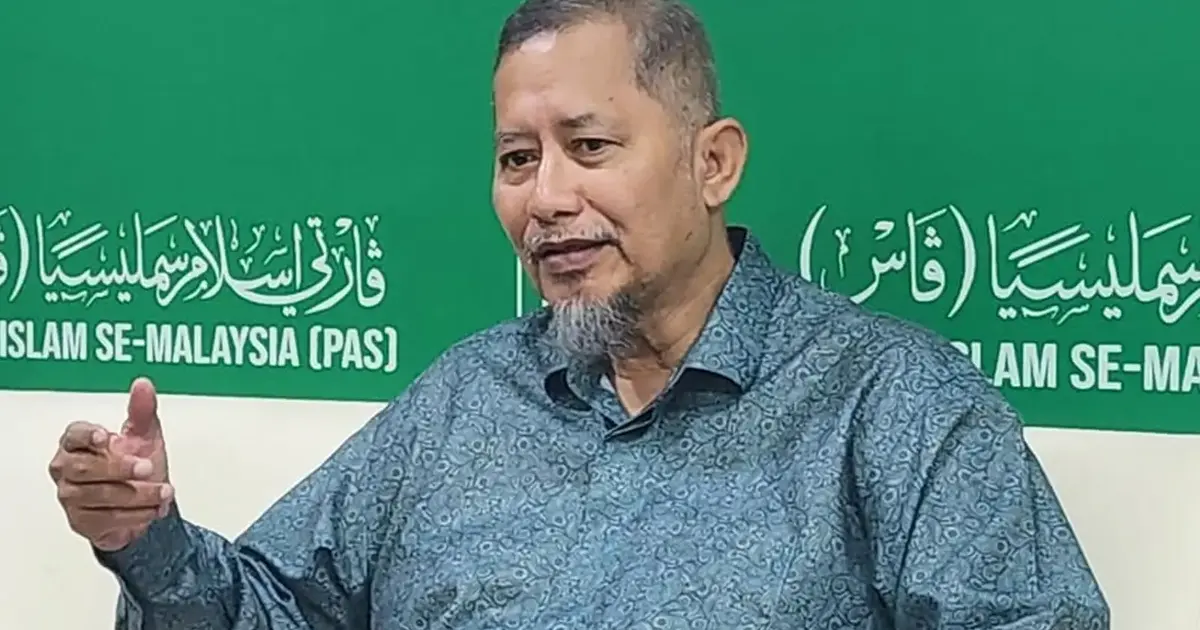
PAS treasurer Iskandar Abdul Samad has thrown down a political gauntlet, declaring that his party possesses the electoral muscle to outmanoeuvre Bersatu should the two Islamic-oriented parties find themselves in direct competition at the ballot box. The assertion reflects mounting tensions within the Perikatan Nasional coalition and signals a confidence—or perhaps calculation—that suggests a fundamental shift in the balance of power among Malaysia's Islamist political movements.
Iskandar's remarks represent more than mere political theatre. They underscore a strategic belief within PAS that the party has solidified its grassroots support network sufficiently to withstand competition even from its coalition partners. The claim carries particular weight given that Perikatan Nasional, which brought together PAS, Bersatu, and other smaller parties, was once positioned as a counterweight to the Barisan Nasional and Pakatan Harapan blocs. The treasurer's confidence suggests that internal fractures within this supposedly unified opposition force may be more pronounced than publicly acknowledged.
The treasurer's statement also appears calibrated to address the broader concerns within PAS ranks about Bersatu's political trajectory and intentions. Since its formation in 2016 by former Prime Minister Mahathir Mohamad and subsequent leadership transitions, Bersatu has undergone considerable repositioning. The party's fluctuating alliances and leadership upheavals have created uncertainty about its long-term viability, potentially making it vulnerable to poaching of support by larger rivals, particularly PAS, which maintains strong organizational structures in key constituencies throughout the peninsula and east Malaysia.
From a practical electoral standpoint, Iskandar's assertion rests on demonstrable organisational advantages. PAS has cultivated deep roots in rural and semi-urban constituencies, particularly across Peninsular Malaysia's east coast states where the party's dominance has become entrenched through decades of sustained grassroots work. Religious authority and community integration have provided PAS with institutional advantages that newer entrants or coalition partners cannot easily replicate. Bersatu, by contrast, lacks comparable organizational depth and has struggled to develop comparable party machinery outside its initial strongholds.
The treasurer's comments also reveal calculated positioning ahead of potential political realignments. Malaysian electoral politics has historically been characterized by fluid coalition-building and party mergers, particularly among opposition groups seeking electoral efficiency. Iskandar's statements may be intended to signal that PAS, rather than becoming subordinate within any future political arrangement, possesses sufficient independent strength to negotiate from a position of relative power. This positioning becomes especially relevant given speculation about possible mergers or deeper integrations among Islamist-oriented parties.
For Malaysian observers, the remarks illuminate the precarious state of opposition unity. While Perikatan Nasional was constructed as a unified force capable of challenging the government, internal declarations of electoral superiority from senior figures in coalition partners suggest that underlying cohesion remains fragile. The timing of such assertions, made openly rather than in private party forums, indicates that PAS leadership has grown sufficiently confident—or sufficiently concerned about Bersatu's trajectory—to speak candidly about competitive dynamics.
The treasurer's comments also carry implications for state-level politics and the distribution of parliamentary seats in future electoral cycles. If PAS genuinely believes it can outperform Bersatu in direct contests, this may influence seat-sharing negotiations within Perikatan Nasional or any successor coalition arrangement. Constituencies where both parties might traditionally stand candidates become flashpoints for internal negotiation, with each side armed with claims about superior electability.
Bersatu's response to such declarations will be instructive. The party faces pressure to either demonstrate its own electoral credibility or risk being sidelined within opposition structures. This competitive dynamic, while perhaps energizing to party activists, complicates the already challenging task of building coherent opposition messaging and strategy. Electoral mathematics in Malaysia increasingly favours larger, more unified groupings, making the inter-party tensions within Perikatan Nasional potentially consequential for broader political outcomes.
For regional observers monitoring Malaysian politics, Iskandar's remarks reflect a broader pattern of rising tension within Islamic-oriented political movements across Southeast Asia. The once-unified Islamist bloc appears increasingly fractured along personality, ideological, and strategic lines. PAS's apparent confidence in its capacity to absorb disaffected Perikatan Nasional supporters reflects the party's assessment that Islamic politics in Malaysia is consolidating around its own organizational structure and brand rather than being distributed evenly across multiple Islamic-oriented parties.
The treasurer's statement ultimately serves as a reminder that Malaysian coalitions, even those united by shared ideological commitments, remain transactional arrangements subject to constant renegotiation. PAS's confidence in electoral superiority may prove well-founded, or it may represent the kind of overconfidence that precedes political miscalculation. Either way, the public assertion of competitive advantage over a coalition partner underscores the turbulent terrain of Malaysian opposition politics and the difficulty of maintaining unified fronts when competing interests and visions collide.