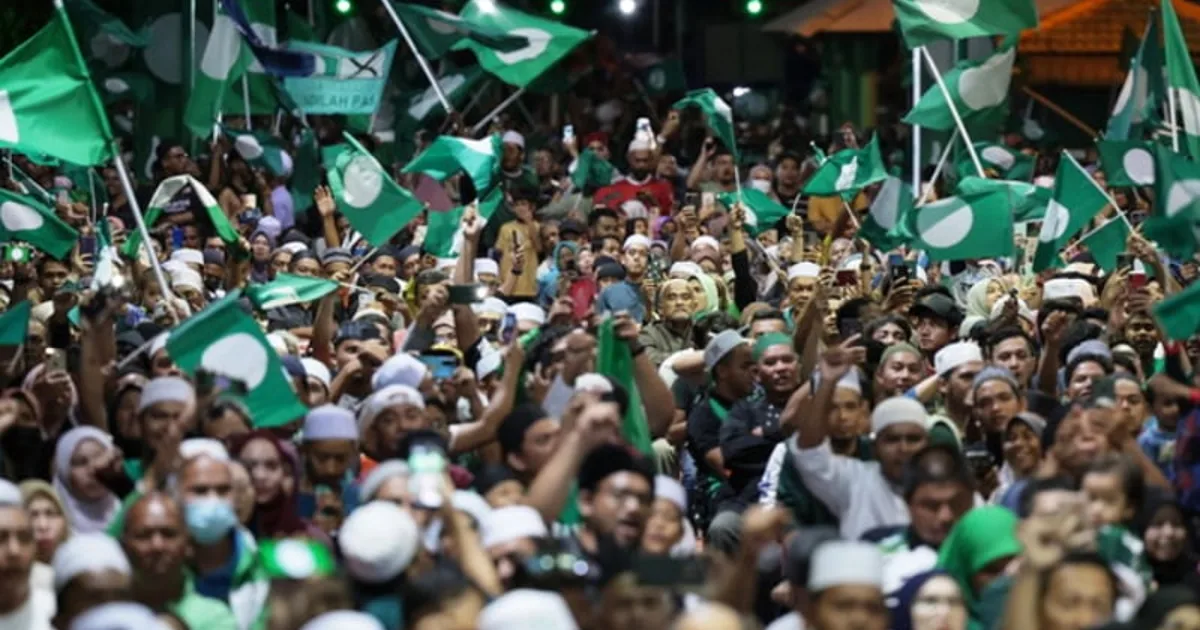
In a significant realignment of its electoral strategy, the Pan-Malaysian Islamic Party (PAS) has opted to concentrate its campaign machinery and resources on constituencies where it is fielding its own candidates, rather than competing against its coalition ally Bersatu within the Perikatan Nasional alliance.
The move reflects an attempt to maximize effectiveness across the opposition coalition's contested seats by avoiding duplication of efforts and internal competition. By redirecting its organisational muscle away from Bersatu strongholds, PAS aims to strengthen the coalition's overall electoral performance while focusing its considerable grassroots apparatus on battlegrounds where it holds a natural advantage or incumbent presence. This tactical shift underscores the matured nature of seat-sharing arrangements within the three-year-old Perikatan alliance, which has significantly disrupted Malaysia's traditional two-coalition political landscape.
The decision carries implications for how Perikatan Nasional, which also includes the Malaysian United Indigenous Party (Bersatu), the small Progressive Democratic Party and several state-level component parties, intends to contest the next general election. Rather than presenting a fragmented opposition challenge, the coalition has increasingly adopted a disciplined approach to seat allocation, designed to concentrate its anti-establishment appeal without diluting votes through inter-coalition competition. This contrasts sharply with the fractured state of Malaysian politics before Perikatan Nasional's emergence in 2020, when opposition votes were frequently split among multiple parties vying for identical seats.
For Bersatu specifically, the arrangement provides clearer pathways in constituencies where the party can leverage its own organisational networks and political capital. The party, which broke away from the United Malays National Organisation in 2016 and subsequently joined opposition politics through Perikatan Nasional, has been steadily building its presence in selected federal and state seats. By operating without direct PAS interference in these constituencies, Bersatu gains undivided access to the anti-establishment vote bank and can mount campaigns tailored to local dynamics without competing for resources or attention against a much larger Islamic party apparatus.
PAS, meanwhile, maintains its core strength in constituencies where it enjoys deep institutional roots, particularly across peninsular Malaysia where it has held legislative presence for decades and possesses sophisticated grassroots networks. The party's withdrawal from Bersatu-contested seats allows it to concentrate its campaign machinery where it can realistically compete or hold incumbency. This resource consolidation proves particularly important in marginal seats where narrow victory margins often determine electoral outcomes. By focusing rather than dispersing its efforts, PAS enhances its chances in strategically important constituencies while allowing coalition harmony to function more smoothly.
The arrangement also reflects lessons learned from Malaysia's recent electoral history. The 2018 general election saw Perikatan Nasional's predecessor alliance, the PAS-led opposition coalition, gain a significant popular vote share yet fail to translate this into corresponding parliamentary representation due to vote-splitting and inefficient constituency-level concentration. The subsequent 2022 general election, which brought Perikatan Nasional to the negotiating table as a kingmaker despite contesting in a limited number of constituencies, demonstrated the effectiveness of disciplined seat-sharing arrangements. The pattern has been reinforced through various state elections, where coalition discipline has consistently yielded better results than uncoordinated multi-cornered contests.
Beyond the immediate electoral calculus, this development signals a maturation of Perikatan Nasional's internal governance structures. Coalition members have established mechanisms for resolving seat disputes and allocating constituencies based on agreed criteria such as existing incumbency, demonstrated electoral viability, and organisational capacity. These frameworks have become increasingly sophisticated, moving beyond ad-hoc negotiations toward institutionalised processes that allow member parties to plan campaigns with greater certainty. Such coordination mechanisms strengthen coalition cohesion while reducing the acrimony that often accompanies seat negotiations in Malaysian politics.
The redistricting undertaken following the 2022 general election has also influenced coalition strategy. With constituency boundaries redrawn and voter populations shifted, traditional strongholds have become less certain, while previously competitive seats have become more promising for specific parties. By reallocating its campaign focus to align with these demographic and electoral geography changes, PAS can deploy its resources where updated boundary configurations favour its candidatures. This data-driven approach to electoral strategy represents a departure from purely traditional or incumbent-based allocation patterns that historically dominated Malaysian coalition politics.
For Malaysian voters and political observers, this PAS decision underscores broader trends in the country's evolving political architecture. The emergence of Perikatan Nasional as a viable third force, coupled with internal fragmentation within the long-dominant Barisan Nasional, has created a more competitive and less predictable electoral landscape. Coalition discipline and seat-sharing coordination have become critical competitive advantages, with parties recognising that internal harmony translates into electoral gains. As Malaysia moves toward the next general election cycle, such strategic repositionings by major opposition components will likely shape electoral dynamics and determine whether Perikatan Nasional can consolidate its position as a genuine alternative governing coalition rather than remaining a kingmaker confined to specific regions or communities.

