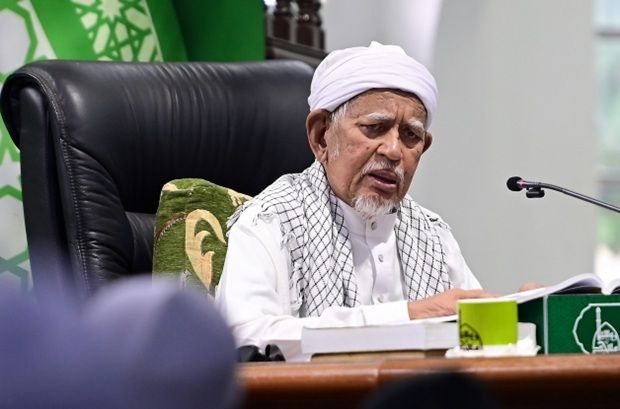
Abdul Hadi Awang's celebratory statements following the Johor state election have reinvigorated a critical conversation about the nature and future trajectory of coalition politics at the national level. The PAS president's contention that his party played a pivotal role in Barisan Nasional's electoral success has reverberated far beyond the southern peninsula, extending into territories whose political cultures operate on fundamentally different principles. Whether or not one fully accepts the extent of PAS's claimed contribution, the ripple effects from Johor carry genuine consequences for how Malaysia's federal system functions across its diverse regions.
The political fallout threatens to reshape relationships within Barisan Nasional itself, particularly in areas where the coalition's traditional formula of inclusive, moderate governance has historically prevailed. Negri Sembilan, governed by Tuanku Muhriz, presents an immediate flashpoint. The Negri Sembilan ruler has cultivated a reputation as an anti-corruption advocate and remains a figure who identifies with accessible, down-to-earth leadership. Yet within state political circles, questions have emerged about whether PAS recognises the sensitivities surrounding the throne's legitimacy and standing in contemporary Negri Sembilan politics. These are not trivial concerns in a state where the ruler's authority carries particular symbolic weight.
Barisan Nasional's decision to contest 26 of 36 seats in Negri Sembilan while formally partnering with PAS, Wawasan and Gerakan reads as a direct challenge to Prime Minister Anwar Ibrahim and his cabinet colleagues who have committed to Barisan collaboration. This coordinated strategy signals an intentional pivot away from the inclusive governance model that Anwar Ibrahim represents, substituting it with a configuration that prioritises different ideological and organisational interests. For Negri Sembilan stakeholders, particularly those aligned with the ruler and the broader constitutional order, this shift represents a meaningful departure from established norms.
The implications become more consequential when examining East Malaysia's position within the federation. Sabah and Sarawak collectively command 56 parliamentary seats—a bloc substantial enough to determine the complexion of federal government. These two states have historically demonstrated that their political priorities diverge markedly from those prevalent in peninsular Malaysia. Where Peninsular politics often fixates on ideological contestation and national-level narrative, Borneo's political leadership consistently prioritises tangible development outcomes, equitable resource allocation from the federal budget and pragmatic governance that accommodates the region's deep religious and ethnic pluralism.
In Johor, Menteri Besar Hafiz Onn's capacity to appoint an additional five state representatives, thereby expanding his majority from 46 to 51 seats, underscores the electoral dominance Barisan Nasional achieved. However, this victory's significance lies not merely in numbers but in what it signals about the ideological orientation guiding the coalition's strategic direction. The prospect of PAS wielding expanded influence across multiple state governments, coupled with the reemergence of Wawasan as a political entity led by Hamzah Zainuddin, generates genuine anxiety in Sabah and Sarawak where leaders remain respectful of Anwar Ibrahim's personal standing and suspicious of sudden reversals in Barisan Nasional's political posture.
Borneo's political traditions have evolved within multicultural societies where religious and ethnic diversity constitutes not merely a tolerable reality but the foundational basis for everyday governance and policymaking. This historical context has cultivated a political culture that exercises pronounced caution regarding approaches perceived as overly ideological or centred on religious mobilisation as a primary electoral strategy. The visible strengthening of PAS within Barisan Nasional, even if mediated through partners like Wawasan and Gerakan, inevitably transmits concerning signals to Borneo's political establishment. Leaders in these states read Hadi Awang's triumphalism as indicative of a broader reorganisation of coalition priorities that may not accommodate Borneo's particular interests and historical traditions.
These concerns intensify because Malaysian coalition politics requires more than electoral arithmetic to function effectively—it demands genuine mutual confidence among participating partners. When one partner claims exceptional responsibility for electoral success, and when that partner's political methodology differs substantially from partners operating in distinct regional contexts, confidence erodes. The constitutional foundations upon which Malaysia was constructed in 1963 loom particularly large in East Malaysian consciousness. Questions regarding state autonomy, the preservation of religious harmony, multicultural governance principles and the proper delineation of federal-state relations consistently rank higher on Borneo's political agenda than ideological contestation surrounding religious identity or centripetal national narratives.
Political leaders throughout Sabah and Sarawak necessarily evaluate peninsular developments through the lens of potential effects on national cohesion and the federation's internal stability. They remain acutely attentive whenever political narratives appear capable of destabilising Malaysia's carefully calibrated equilibrium among its constituent regions and their respective communities. This is not parochialism but rather a sophisticated understanding that Malaysia's continued functioning as a unified nation depends upon respecting the distinct political cultures and historical experiences that different regions bring to the federation.
It bears emphasis that PAS, like every registered political party, possesses entirely legitimate claims to participate in Malaysian democracy. The party has every constitutional right to contest elections, articulate policy positions and mobilise electoral support through lawful means. Democratic competition fundamentally depends upon this capacity for multiple parties to vie for public support and governmental responsibility. However, democratic legitimacy within a federal system simultaneously requires sensitivity towards the broader composition of the entire federation and the expectations that different regions hold regarding governance.
Electoral success concentrated within particular peninsular states does not automatically translate into acceptance or legitimacy across Malaysia's entire political landscape. The federation's structural design requires governing coalitions to accommodate genuinely divergent historical experiences, cultural traditions and political expectations across regions. A party's ascendancy in one context cannot simply be transposed into another without regard for how that repositioning affects existing relationships and carefully maintained equilibriums.
One of Malaysian democracy's enduring strengths has been its demonstrated capacity to construct broad-based coalitions despite substantial ideological and organisational differences among constituent parties. This flexibility has historically enabled governments of varying compositions to sustain national stability while simultaneously accommodating the federation's considerable regional diversity. Whether Barisan Nasional can preserve this balancing capacity while integrating an apparently energised and more assertive PAS remains an open question with genuine significance for Negri Sembilan, Sabah and Sarawak. The choices made in coming months regarding coalition management and resource distribution will substantially determine whether Malaysian federalism's consensual foundations can weather this reconfiguration.

