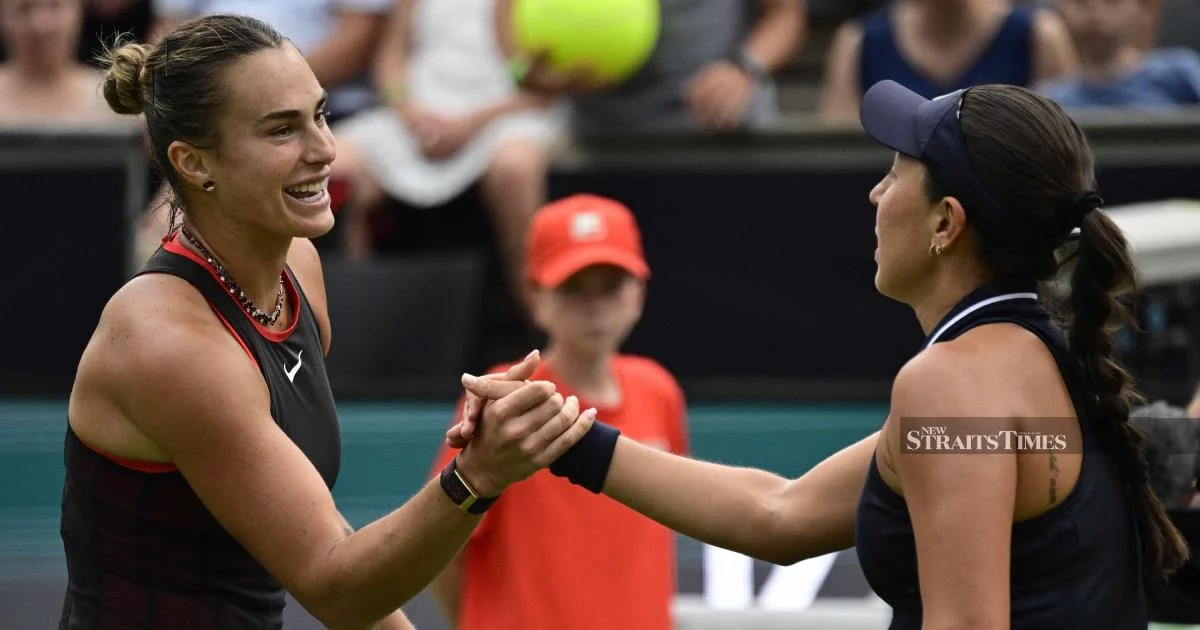
American Jessica Pegula has advanced to the final of the Berlin WTA grass-court tournament for the second time after overpowering world number one Aryna Sabalenka in a closely contested semi-final. The American secured a 6-2, 6-7 (4-7), 6-0 triumph to book her place in the championship match, demonstrating remarkable resilience and tactical acumen across the three sets.
Pegula's pathway to victory illustrated the unpredictable nature of professional tennis, where momentum shifts can determine outcomes. The first set saw the American establish early dominance, breaking Sabalenka's serve to claim a 6-2 victory. However, the world number one mounted a determined response in the second set, forcing a tiebreaker that extended the contest and tested Pegula's composure. In that decisive tiebreaker, Sabalenka's aggressive baseline play initially appeared to give her an edge, yet Pegula held her nerve to prevail 7-4 in the breaker, narrowly taking the set 7-6.
The psychological impact of winning that second-set tiebreaker proved decisive. Rather than allowing Sabalenka's famed power game to regain momentum, Pegula seized control in the third set with an emphatic 6-0 scoreline. This shutout performance underscored the American's superior court positioning, service returns, and consistency during the final stages of the match. Sabalenka, despite her world ranking and established prowess on fast courts, appeared unable to adjust tactically as the match progressed.
For Southeast Asian and Malaysian tennis followers, Pegula's victory carries significance beyond the immediate tournament result. The American has long been a consistent performer at the sport's highest level, and her resurgence on grass-court surfaces—traditionally dominated by European and Australian players—reflects the globalization of elite tennis. Pegula's grass-court success demonstrates that American players remain competitive across all surface types, despite the historical perception that grass events belong to certain regional strongholds.
Sabalenka's defeat, while ending her bid for tournament victory, does not fundamentally alter her positioning in women's tennis. Her status as world number one, backed by significant wins throughout the season, remains secure. However, the loss illustrates an emerging pattern: while Sabalenka excels in baseline exchanges and generating extreme pace, certain opponents have demonstrated the ability to neutralize these strengths through superior positioning and service return capabilities. Pegula's patient approach in this match showcased a strategic alternative to the power-versus-power tennis that defines many modern contests.
The Berlin tournament itself remains one of the WTA Tour's most prestigious grass-court events, drawing elite players eager to prepare for Wimbledon or claim titles on the surface. Pegula's return to the final represents a confirmation of her upward trajectory through the middle stages of the 2024 season. Her previous appearance in a Berlin final, combined with this latest achievement, establishes her as a genuine contender on grass courts—a surface where consistency and tactical intelligence prove as important as raw power.
Pegula's victory also emphasizes the competitive depth currently characterizing women's professional tennis. The ability to defeat the world number one on grass demands not only technical excellence but also mental fortitude and the capacity to execute under pressure. The tiebreaker loss particularly tested the American's resilience, as many players might have experienced momentum collapse following such a close second set. Instead, Pegula regrouped completely, dominating the final set without allowing Sabalenka a single game.
Looking toward the final, Pegula advances to face another accomplished player, with implications for both her career trajectory and the broader competitive landscape of women's tennis heading into the sport's second half. The Berlin title would represent a significant achievement that adds to Pegula's tournament resume and validates her position among tennis's elite performers. For Malaysian and Asian tennis enthusiasts, Pegula's methodical style of play—emphasizing consistency, positioning, and tactical adjustment—offers an interesting counterpoint to the aggressive, power-oriented approach increasingly prevalent in modern professional tennis.
Sabalenka's performance, despite the loss, demonstrated the high quality of opposition Pegula faced and overcame. The Belarusian's competitive efforts across all three sets, particularly in the second-set tiebreaker, showcase why she maintains her world number one ranking. However, the outcome ultimately reinforces that tennis rankings and head-to-head results do not always align, and individual tournaments often produce surprising victors when conditions, form, and tactical execution converge favorably for a particular player.

