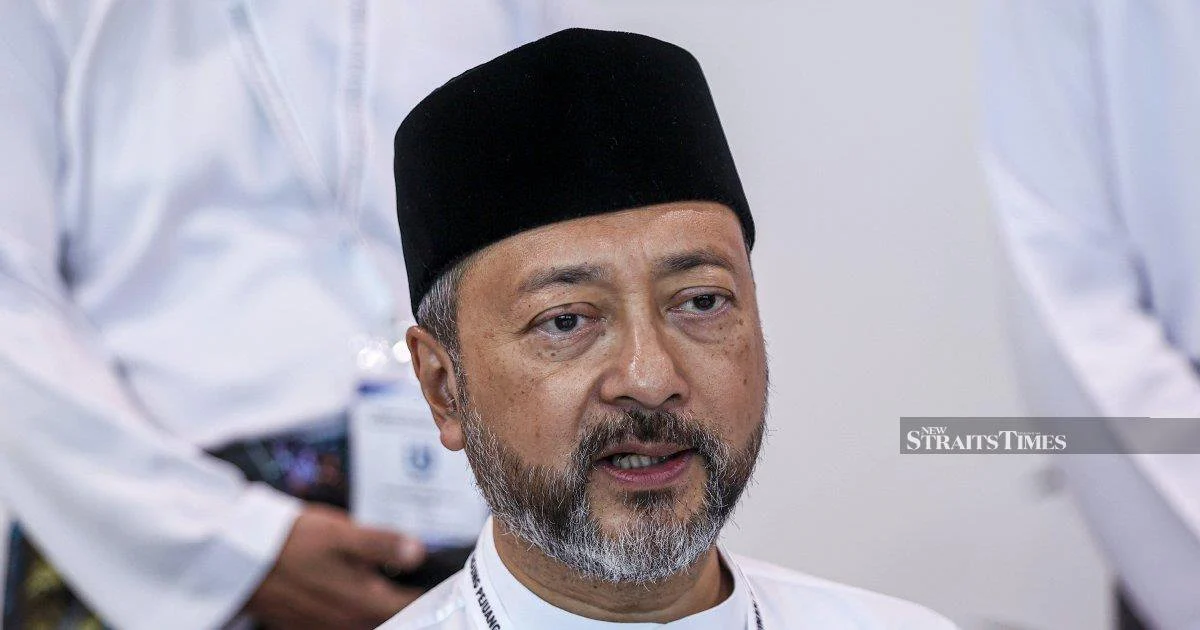
Parti Pejuang Tanah Air's admission into Perikatan Nasional represents a significant shift in Malaysia's political landscape, with the party's leadership framing the move as part of a larger consolidation strategy rather than an isolated coalition arrangement. Party president Datuk Seri Mukhriz Mahathir outlined this perspective on the development, suggesting that Pejuang's decision to join the opposition coalition extends beyond immediate electoral calculations to address structural weaknesses in how Malaysia's political system addresses contemporary problems.
The entry of Pejuang into Perikatan Nasional carries particular weight given the political trajectory of the party's founder and former Prime Minister Mahathir Mohamad. Pejuang emerged in 2020 as an independent political vehicle outside the traditional power structures that had defined Malaysian politics for decades. By joining PN, the party signals a recalibration of its strategic positioning and a willingness to operate within broader coalition frameworks rather than maintaining a separate identity focused primarily on Mahathir's personal brand.
Mukhriz's characterisation of the merger as a "broader unity effort" suggests that Perikatan Nasional itself is undergoing evolution. The coalition, which coalesced around opposition to the Pakatan Harapan government formed in 2018, has traditionally comprised PAS, Bersatu, and various Bumiputera-focused parties. The incorporation of Pejuang introduces another layer to PN's political positioning, potentially reshaping how the coalition approaches policy matters and electoral strategy moving forward.
The timing of this consolidation warrants attention within the context of Malaysia's political maturation. Over the past five years, the country has witnessed unprecedented flux in coalition arrangements, with major realignments following the 2022 general election that produced a hung parliament and eventually led to the formation of the current Unity Government. Against this backdrop, Pejuang's move suggests that some opposition figures view coalition-building as essential to presenting competitive alternatives to the ruling arrangement.
From a structural perspective, the merger raises questions about how Perikatan Nasional will maintain internal coherence while accommodating parties with potentially divergent ideological foundations. Pejuang emerged partly as a critique of how mainstream Malay-Muslim politics had become dominated by competing personality cults and patronage networks. Integrating this critique into a coalition that includes PAS, an Islamist party with its own distinct theological and political frameworks, presents interesting challenges for coalition management and policy formulation.
For Southeast Asian observers and international commentators tracking Malaysian politics, this development underscores the region's broader pattern of coalition fluidity. Unlike established democracies with more stable party systems, Malaysian politics continues to experience significant reorganisation driven by personality conflicts, factional disputes, and strategic recalculations by leadership figures. Pejuang's entry into PN follows similar consolidation patterns visible across Indonesia, Thailand, and the Philippines, where opposition forces frequently attempt to coalesce into broader configurations to enhance electoral competitiveness.
The absorption of Pejuang also potentially strengthens Perikatan Nasional's claims to represent a cross-cutting coalition rather than a narrow ethnic or religious bloc. While PAS explicitly represents Islamist interests and Bersatu draws considerable support from Bumiputera constituencies, Pejuang's presence might broaden PN's appeal among centrist and reform-oriented voters who might otherwise gravitate toward Pakatan Harapan. This diversification of PN's base could prove strategically valuable in future electoral contests, particularly if the ruling coalition experiences difficulties implementing policy agendas or managing economic challenges.
Mukhriz's emphasis on addressing "growing national challenges" reflects political rhetoric that transcends partisan boundaries in contemporary Malaysia. Most major parties, regardless of their coalition affiliation, articulate commitments to tackling issues including economic inequality, urban congestion, environmental degradation, and the sustainability of government services. By tying Pejuang's entry into PN to this broader reform agenda, party leadership attempts to justify the merger on principled grounds rather than purely transactional motives related to electoral positioning or access to patronage networks.
The consolidation also carries implications for Perikatan Nasional's internal power dynamics and its relationship with the federal government. A larger, more heterogeneous coalition requires more sophisticated coordination mechanisms and dispute-resolution procedures. Additionally, if PN successfully presents itself as an increasingly viable alternative government, it may attract additional defectors from other parties seeking to position themselves within the opposition's ascending trajectory, which could further transform the coalition's character and policy orientation.
As Malaysia approaches future electoral cycles, the integration of Pejuang into Perikatan Nasional represents one component of broader realignment processes reshaping the country's political architecture. Whether this consolidation ultimately strengthens opposition capacity to challenge the Unity Government or merely reflects the continued fragmentation underlying Malaysian politics remains contingent on how effectively these disparate political forces can maintain coalition discipline while advancing distinct factional interests within a shared institutional framework.

