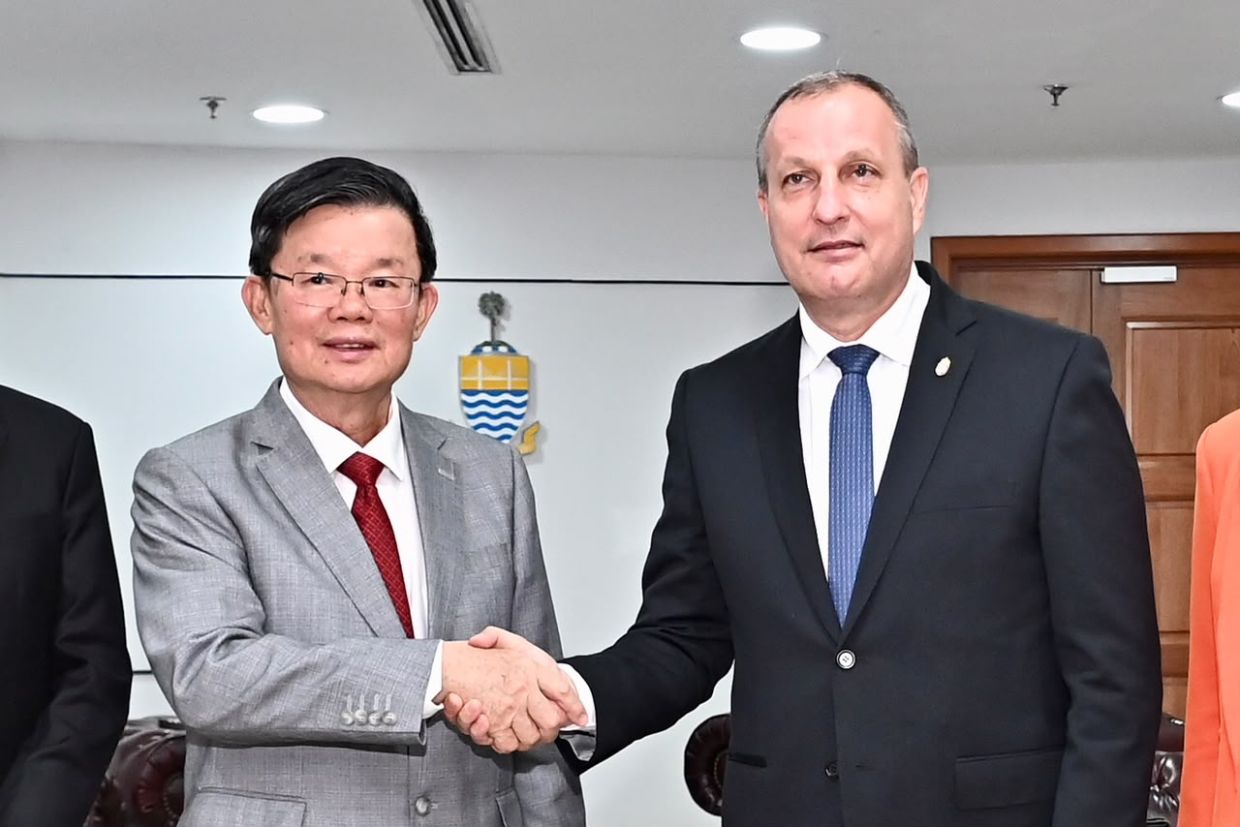
Penang state leaders have signalled an intent to broaden engagement with Hungary across multiple sectors, ranging from academic institutions to renewable energy infrastructure, following recent dialogue between Chief Minister Chow Kon Yeow and a visiting Hungarian diplomatic delegation. The discussions underscore growing recognition within the state administration that Central Europe's established expertise in water management, green technology and higher education can complement Penang's own development priorities, particularly as the state seeks to position itself as a regional innovation and sustainability hub.
Chow characterised Hungary as a European powerhouse with deep institutional knowledge in fields where Penang aspires to build competitive advantages. Speaking after receiving Hungarian Ambassador to Malaysia Dr Sándor Sipos and his team, the Chief Minister outlined a collaborative vision spanning heritage preservation, academic research, renewable energy deployment and talent mobility. The scope of potential partnership reflects a strategic calculation that developed economies in Europe hold lessons applicable to Southeast Asian contexts, especially regarding efficient water systems and environmental stewardship—matters of particular relevance to a densely populated island state navigating climate and resource pressures.
The bilateral agenda mapped during the visit encompasses both immediate and longer-term initiatives. Trade and investment discussions centred on identifying sectors where Hungarian expertise and Malaysian capital might converge productively, while separate conversations explored how academic institutions in both jurisdictions could establish research partnerships and student exchange mechanisms. Cultural and heritage conservation emerged as a shared interest, reflecting Penang's status as a Unesco World Heritage Site and Hungary's own historical preservation efforts. Tourism development and people-to-people exchanges were flagged as vehicles for deepening mutual understanding beyond government-to-government channels.
A pivotal element of the partnership framework concerns educational mobility. Ambassador Sipos announced that Hungary's government allocates 40 fully funded scholarship places annually to Malaysian students, a programme the diplomat is actively promoting across the country. For Penang specifically, this represents a significant opportunity for young professionals and researchers to gain postgraduate qualifications and conduct cutting-edge research in Central European universities, potentially returning to the state with advanced skills in priority domains such as water technology and renewable systems. Chow welcomed the scholarship initiative, framing education and talent exchange as foundational to sustained regional cooperation—a framing that aligns with Malaysian government priorities around developing high-skill workforces for the knowledge economy.
Water security and renewable energy emerged as signature themes in the talks, suggesting both parties recognise these as critical challenges for the coming decades. Hungary has developed sophisticated water management infrastructure and expertise in response to its own geographic and climatic circumstances, experience that could inform Penang's approach to securing reliable freshwater supplies amid urbanisation and environmental pressures. Similarly, Hungary's engagement with renewable energy transitions offers lessons for Penang as it seeks to reduce carbon intensity while maintaining reliable power supplies. Research collaboration between water technology institutes or renewable energy centres could yield innovations deployable across Southeast Asia, potentially positioning Penang as a testing ground for European solutions adapted to tropical conditions.
State executive councillor Gooi Zi Sen introduced a sports cooperation dimension to the relationship, indicating that Penang intends to study bilateral athletic partnerships and potential exchanges. This agenda reflects an emerging trend among Malaysian states to view international sports collaboration as integral to broader relationship-building, as well as a mechanism for youth development. The Penang State Sports Council is expected to conduct feasibility studies identifying which disciplines might benefit from Hungarian coaching expertise or competition exposure, though no specific sports were named during the initial discussions.
The visit also involved courtesy calls on executive councillors Goh Choon Aik and Gooi, suggesting a structured diplomatic approach designed to ensure multiple tiers of Penang's government machinery engage with the Hungarian mission. This multi-level contact protocol increases the likelihood that collaborative intentions translate into institutional mechanisms and budgeted projects. By routing discussions through relevant state departments—education, environment, trade, sports—rather than concentrating engagement at the chief minister's office alone, Penang is constructing a foundation for sustained partnership transcending individual political cycles.
From Hungary's perspective, the Penang engagement reflects broader Central European strategies to deepen presence in Southeast Asian markets and build soft power through educational and cultural initiatives. Malaysia represents a significant source of students for Hungarian universities and a growing investment destination for Hungarian technology firms, particularly in digital and green sectors. Strengthening state-level relationships in Penang—a prosperous, business-friendly jurisdiction with significant foreign investment and a strong services sector—aligns with Budapest's interests in cultivating long-term partnerships beyond federal government channels. Ambassador Sipos's emphasis on widening scholarship uptake from Penang suggests Hungary views the state as a key growth market for educational exports and alumni networks.
The timing of these discussions reflects wider regional dynamics. As geopolitical tensions shape global partnerships, nations in Southeast Asia are actively diversifying their international relationships, looking beyond traditional partners toward emerging cooperation frameworks. Penang, as a developed state with autonomous policy-making capacity in certain domains, enjoys flexibility to pioneer bilateral relationships that may later inform broader Malaysian-Hungarian engagement. Should education and research partnerships yield tangible outputs—published collaborative research, technology transfers, or joint ventures—the model could be replicated in other Malaysian states, creating a cascading effect.
Looking forward, the substance of this partnership will depend on follow-through mechanisms. The announcement of intentions is typically the easiest phase; converting diplomatic pleasantries into binding agreements, funded research projects and implemented infrastructure initiatives requires dedicated institutional effort and resource allocation. Penang's state government will need to identify which agencies should lead specific workstreams, establish timelines and secure budgetary commitments. Hungary's embassy will similarly need to coordinate with Budapest-based institutions to operationalise scholarship placements and research partnerships. Success will be measured not by the scope of initial discussions but by concrete outcomes: the number of Penang students accessing Hungarian scholarships, research publications emerging from joint projects, and green technology pilot programmes operational within the state.
The broader significance of this engagement lies in its demonstration that Malaysian states, particularly developed ones like Penang, are increasingly acting as semi-autonomous actors in international relations, shaping partnership architectures independent of federal coordination. This devolution of diplomatic initiative reflects both genuine autonomy within Malaysia's federal system and the rise of sub-national economic importance in globalised commerce. For observers tracking Southeast Asian foreign policy, Penang-Hungary collaboration exemplifies how regional and local governments are expanding their diplomatic footprints, creating networks of partnership that enrich bilateral relations and open new avenues for knowledge and technology transfer.

