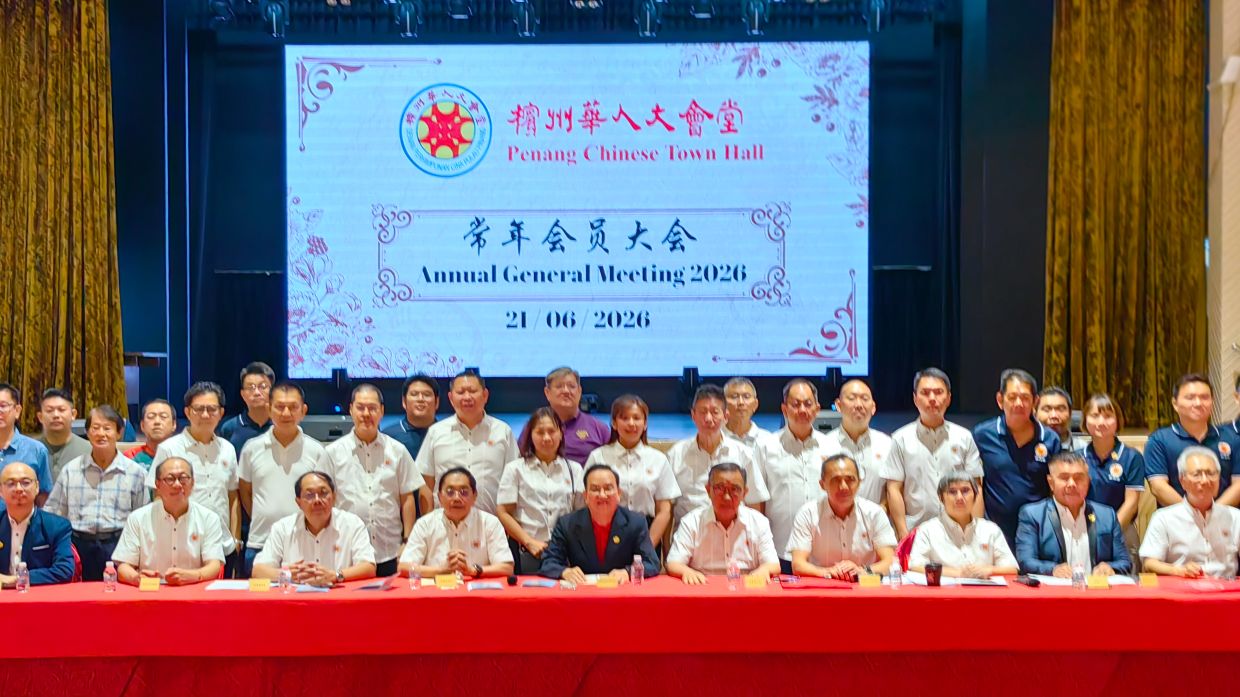
The Penang Chinese Town Hall has delivered a solid financial performance for 2025, recording total income of RM12.61mil against expenditure of RM12.55mil, leaving the organisation with a modest surplus of RM59,191. The result demonstrates the continued financial stability of one of Penang's oldest community institutions, though it reflects tighter operational margins than in previous years as the organisation balances its traditional charitable mission with modernisation efforts.
Donations remain the lifeblood of PCTH's finances, providing RM11.24mil or approximately 89% of total revenue. This reliance on philanthropic contributions underscores the organisation's deep roots in the Chinese community and its appeal to donors seeking to support cultural preservation and social causes. Secondary revenue streams include rental and maintenance fees of RM439,671, auditorium rental income of RM361,245, and anniversary-related receipts of RM222,498, reflecting the diversified use of PCTH facilities across corporate, community and charitable activities throughout the year.
The expenditure side of PCTH's accounts tells a revealing story about where the organisation channels its resources. Donations distributed to beneficiaries totalled RM11.12mil, representing 88.6% of spending and marking a significant decrease from RM12.35mil in 2024. This reduction may reflect more targeted allocation strategies or simply lower donation requests from beneficiary organisations. Meanwhile, personnel costs have edged upward, with salaries and allowances rising to RM502,625 from RM452,761 a year earlier, a 10.9% increase that tracks broader wage pressures across the economy.
At PCTH's annual general meeting held on June 21 and attended by approximately 200 members, chairman Tan Sri Prof Tan Khoon Hai seized the platform to emphasise the broader civic responsibilities facing Malaysians beyond organisational matters. With Johor and Negri Sembilan scheduled to conduct state elections later in 2025, Tan urged voters to approach electoral participation with seriousness and rational deliberation, assessing the performance records and policy platforms of contending parties rather than voting along purely emotional or traditional lines. His remarks reflect growing concerns among civil society leaders about the quality of electoral discourse and the importance of informed voter choice in maintaining democratic health.
Tan articulated a vision of elections that transcends parochial local concerns, framing electoral participation as an opportunity for citizens to shape Malaysia's strategic direction across economic development, national unity and social cohesion. This perspective aligns with efforts by community institutions nationwide to elevate civic consciousness and encourage deeper engagement with the policy platforms and leadership qualities of competing candidates. The chairman's emphasis on rational assessment and the selection of candidates capable of fostering unity carries particular weight given Malaysia's ongoing challenges in managing diversity and sustaining inter-communal harmony.
On the infrastructure front, PCTH has invested significantly in upgrading its Ping Zhang Hall, completing extensive renovation and modernisation works that reflect the organisation's commitment to remaining relevant to contemporary event needs. The revamped venue now features enhanced spatial design, professional-grade sound and lighting systems, and modern LED capabilities, positioning it as a competitive option for corporate dinners, association celebrations, anniversary functions, charitable events and diverse community gatherings. This investment signals confidence in the organisation's ability to generate rental income and serve as a community gathering point for decades to come.
Perhaps most ambitious is PCTH's announcement that it will co-organise the 2026 China-Asean Artificial Intelligence Cooperation Forum in Penang this November, partnering with technology and business organisations from across China and Asean. This initiative positions Penang as a serious contender for regional leadership in artificial intelligence development and deployment, building on the state's existing reputation as the Silicon Valley of the East and its established dominance in electrical and electronics manufacturing. The forum will convene experts, business leaders and industry representatives from across Southeast Asia and China to deliberate on emerging AI technologies, their commercial applications and cross-border collaboration opportunities.
Tan's framing of Penang as Malaysia's primary hub for electrical and electronics manufacturing and as a foundation for AI-related industrial development reflects the state's strategic ambitions to transition from traditional manufacturing toward higher-value technology sectors. By hosting a high-profile regional forum on artificial intelligence, PCTH positions itself not merely as a cultural institution but as a participant in reshaping Penang's economic future. The platform will likely attract policymakers, venture capitalists and technology entrepreneurs seeking to understand Asean's AI trajectory and identify partnership opportunities.
The chairman's call for members with relevant expertise to participate and strengthen Penang's role in regional AI cooperation speaks to the challenge of building critical mass in emerging technology sectors. Malaysia and Southeast Asia broadly face intense competition from China, Japan, South Korea and other regional players investing heavily in AI capabilities. Penang's combination of industrial base, talent pools, government support and private sector innovation creates conditions for meaningful regional collaboration, yet success requires deliberate ecosystem development and strategic networking across borders. PCTH's initiative represents an effort to leverage its convening power and institutional standing to facilitate such connections.
The modest financial surplus, infrastructure investments and ambitious regional initiatives collectively suggest that PCTH is navigating a transition from a primarily charity-focused organisation toward a more diversified institution encompassing community services, commercial venue operations and thought leadership on regional technological development. This evolution mirrors broader patterns among established community institutions across Southeast Asia, which face pressures to remain financially sustainable while maintaining their core missions. For Malaysian observers, PCTH's trajectory offers insights into how traditional organisations can adapt to contemporary challenges while preserving their cultural significance and community roots.

