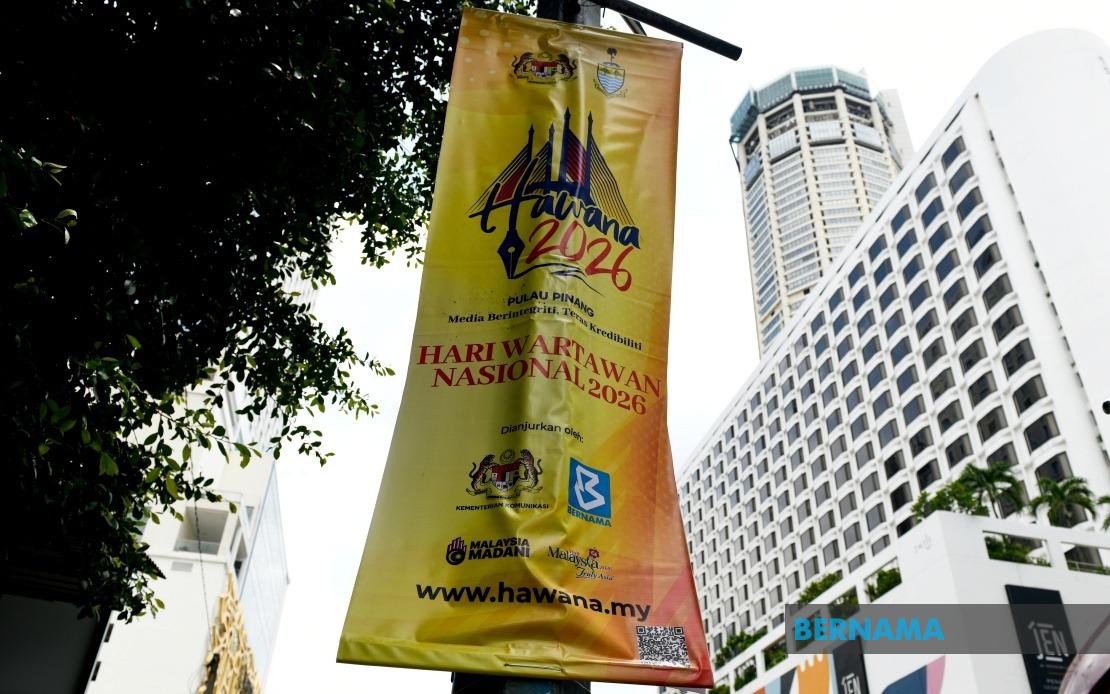
Penang's state government is positioning itself to deliver a landmark celebration of Malaysia's media industry when it hosts the National Journalists' Day (HAWANA) 2026 this weekend, with Chief Minister Chow Kon Yeow emphasising months of coordinated preparation between state authorities and the federal Communications Ministry. The announcement comes as final arrangements near completion for what promises to be one of the region's most significant gatherings of news professionals and industry stakeholders in recent years.
The cornerstone event, the HAWANA 2026 Summit, will take place at PICCA Convention Centre @ Butterworth Arena on Saturday, bringing together approximately 1,000 media practitioners from across Malaysia and internationally. The summit will be officially opened by Prime Minister Datuk Seri Anwar Ibrahim on June 20, underscoring the federal government's commitment to recognising the work of journalists and news organisations. Preceding this central event, a media dinner hosted by Penang Governor Tun Ramli Ngah Talib is scheduled for the evening of June 19, providing an opportunity for senior figures in government and media to engage in informal dialogue.
Chow's remarks to reporters in George Town reflected the Penang administration's determination to execute the programme without significant complications. He noted that the state government had invested considerable effort over the preceding two to three months in an engagement process with the Communications Ministry, demonstrating a collaborative approach that has become increasingly common in major event coordination across Malaysia. This sustained dialogue has been designed to identify and resolve potential logistical challenges before they materialise during the actual celebration, reducing the risk of operational disruptions.
The summit operates under the thematic framework of "Media Integrity Strengthens Credibility," a concept that resonates deeply across Southeast Asia at a time when public trust in news institutions has become a central concern for governments and civil society alike. The Malaysian National News Agency (Bernama), acting as the implementing agency under the Communications Ministry's direction, has structured HAWANA 2026 to serve not merely as a ceremonial occasion but as a substantive platform for discussing professional standards and the contemporary role of journalism in democratic governance. This positioning reflects a broader regional trend toward using high-profile media events as spaces for frank discussion about challenges facing the press.
Beyond the summit itself, organisers have planned an ancillary three-day festival called RIUH Pi HAWANA Carnival, running concurrently at the same venue starting June 19. This carnival initiative represents an effort to extend the celebration beyond media professionals to engage the general public, democratising what might otherwise remain an insider event. Projections suggest the carnival will draw approximately 30,000 visitors over its three-day run, indicating significant public interest in engaging with media and creative industries.
The carnival programming reveals deliberate curation designed to appeal across demographic lines. More than 24 local creative product brands will display and sell their wares, alongside 20 food and beverage vendors, transforming the event into a mini marketplace of Malaysian creativity. This commercial dimension serves multiple purposes: it provides small entrepreneurs with exposure and sales opportunities, it enhances the visitor experience beyond formal programming, and it creates economic activity spillover for the Butterworth area during what would otherwise be a regular June weekend.
The entertainment schedule demonstrates similar attention to inclusivity and local representation. Sixteen free stage performances have been secured, featuring artists including Exists, Bunkface, Masdo, Sakura Band, Budak Nakal Hujung Simpang, and Chelsea Ng, a lineup that spans musical genres and generational appeal. By offering free access to professional-quality entertainment, organisers remove financial barriers that might otherwise limit attendance, particularly among younger demographics and families with limited discretionary spending.
Interactive workshops embedded throughout the carnival programme provide another layer of value, offering visitors opportunities to participate directly in creative activities rather than remaining passive spectators. This hands-on approach aligns with contemporary event design philosophy that emphasises experiential engagement, particularly effective in attracting and retaining younger audiences. For many visitors, such workshops may represent their first exposure to creative processes or professional media work, potentially influencing career aspirations or media literacy development.
The scale and ambition of HAWANA 2026 positions it as a significant undertaking for Penang, comparable to major international conferences or festival events that governments across Southeast Asia have used to demonstrate organisational capacity and promote regional standing. For Malaysia specifically, the event affords an opportunity to showcase the maturity of its media landscape and the professionalism of its journalism workforce to international observers who will be attending. This diplomatic dimension should not be underestimated, as media professionals from neighbouring countries will potentially carry impressions of Malaysian institutions back to their home publications and networks.
The Penang government's confidence in executing the celebration rests partly on the state's track record with major events, though HAWANA 2026 represents a distinctive challenge given its focus on a professional sector rather than general tourism or entertainment. The coordination required between government agencies, Bernama, the Communications Ministry, venue operators, vendors, performers, and international participants demands sophisticated project management, particularly given the compressed timeline for final preparations.
For the broader Malaysian media landscape, HAWANA 2026 carries significance beyond ceremonial recognition of professional achievement. The summit's thematic focus on media integrity and credibility reflects acknowledged concerns about news quality, misinformation, and public confidence that extend across the region. How discussions during the summit address these issues, what recommendations emerge, and whether they translate into substantive professional or regulatory changes will likely shape perceptions of Malaysian journalism's direction during the coming years.
The event also carries potential implications for press-government relations in Malaysia and Penang specifically. The visible support from Prime Minister Anwar Ibrahim, the State Chief Minister, and the Governor suggests an administration committed to recognising and working with media institutions. Whether this translates into policies supporting editorial independence, protecting journalist safety, or enhancing media sector sustainability remains to be seen, but the symbolic weight of hosting such an event sends signals about government positioning on press freedom that observers across Southeast Asia will note.