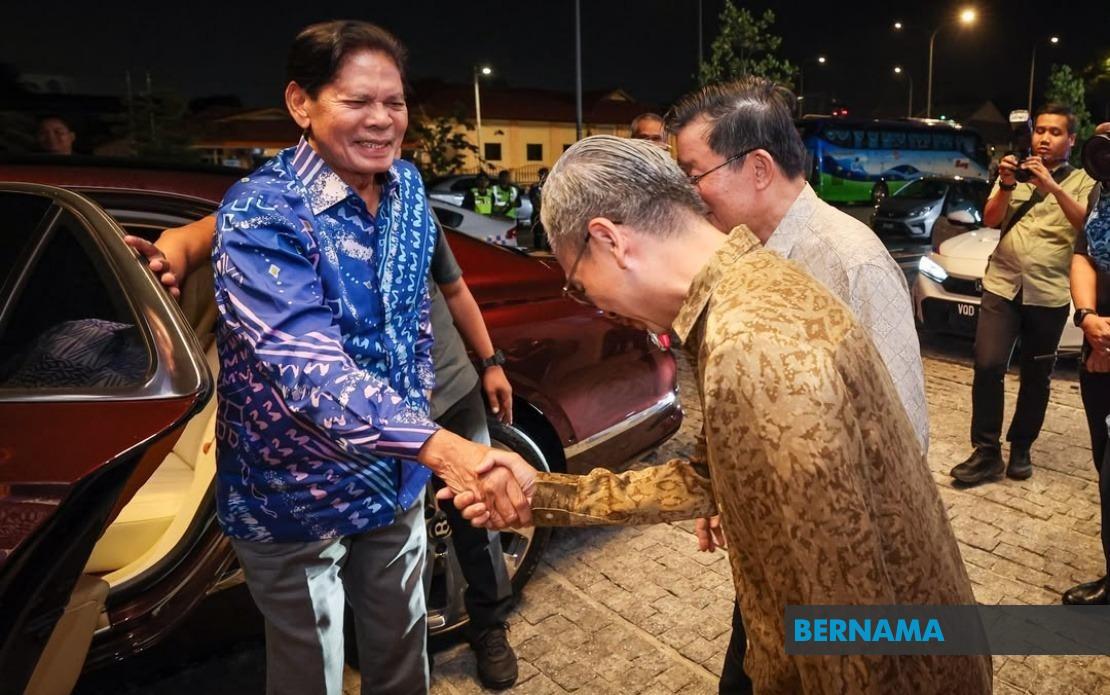
Penang Governor Tun Ramli Ngah Talib brought together nearly 350 journalists, editors and media executives from across Malaysia and the ASEAN region for a celebratory dinner marking National Journalists' Day (HAWANA) 2026, underscoring the state government's recognition of the media's indispensable contribution to national development. The event, held in Butterworth ahead of the conference's official opening, created space for reflection on the profession's evolving responsibilities in an era of rapid information dissemination and mounting pressure on news credibility.
The gathering drew an impressive cross-section of Malaysia's media leadership, including Penang Chief Minister Chow Kon Yeow and Communications Minister Datuk Fahmi Fadzil, signalling strong government endorsement for the sector. The presence of senior bureaucrats such as Penang State Secretary Datuk Seri Zulkifli Long and Communications Ministry Secretary-General Datuk Abdul Halim Hamzah reflected the high-level institutional support surrounding HAWANA 2026. Among media representatives were prominent figures from major outlets: Bernama Chairman Datuk Seri Wong Chun Wai, New Straits Times Group Editor Farrah Naz Karim, Sin Chew Daily Editor-in-Chief Chan Aun Kuang, Star Media Group Chief Content Officer Datin Paduka Esther Ng Sek Yee, Daily Express Sabah Chief Editor Datuk Sardahthisa James, and Astro Awani Editor-in-Chief Zaiful Mohd Ariffin.
The event's international dimension extended beyond Malaysia's borders, with delegates from neighbouring countries and key ASEAN members in attendance. Timor-Leste's Secretary of State for Social Communication Expedito Loro Dias Ximenes brought perspectives from Southeast Asia's newer democracies, while representatives from Indonesia's media fraternity and Timor-Leste's national news agency TATOLI joined the conversation. This cross-border representation highlights how HAWANA has matured into a significant platform for regional media dialogue and professional exchange, particularly as Southeast Asian nations grapple with similar challenges around misinformation, press freedom and journalistic standards.
HAWANA 2026, carrying the theme 'Media Integrity Strengthens Credibility', represents a critical moment for Malaysia's journalism sector to address mounting concerns about trust in news media. The emphasis on integrity resonates deeply across Southeast Asia, where fake news and coordinated disinformation campaigns have repeatedly undermined public discourse and democratic processes. By assembling approximately 1,000 media practitioners from several ASEAN countries in Penang, the conference creates opportunities for journalists to share strategies for combating misinformation while defending editorial independence under increasing political and commercial pressure.
Prime Minister Datuk Seri Anwar Ibrahim is scheduled to officially open the main event at the PICCA Convention Centre @ Butterworth Arena, lending further weight to the government's investment in this gathering. His participation signals that the administration views journalism not as adversarial but as a constructive partner in governance and public information. This positioning is particularly significant in Malaysia's context, where relations between government and media have historically been fraught with tension over reporting on politically sensitive matters, corruption and administrative accountability.
The three-day RIUH Pi HAWANA Carnival accompanying the conference represents an innovative effort to connect professional journalism discussions with broader public engagement. Expected to attract approximately 30,000 visitors, the carnival incorporates more than 24 local creative product brands and 20 food and beverage vendors, creating a festival atmosphere around what might otherwise remain an insular professional conference. This approach acknowledges that media literacy and public understanding of journalism's role require outreach beyond newsrooms and editorial offices.
The carnival's programming includes 16 stage performances featuring local musicians and artists such as Exists, Bunkface, Masdo, Sakura Band, Budak Nakal Hujung Simpang and Chelsea Ng, with free admission democratizing access to the event. Interactive workshops embedded within the carnival offer members of the public hands-on opportunities to explore creative media production, potentially inspiring a new generation of content creators and informed news consumers. This integration of entertainment, education and professional development mirrors successful media conferences globally that blur boundaries between industry conferences and public festivals.
For Malaysian and Southeast Asian readers, HAWANA 2026 carries implications extending beyond professional networking. The conference provides a testing ground for establishing shared standards around digital journalism practices, fact-checking methodologies and resistance to pressure from powerful interests seeking to shape media narratives. Countries across ASEAN face mounting challenges from state-sponsored disinformation, corporate entities seeking favourable coverage and authoritarian-leaning political movements seeking to delegitimize critical journalism. When journalists from multiple countries convene under the banner of integrity-focused dialogue, they strengthen professional networks that can sustain independent reporting across national boundaries.
The participation of international delegates from Timor-Leste, Indonesia and other Asian nations also reflects journalism's increasingly borderless nature. Stories originating in one Southeast Asian country often have immediate relevance in others, whether they concern regional trade, climate change, public health or security matters. By creating forums where journalists can discuss how to cover transnational issues responsibly and thoroughly, HAWANA contributes to more informed public discourse across the region as a whole.
The Penang government's prominent role in hosting HAWANA 2026 also underscores how regional administrations increasingly recognize media engagement as central to their development narratives. As Penang positions itself as a progressive, economically dynamic state, association with a major international journalism conference reinforces its image as a place where ideas circulate freely and professional standards are respected. This symbolic dimension matters in Southeast Asia's competitive political and economic landscape, where perceptions of openness and governance quality influence investor confidence and talent attraction.
Looking forward, the conference's emphasis on credibility during a period of profound transformation in media consumption patterns suggests that Malaysia's journalism sector is actively grappling with existential questions about its future. As traditional revenue models collapse, digital platforms fragment audiences and trust in institutions declines, journalists and news organizations require spaces to collaborate on sustainable business models and professional practices. HAWANA 2026 provides that space, bringing together voices from legacy media, digital-native outlets and emerging platforms under one roof to discuss shared challenges and potential solutions.

