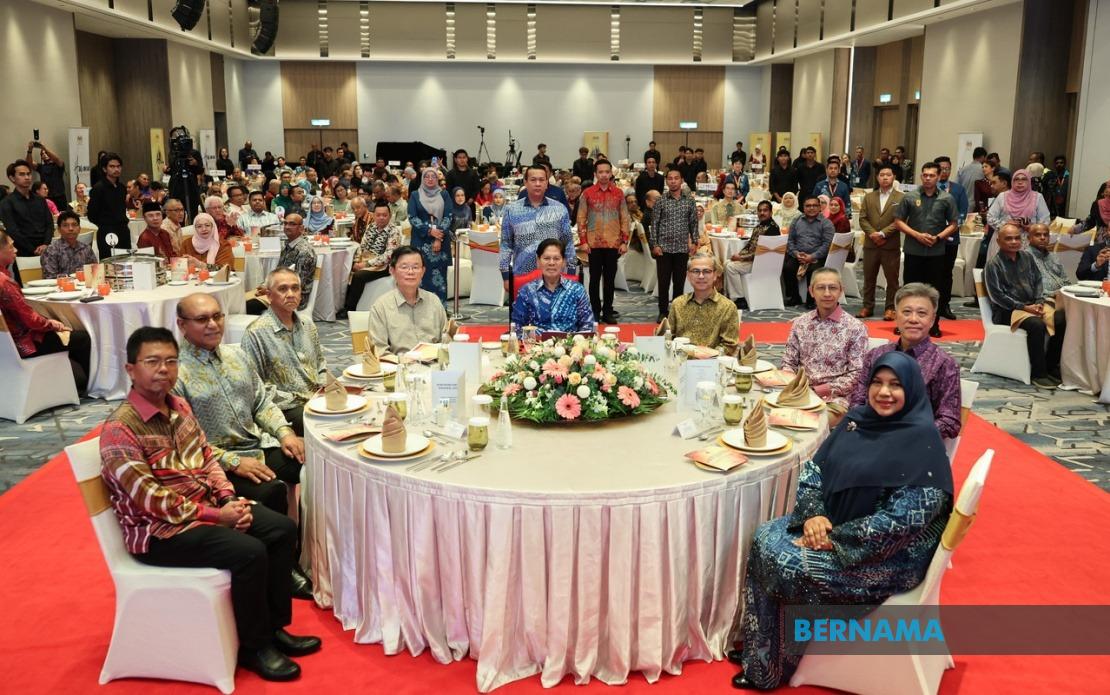
Penang has been selected as the host state for this year's National Journalists' Day celebrations, marking a significant recognition of the state's growing prominence in Malaysia's media and communications landscape. Penang Governor Tun Ramli Ngah Talib expressed his appreciation for the Communications Ministry's strategic approach to distributing HAWANA celebrations among different states, a decision he believes strengthens public understanding of journalism's integral role in national development.
The rotating hosting arrangement, according to Tun Ramli, creates meaningful opportunities for local communities to engage with media practitioners and comprehend the profound impact journalists have on shaping informed societies. By bringing the celebration to Penang, the state gains a platform to showcase its evolution as a progressive, competitive hub within Malaysia's economic and social framework. The governor characterised the honour of hosting as both a recognition of Penang's development trajectory and a chance to highlight the state's commitment to supporting a vibrant media ecosystem.
The HAWANA 2026 dinner, held in Penang, attracted nearly 350 distinguished guests representing the breadth of Malaysia's media industry. The gathering included editors-in-chief, senior management from both domestic and international news organisations, veteran journalists whose careers have defined Malaysian journalism, and representatives from state government. The diversity of attendees underscored the significance of the event and its reach across regional boundaries, with participants from several ASEAN nations attending alongside Malaysian counterparts.
Beyond the formal dinner, the broader HAWANA 2026 celebration has drawn approximately 1,000 media practitioners to Penang, creating an unprecedented gathering of journalistic talent. This large-scale assembly reflects the growing importance of regional media cooperation and the recognition that journalism's challenges and opportunities transcend national borders. The concentration of media professionals in Penang presents opportunities for networking, knowledge sharing, and discussion of industry standards that will likely influence journalism practices throughout Southeast Asia.
The event operates under the thematic framework of 'Media Integrity Strengthens Credibility', a choice that reflects current industry preoccupations with maintaining public trust amid an era of information abundance and misinformation. This theme carries particular resonance for Malaysian readers, as the country navigates complex conversations about media freedom, editorial independence, and the relationship between journalism and governance. The emphasis on integrity suggests that organisers view professional standards and ethical practice as foundational to the media's broader social mission.
Tun Ramli articulated a vision of HAWANA that extends beyond ceremonial recognition. He positioned the celebration as a platform for honouring both active journalists and veterans whose decades of work have established professional foundations within the industry. By formalising this recognition, the event reinforces that journalism represents a cumulative profession built on institutional knowledge and evolving standards. For Malaysia, where media narratives frequently intersect with political discourse and national development priorities, such acknowledgment of journalistic contributions carries symbolic weight.
The participating government officials reflected the celebration's prominence within Malaysia's institutional framework. Communications Minister Datuk Fahmi Fadzil attended alongside Prime Minister Datuk Seri Anwar Ibrahim, who was scheduled to officiate the main event at PICCA Convention Centre @ Butterworth Arena. This high-level participation demonstrates that the government views media engagement and recognition as strategically important, signalling official commitment to fostering a functional media environment capable of serving democratic and developmental purposes.
International representation at HAWANA 2026 underscored regional dimensions of contemporary journalism. The presence of Timor-Leste's Secretary of State for Social Communication Expedito Loro Dias Ximenes, alongside media practitioners from multiple ASEAN nations, positioned Penang as a convening point for regional media dialogue. This regional integration reflects broader Southeast Asian recognition that shared media challenges require collaborative responses and mutual learning among journalism communities operating within diverse political and economic contexts.
Bernama, Malaysia's national news agency, played a central coordinating role in organising HAWANA 2026. As the implementing agency under the Communications Ministry's auspices, Bernama's involvement reinforces state interest in supporting structured dialogue within the media industry. The agency's leadership, including chairman Datuk Seri Wong Chun Wai and chief executive officer Datin Paduka Nur-ul Afida Kamaludin, guided the working committee overseeing event execution, demonstrating institutional capacity for managing large-scale professional gatherings.
For Malaysian readers and media practitioners, HAWANA 2026 represents a milestone affirming journalism's position within the national conversation. The celebration occurs within a context where Malaysian journalists continue navigating questions about editorial autonomy, the balance between development journalism and critical reporting, and the profession's relationship with both government and commercial interests. By convening nearly 1,000 practitioners under the banner of media integrity and credibility, the event acknowledges that these concerns remain central to journalism's future in Malaysia and the broader region.
The rotating host-state model introduces geographic and cultural diversity into how HAWANA celebrations unfold annually. Penang's selection reflects its established media infrastructure, home to numerous news organisations and communications enterprises. Future rotations will similarly distribute the celebration's benefits and visibility across Malaysia, fostering a distributed rather than centralised approach to industry recognition. This decentralisation mirrors international trends where journalism communities increasingly organise through networked rather than hierarchical structures.
Tun Ramli's endorsement of the Communications Ministry's initiative carries subtle political significance. By publicly commending the decision to rotate hosting, the governor positioned himself as supportive of inclusive institutional practices that extend beyond traditional power centres. This framing suggests that the rotating model serves broader goals of democratic participation and geographic equity within Malaysia's governance structures, themes that resonate with contemporary conversations about federalism and state autonomy.
The convergence of nearly 1,000 media professionals in Penang, combined with official recognition of journalism's contributions, creates a moment for industry reflection and forward-looking dialogue. Whether such gatherings translate into tangible improvements in journalistic standards, enhanced professional collaboration, or structural support for journalism depends on the substantive outcomes emerging from the event's discussion forums and working sessions. For Southeast Asian media communities watching, HAWANA 2026 offers a model for how governments might engage constructively with journalism while respecting professional independence and editorial integrity.

