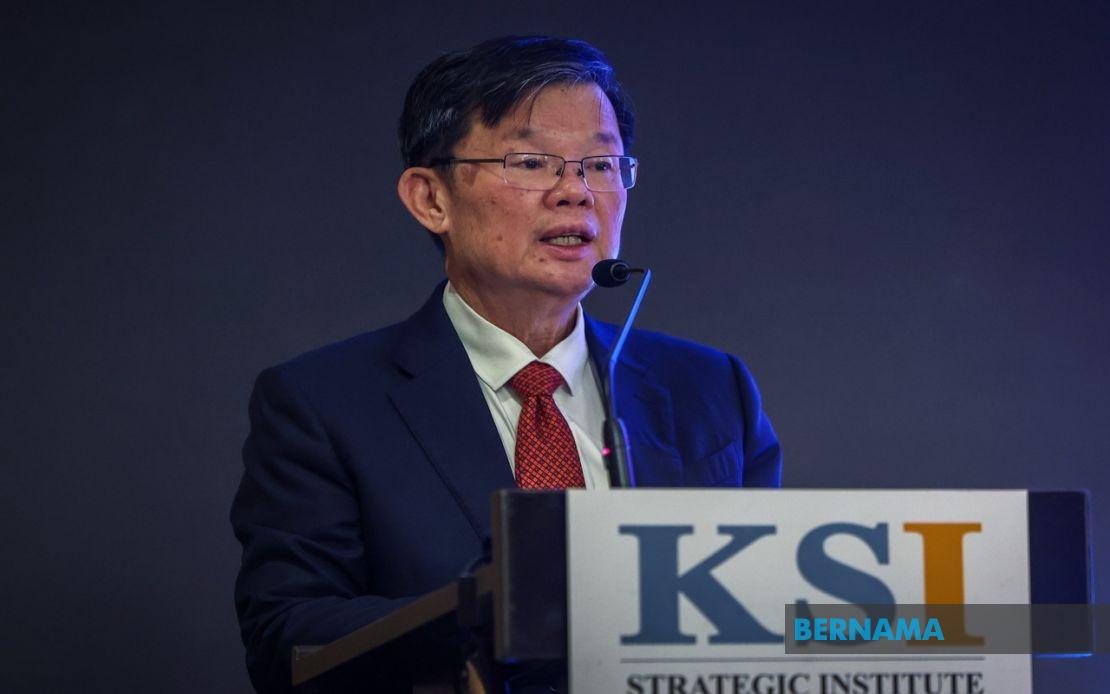
Penang Pakatan Harapan intends to increase the number of women candidates contesting in the forthcoming state election, though the coalition continues grappling with a persistent shortage of suitable women willing to enter the political arena. Chow Kon Yeow, who chairs the Penang PH chapter and serves as Chief Minister, outlined the ambition while acknowledging that actual candidate numbers will ultimately hinge on the availability of qualified and willing participants from the female electorate.
Speaking at the World Women Economic and Business Summit 2026 here, Chow articulated a fundamental tension underlying Malaysia's push for greater female political representation. While Penang PH remains dedicated to the 30 per cent women's participation benchmark in politics and policymaking, the coalition confronts the stubborn reality that insufficient numbers of eligible women are stepping forward during candidate vetting and selection processes. The challenge extends beyond simply wanting to nominate female contenders; the pipeline of prospective candidates itself requires strengthening before ambitious targets can be meaningfully achieved.
The Chief Minister pointed to a troubling national picture that underscores why Penang's aspiration, though worthwhile, reflects a broader Malaysian struggle. Nationally, women comprise only 13.5 per cent of Members of Parliament and 12 per cent of state assemblypersons—figures that fall dramatically short of the 30 per cent objective first established in 2009. Nearly 15 years on, the yawning gap between aspiration and reality reveals that Malaysia's political ecosystem continues resisting female advancement, despite rhetorical commitments from leadership tiers.
Chow observed that women have achieved considerable strides in education, commerce, engineering, and public administration, yet paradoxically remain underrepresented in electoral politics. This paradox suggests that political participation carries distinct barriers absent from professional sectors. The pressures and complexities inherent to contesting elections—intense media scrutiny, personal security concerns, family obligations, and entrenched male-dominated party structures—deter potential female candidates more effectively than formal qualification deficits do. The challenge is therefore psychological, institutional, and structural rather than merely a shortage of capable women.
Among the systemic remedies Chow advocated during his summit address was the formal institutionalisation of the 30 per cent target within each political party's candidate selection methodology. Rather than treating women's representation as an optional aspiration, parties should embed quotas or targets into binding procedures that make gender parity a non-negotiable element of nomination processes. This mechanism has proven effective in corporate boardrooms across Southeast Asia and could similarly reshape political candidacy pathways.
Beyond recruitment mechanisms, Chow stressed the necessity for political parties to guarantee equitable female representation on decision-making committees. Women relegated to ceremonial or secondary roles within party hierarchies inevitably lack the authority, visibility, and confidence-building opportunities required to transition into electoral candidacy. Structural parity in leadership committees sends a powerful internal signal that party governance values female perspectives, thereby normalising female leadership across all organisational levels.
Access to resources constitutes another critical bottleneck. Emerging female political leaders frequently encounter difficulty securing campaign financing, media connections, and strategic advice compared to their male counterparts navigating familiar, male-dominated party networks. Chow's emphasis on strengthening mentorship programmes targeting aspiring women leaders acknowledges that formal guidance from experienced politicians substantially eases the transition into candidacy. Mentorship simultaneously provides practical knowledge about campaigning while offering psychological reassurance that female politicians can successfully navigate systemic pressures.
For Malaysian observers, Penang's struggle mirrors comparable difficulties across the coalition and opposition alike. Despite progressive rhetoric from Pakatan Harapan leaders, implementation remains inconsistent and fragmented. The party's genuine commitment appears evident, yet genuine commitment divorced from institutional restructuring produces only marginal gains. Penang's next state election will therefore serve as a measurable indicator of whether Chow and his coalition can translate aspirational statements into tangible candidate numbers that approach the three-decade-old 30 per cent benchmark.
The broader regional context proves instructive. Several Southeast Asian democracies have achieved or approached gender parity in legislative bodies through mandatory quota systems—mechanisms Malaysia continues resisting despite repeated calls from women's rights advocates. Thailand, the Philippines, and Indonesia employ various quota approaches that have substantially elevated female representation beyond Malaysia's current levels. Penang's forthcoming election presents an opportunity for Malaysian progressives to demonstrate that voluntary measures can achieve meaningful results, thereby pre-empting calls for legislated quotas that ruling coalitions across the political spectrum have historically opposed.
Ultimately, Chow's candid acknowledgment of recruitment difficulties, rather than merely celebrating aspirational targets, reflects refreshing honesty about Malaysia's political maturation challenge. The gap between the 30 per cent goal and current 12-13 per cent reality will not narrow through rhetoric alone. Sustained institutional reform, resource reallocation, mentorship commitment, and genuine cultural shifts within party structures remain prerequisites. Penang's next election will reveal whether this acknowledgment translates into substantive action or remains another iteration of Malaysia's familiar pattern of noble intentions outpacing implementation.