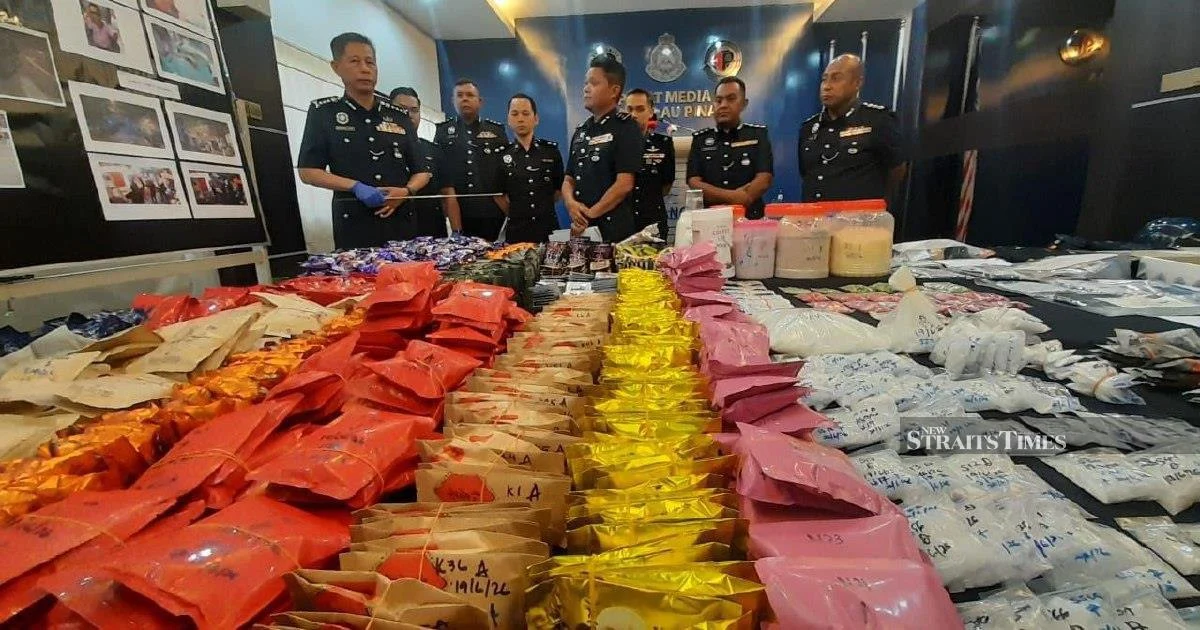
In a major blow against organised drug trafficking in Penang, state police have arrested a couple and dismantled a sophisticated drug-processing facility after discovering the operation concealed within a condominium unit in Butterworth. The enforcement action culminated in the seizure of narcotics estimated at RM9.7 million, marking one of the more substantial drug hauls in the northern state's recent law enforcement efforts. The discovery highlights the evolving tactics employed by trafficking networks to conceal illicit activities within residential developments, exploiting the anonymity afforded by urban high-rise living.
The investigation that led to the arrests and seizure appears to have been triggered by intelligence gathered from ongoing anti-narcotics operations across the region. Penang, as a major port state with significant commercial and tourism infrastructure, has long attracted criminal syndicates seeking to exploit maritime and land routes for drug distribution. The accessibility of residential premises in densely populated areas provides cover for operations that might otherwise draw attention in commercial or rural settings. The condominium format offers particular advantages to traffickers: shared common areas that reduce suspicion around unusual foot traffic, multiple entry and exit points, and the demographic diversity typical of such developments which provides natural camouflage.
The seized narcotics represent an investment in inventory and processing capacity that underscores the scale at which these operations functioned. The RM9.7 million valuation reflects both the quantity and type of controlled substances encountered during the raid. Such valuations typically encompass heroin, methamphetamine, fentanyl, and other synthetic drugs that command premium prices in Southeast Asian markets. The processing capability suggests the operation was not merely a redistribution point but an active manufacturing or refinement facility, adding a layer of technical sophistication and indicating links to upstream suppliers capable of providing precursor chemicals and raw materials.
For Malaysian law enforcement, the arrest of the couple involved presents opportunities to develop intelligence about the broader network sustaining this operation. The relationship between the suspects may indicate a sophisticated partnership where domestic or romantic partnership provides cover for commercial criminality, a pattern increasingly documented in organised crime analysis. Their cooperation or resistance during interrogation will likely prove crucial in determining whether investigators can trace connections upstream to source countries or laterally to distribution networks operating in other parts of the peninsula or the broader region.
The Butterworth location carries particular significance within Penang's geography and criminal underworld. Situated on the mainland portion of the state, across the Penang Bridge from the island, Butterworth serves as a crucial transit point for road traffic entering and leaving Penang. Its proximity to major highways linking the state to Kuala Lumpur and Thailand makes it strategically valuable for trafficking operations. The residential and mixed-use character of much of Butterworth provides less scrutiny than might be encountered in more isolated locations while maintaining transport accessibility essential for distribution networks.
This operation demonstrates the sophistication now expected in high-volume drug trafficking enterprises operating throughout Southeast Asia. The establishment of a processing facility rather than a simple storage point indicates knowledge of chemistry and manufacturing protocols, suggesting involvement of personnel with technical expertise or training. The maintenance of such an operation within a residential area requires management of multiple operational challenges: odour control, noise management, security against theft or infiltration by rival gangs, and counter-surveillance awareness to avoid detection by authorities.
The implications of this bust extend beyond immediate law enforcement success. The removal of RM9.7 million in narcotics from the supply chain creates temporary disruption to distribution networks downstream. However, trafficking organisations typically maintain sufficient redundancy and capital reserves to quickly establish replacement facilities or accelerate operations through alternative locations. The arrest of the two suspects provides interrogation leads, but disruption to supply rarely proves permanent unless accompanied by sustained, coordinated enforcement addressing multiple nodes within trafficking networks simultaneously.
For Malaysian readers, the case underscores the reality that major drug operations increasingly penetrate urban residential areas rather than remaining confined to isolated manufacturing sites. The normality of condominium living masks extraordinary criminality, a challenge that complicates prevention strategies relying on community vigilance or neighbourhood awareness. Residents in high-rise developments may unknowingly occupy units near processing facilities, creating exposure to chemical hazards and violent incidents arising from turf disputes or internal conflicts within criminal organisations.
The bust also reflects Penang police's sustained focus on dismantling trafficking infrastructure within the state. Penang's position on major trafficking routes and its status as a gateway for maritime-based smuggling have necessitated intensive drug enforcement, with multiple agencies coordinating to address the problem. Individual operations like this condominium raid contribute to a broader pressure campaign, though the fundamental economics of drug trafficking—substantial profits despite enforcement risks—ensure that supply networks continually adapt and regenerate. The investigation remains ongoing as authorities work to establish the full extent of the operation and its connections to broader trafficking enterprises operating regionally.

