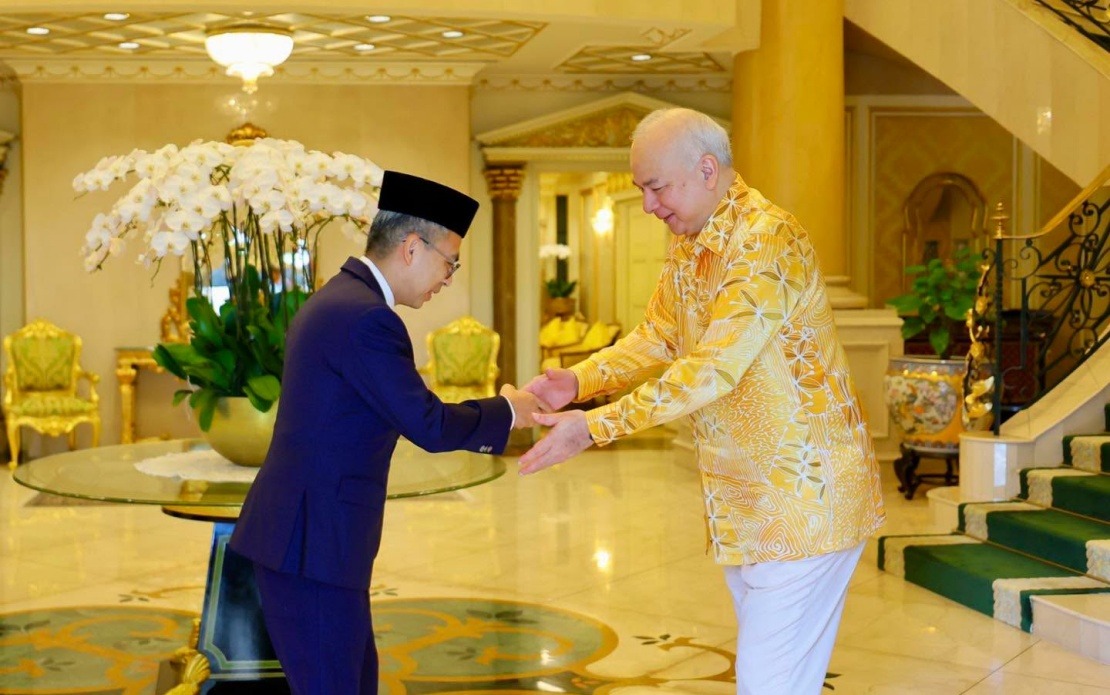
Communications Minister Datuk Fahmi Fadzil has provided Sultan Nazrin Shah, the Sultan of Perak, with a comprehensive overview of federal initiatives aimed at reinforcing communication infrastructure development and broadening connectivity reach across the state. The briefing took place during an official audience granted to the minister at Istana Negara, underscoring the government's commitment to keeping the royal institution informed on significant policy developments affecting the state.
The expansion of digital service coverage in Perak represents a key pillar of the administration's broader telecommunications modernisation agenda. As Malaysia navigates the complexities of an increasingly digital economy, the state of Perak—with its mix of urban centres and rural communities—stands to benefit substantially from targeted infrastructure improvements. Enhanced connectivity directly translates to economic opportunity, particularly for small and medium enterprises operating in interior regions where traditional business networks remain geographically constrained.
During the audience, the minister emphasised not only the physical expansion of communication networks but also the institutional safeguards necessary to protect users in an evolving digital landscape. Online safety emerged as a focal point of discussion, reflecting growing governmental recognition that infrastructure development must be accompanied by protective frameworks addressing cybersecurity, data privacy, and digital literacy concerns. This dual approach—simultaneous expansion and protection—acknowledges that connectivity without safety creates vulnerabilities that disproportionately affect vulnerable populations.
Pearak's unique geographic and demographic profile makes it particularly suitable for pioneering integrated digital development strategies. The state encompasses both the Klang Valley's industrial hinterland and substantial rural territories where digital divide challenges persist. Infrastructure initiatives here could serve as a testbed for scalable solutions applicable across other Malaysian states facing similar connectivity disparities. The royal briefing signals that state-level development planning now incorporates telecommunications as a foundational consideration, elevating digital infrastructure from a peripheral concern to central government priority.
The minister's decision to personally brief the Sultan reflects the ceremonial but substantive importance attached to royal engagement in policy matters. While constitutionally advisory, the institution of the Sultan maintains considerable informal influence over state development trajectories and public sentiment. Securing royal awareness and implicit endorsement of telecommunications initiatives smooths implementation pathways and demonstrates governmental responsiveness to subnational leadership structures.
Online safety in the Malaysian context encompasses multiple dimensions often underemphasented in developed markets. Consumer fraud targeting individuals unfamiliar with digital transaction mechanics represents an acute concern in states with significant older and less digitally native populations. Simultaneously, misinformation propagation through messaging applications and social platforms poses governance challenges that conventional regulatory approaches struggle to address. The minister's highlighting of this issue suggests the government recognises these complexities and views them as integral to telecommunications policy rather than ancillary concerns.
Infrastructure development timelines in Perak will likely influence rural economic prospects for the next decade. Reliable broadband access enables agricultural communities to access market information, connect with buyers directly, and adopt precision farming technologies. Similarly, healthcare delivery improves substantially where telemedicine becomes viable, addressing physician shortages in remote districts. The communications minister's briefing positioned these practical outcomes as central motivations for the infrastructure programme, appealing to the Sultan's demonstrated interest in state welfare and economic development.
The government's communication of these initiatives through formal royal briefings also serves important domestic political functions. In Malaysia's federal structure, state rulers retain significant symbolic authority and ceremonial responsibilities that shape public perception of legitimacy. By ensuring royal houses receive detailed advance information on major policies affecting their states, the federal government builds cooperative relationships essential for implementation success. This is particularly relevant in Perak, where historical tensions between state and federal authorities occasionally emerge around resource allocation and development priorities.
Looking forward, the integration of online safety considerations into infrastructure development planning may establish precedent for other government agencies. If telecommunications improvements are accompanied by citizen education programmes, regulatory frameworks addressing digital fraud, and coordination with financial institutions on transaction security, Perak could emerge as a model for holistic digital development. The involvement of state-level royal institutions in overseeing these initiatives might enhance public confidence and participation in digital services previously viewed with suspicion in more traditional communities.
The minister's expressed well-wishes toward the Sultan and the royal family, communicated publicly through social media, reinforce the ceremonial and relational aspects of such briefings. These formalities, while sometimes dismissed as purely symbolic, carry genuine weight in Malaysian governance contexts where respect for institutions and hierarchies influences cooperation levels and policy legitimacy. The Perak briefing exemplifies how modern telecommunications policy intersects with traditional governance structures and institutional relationships that continue shaping Malaysia's administrative culture.

