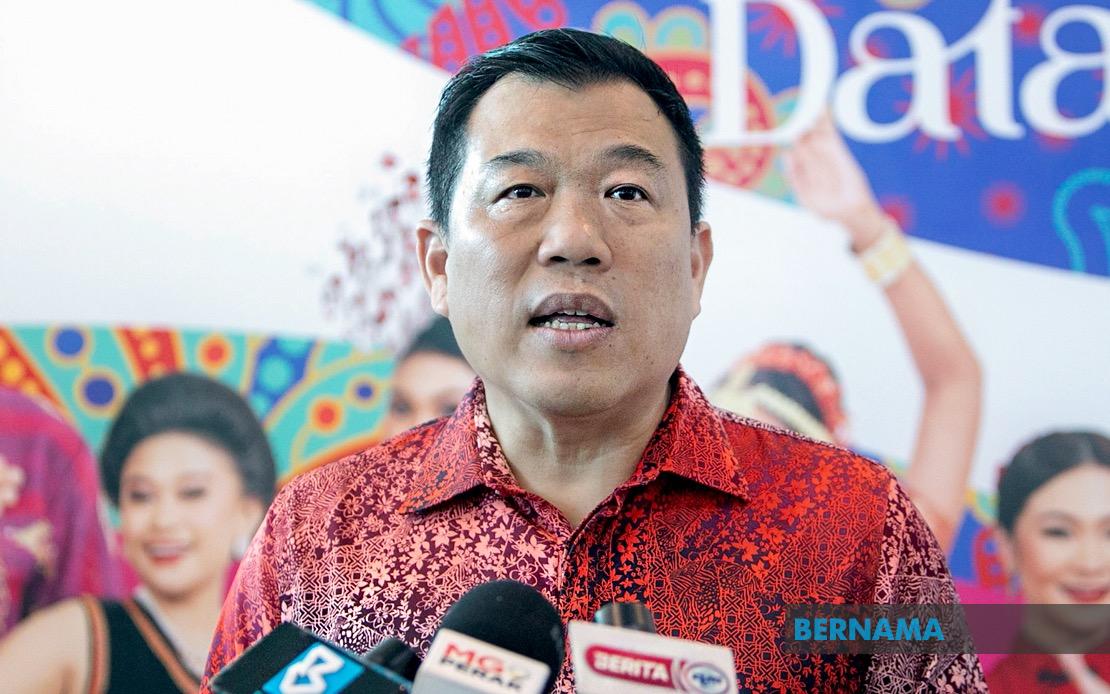
Perak's tourism sector is demonstrating resilience in attracting domestic visitors, though the state faces mounting challenges in drawing international travellers amid global economic uncertainty and regional connectivity gaps. Official data reveals that overnight domestic tourist arrivals grew modestly to 10.4 million in 2024 from 10.2 million the previous year, according to Loh Sze Yee, chairman of the state Tourism, Industry, Investment and Corridor Development Committee. The growth, though marginal, underscores the continued appeal of Perak's attractions to Malaysian holidaymakers seeking domestic getaways. This trajectory reflects broader patterns across Malaysia's tourism landscape, where internal travel remains a stabilising force even as international markets contract.
The corresponding decline in foreign visitor numbers tells a different story. International tourist arrivals to Perak contracted by approximately 1.5 per cent last year, a slippage that officials attribute to structural and macroeconomic headwinds rather than local factors. Among the primary culprits is the suspension of direct flight services on the Singapore-Ipoh route, a critical gateway for Southeast Asian visitors and particularly Singaporean tourists who traditionally form a substantial portion of Perak's international visitor base. The loss of this connectivity has effectively shortened Perak's reach into one of the region's most affluent markets, forcing international travellers to navigate less convenient routing options that discourage same-day or short-break visits.
Beyond aviation challenges, the global oil crisis has cascading effects throughout the aviation industry, placing upward pressure on airfares and operational costs. This macroeconomic turbulence has made leisure travel more expensive and discretionary, prompting cost-conscious international tourists to reassess their holiday plans. For a destination like Perak that relies partly on price-sensitive middle-income tourists from neighbouring countries and beyond, such headwinds create genuine market contraction rather than mere redistribution of visitors to competing locations.
Within Malaysia's broader domestic tourism hierarchy, Perak occupies a notable yet subordinate position. According to data from Chief Statistician Datuk Seri Dr Mohd Uzir Mahidin, Selangor dominates with 36.4 million domestic visitors, while Kuala Lumpur follows closely at 35.1 million. Perak's 23.6 million domestic arrivals place it firmly within Malaysia's top-tier tourist destinations, reflecting the state's enduring attractions spanning heritage sites, natural landscapes, and emerging experiential tourism offerings. Yet the competitive intensity of Malaysia's tourism sector means that growth rates and absolute visitor numbers are increasingly pivotal to economic development strategies, particularly in secondary cities seeking diversified revenue streams beyond traditional manufacturing and agriculture.
The Pantai Timur Fest 2026, hosted in Ipoh and officially inaugurated by Tourism Malaysia director-general Mohd Amirul Rizal Abdul Rahim, represents a strategic initiative to reposition Perak as a gateway destination for East Coast peninsular attractions. The festival's selection of Ipoh capitalises on the city's geographic centrality within Peninsular Malaysia, bridging northern, central, and southern regions whilst simultaneously introducing the distinctive tourism offerings of Kelantan, Terengganu, and Pahang to a wider audience. This collaborative approach acknowledges that intraregional tourism promotion can generate multiplicative effects, allowing peripheral destinations to leverage more established regional hubs for market access.
The festival's infrastructure reveals sophistication in tourism product packaging. Thirty exhibition booths showcase operators from the East Coast, encompassing travel agencies, hotel chains, theme parks, tourism product developers, and online travel platforms. This diversity reflects the maturation of Malaysia's tourism ecosystem, where both traditional hospitality providers and digital commerce intermediaries compete for consumer attention. The event extends beyond commercial transactions to cultural programming, featuring traditional performances, artisanal demonstrations, heritage cuisine promotions, and interactive experiences. Such experiential components address evolving consumer preferences, particularly among younger demographic cohorts seeking authenticity and cultural engagement rather than passive sightseeing.
Special promotions and travel package discounts featured at the festival align strategically with Tourism Malaysia's Visit Malaysia 2026 campaign, a nationwide initiative aimed at attracting visitor volumes ahead of potential economic headwinds. By concentrating promotional firepower during such flagship events, authorities seek to generate concentrated demand spikes that translate into immediate revenue for hospitality and transportation sectors. For Perak specifically, such campaigns offer opportunities to shift domestic tourist composition toward higher-spending cohorts willing to invest in bundled experiences rather than budget accommodation.
The state's tourism trajectory reflects systemic patterns affecting Malaysian destinations beyond Perak's borders. Domestic tourism demonstrates structural resilience rooted in rising middle-class purchasing power, established holiday traditions, and limited necessity for international travel documentation or currency conversion. Conversely, international arrivals remain vulnerable to exogenous shocks including aviation supply disruptions, currency volatility, geopolitical events, and global economic cycles. This asymmetry suggests that regional destinations must increasingly develop sophisticated domestic market strategies whilst simultaneously addressing structural barriers to international connectivity, whether through advocacy for enhanced flight services or pricing strategies that absorb cost increases.
Looking forward, Perak's tourism development hinges on resolving the Singapore-Ipoh flight service gap, a commercially important connection that requires coordination between Malaysian and Singaporean aviation authorities alongside commercial carriers evaluating route viability. The resumption of this service could catalyse renewed international visitation whilst complementing ongoing domestic tourism growth. Concurrently, enhanced promotional integration with neighbouring East Coast states through initiatives like Pantai Timur Fest 2026 offers mechanisms to increase visitor yield and dwell time, expanding economic impact beyond simple arrival statistics. The interplay between restoring international connectivity and deepening domestic market penetration will ultimately determine whether Perak's modest current growth trajectory accelerates into the double-digit expansion rates increasingly necessary to compete within Malaysia's intensifying tourism landscape.

