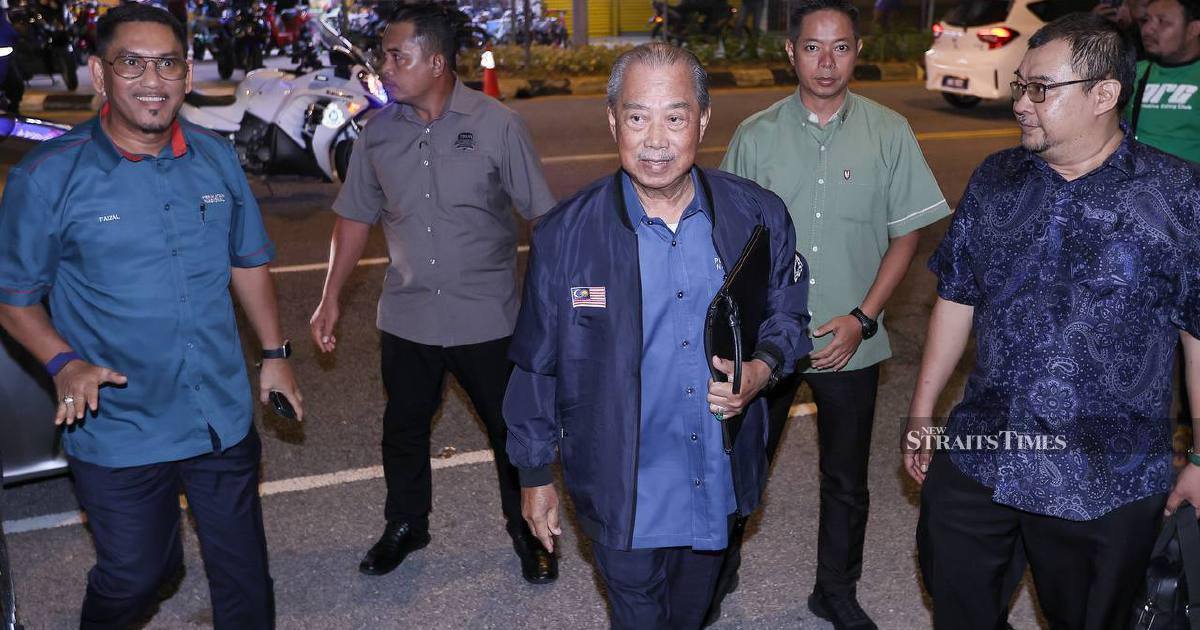
The Perikatan Nasional coalition mobilised its top-tier leadership for an unscheduled Supreme Council session at PAS headquarters in Kuala Lumpur, marking a significant moment in Malaysia's increasingly volatile political landscape. The emergency nature of the gathering underscores mounting pressures facing the alliance, which has evolved into a formidable parliamentary force over recent years but now confronts internal and external challenges that demand immediate collective deliberation.
PN's decision to convene at short notice typically signals that coalition members must address matters of strategic importance that cannot wait for routine scheduled meetings. The choice of venue—PAS headquarters rather than a neutral location—carries symbolic weight, reflecting the Islamic party's prominent role within the alliance structure. PAS, alongside PKR and WARISAN, forms the backbone of PN, and hosting the meeting at its premises underscores its position as a key stakeholder in navigating whatever crisis prompted the emergency assembly.
The timing of such meetings often corresponds to parliamentary manoeuvres, internal disagreements over policy direction, or responses to government initiatives that threaten the coalition's legislative objectives. Given Malaysia's fractious political environment, where slim parliamentary majorities have become the norm rather than exception, sudden developments in coalition dynamics can reshape the balance of power between government and opposition within hours. This particular session evidently warranted interrupting leaders' schedules, suggesting the matter transcends routine administrative matters.
PN's emergence as a cohesive opposition force has represented a significant realignment in Malaysian politics, particularly in challenging the long-standing PH-BN binary that dominated political discourse. However, maintaining coalition discipline across parties with distinct ideological bases and regional strongholds presents perpetual challenges. The alliance must constantly negotiate between PAS's Islamist orientation, PKR's progressive positioning, and WARISAN's Sabah-focused interests—a balancing act that occasionally produces friction requiring high-level intervention.
For Malaysian observers and regional analysts tracking Southeast Asian political trends, PN's internal cohesion remains a bellwether for broader shifts in opposition politics. The coalition's ability to present a united front affects not only parliamentary calculations but also electoral prospects in any snap election scenario. Emergency meetings become barometers of coalition health, as they typically indicate either unprecedented opportunity or existential threat requiring immediate response.
The opposition landscape's current state carries particular significance for Malaysia's development trajectory. Whether PN can maintain unity while articulating a coherent alternative policy platform remains pivotal as the country navigates economic challenges, religious sensitivities, and regional positioning. Coalition fragmentation would likely reinvigorate BN's political calculations, while PN consolidation could reshape the next electoral cycle entirely.
Such emergency sessions also reflect the compressed timeframes within which contemporary Malaysian politics operates. With government decisions, parliamentary votes, and media cycles moving at accelerated pace, opposition coalitions increasingly must adopt similarly rapid response mechanisms. What might have previously warranted a formal agenda and advance scheduling now demands spontaneous assembly to address fast-moving developments.
The presence of multiple party leaders at PAS headquarters signals the issue transcends any single coalition member's purview, affecting the entire alliance's strategic position or parliamentary standing. Individual party interests must be subordinated to collective PN objectives, even as each component organisation guards its autonomy and policy priorities. Such meetings often produce carefully calibrated statements designed to project unity while allowing individual parties interpretive flexibility.
Regionally, Malaysia's opposition politics carry implications beyond domestic boundaries. ASEAN stability partly depends on orderly political transitions and coherent policymaking, both compromised if major coalitions succumb to internal dysfunction. PN's capacity to function as responsible opposition—scrutinising government while avoiding destabilising tactics—contributes to institutional health throughout Southeast Asia.
The emergency nature of the Kuala Lumpur gathering also reflects PN's evolution from protest movement to governing coalition (in several states) and major parliamentary bloc. With this increased responsibility comes heightened vulnerability to sudden shocks, whether parliamentary reversals, defections, or strategic miscalculations. The Supreme Council's collective deliberation becomes increasingly consequential as PN's institutional footprint expands.
Observers will closely monitor whether PN issues a substantive statement following the meeting or maintains strategic ambiguity about the proceedings. Coalition communications often employ careful language to signal resolve to supporters while avoiding inflammatory rhetoric that might provoke government response or internal recrimination. The tone and content of post-meeting messaging will provide crucial insight into the severity of whatever prompted the emergency assembly.
As Malaysian politics continues navigating complex terrain shaped by parliamentary mathematics, state-federal dynamics, and competing ideological currents, PN's internal cohesion remains essential to system stability. The emergency meeting represents both a test of coalition mechanisms and a moment for leadership to demonstrate responsiveness to challenges. How successfully PN's top echelon addresses whatever prompted the unexpected gathering will likely reverberate through Malaysian politics in coming weeks.

