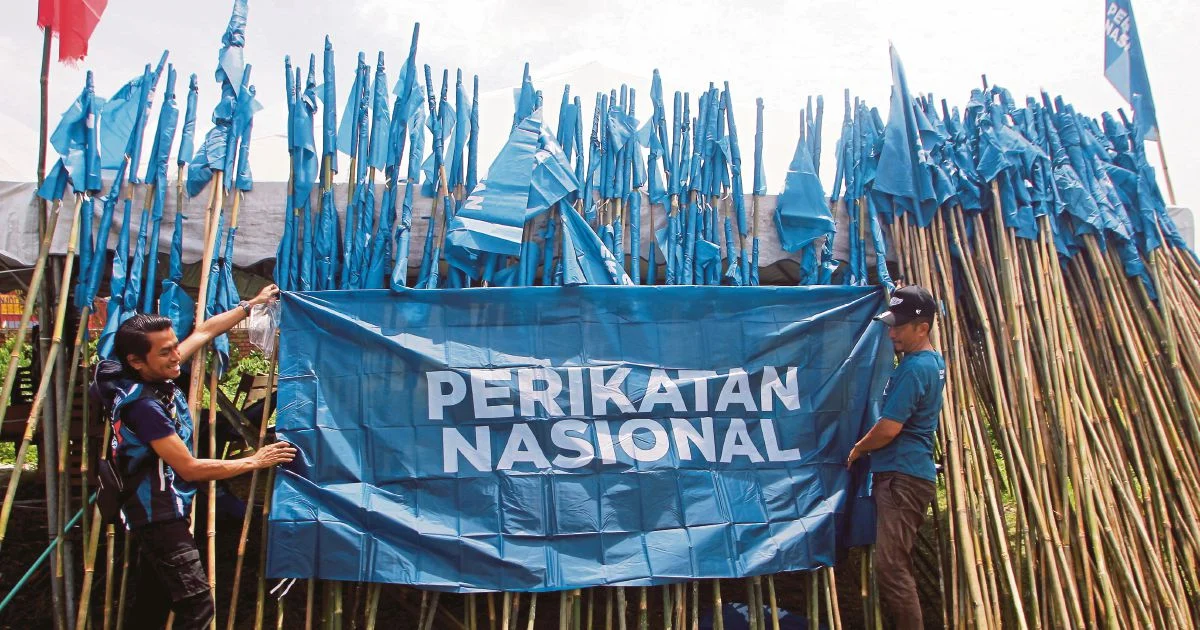
The Perikatan Nasional coalition is preparing for a significant internal gathering on June 22, bringing together its Supreme Council to tackle longstanding administrative and procedural questions that have remained unresolved. The session, scheduled for Kota Baru, will focus on multiple contentious matters that have the potential to shape how the opposition alliance conducts its electoral operations in the near term.
Among the most pressing issues requiring clarification is the permissible use of the coalition's logo across member parties and their affiliated entities. This technical detail carries substantial implications for how Perikatan Nasional presents itself to voters and how resources are deployed across the alliance's organisational structure. The logo dispute reflects deeper structural tensions within the coalition regarding which components hold authority over branding decisions and how uniformity can be maintained across geographically dispersed member parties.
Equally critical to the council's deliberations will be establishing definitive protocols for candidate endorsements moving forward. The coalition encompasses multiple political parties with distinct organisational cultures and constituent bases, creating inherent complexity in developing a unified selection and endorsement framework. The absence of clear procedural guidelines has evidently created friction and uncertainty about how candidates will be vetted, selected, and formally backed by the broader PN apparatus.
For Malaysian observers, these internal mechanisms carry significance beyond procedural housekeeping. How effectively Perikatan Nasional resolves these governance questions will influence the coalition's ability to present a cohesive political force capable of mounting a credible national-level challenge. The opposition alliance has sought to position itself as an organised alternative to the current government, and internal clarity on these matters reinforces that narrative or undermines it, depending on how transparently and decisively the June 22 meeting proceeds.
The timing of this gathering also warrants consideration within the broader Malaysian electoral calendar. As speculation continues regarding when the government might dissolve Parliament and call for fresh elections, clarity on candidate procedures becomes increasingly time-sensitive. Should the council reach decisive conclusions on these matters, it would signal to coalition members and the broader electorate that Perikatan Nasional is operationally prepared for the electoral contest whenever it arrives.
From a Southeast Asian perspective, the mechanics of opposition coalition management remain understudied but consequential for regional democratic development. Malaysia's multi-ethnic, multi-confessional political landscape means that opposition coalitions must negotiate not only partisan interests but also communal and ideological divides. How Perikatan Nasional manages its internal governance therefore offers insights into how diverse political groupings can maintain sufficient cohesion to function effectively without surrendering their individual identities.
The Supreme Council meeting also reflects the practical realities of managing a coalition encompassing parties with different historical trajectories and institutional capacities. Some members command substantial organisational infrastructure and parliamentary representation, while others are newer or smaller entities. Establishing logo usage and endorsement protocols that feel equitable across this spectrum requires both technical administrative work and political negotiation.
Previous instances where opposition coalitions in Malaysia have struggled with unclear governance procedures have resulted in defections, public disputes, and damaged electoral performance. The Perikatan Nasional leadership's willingness to formally address these issues through a scheduled Supreme Council session suggests an awareness of these historical lessons and a determination to avoid similar pitfalls.
The substance of what emerges from June 22 will likely be scrutinised carefully both by coalition members seeking clarity on their roles and prerogatives, and by the ruling administration and public observers evaluating whether Perikatan Nasional has genuinely consolidated as a functioning political force. The resolution of logo questions may seem technical to casual observers, but it carries symbolic weight regarding the coalition's overall organisational maturity.
Candidates themselves have direct interest in the endorsement protocols that emerge from this meeting. Clear criteria and transparent processes affect how individuals navigate their paths into electoral politics, whether through party affiliation or coalition backing. Ambiguity on endorsement procedures can generate grievances and recriminations that ripple through party structures long after an election concludes.
Regionally, the Perikatan Nasional meeting illustrates broader challenges facing opposition coalitions across Southeast Asia. Thailand, Indonesia, and the Philippines have all grappled with similar questions about how to maintain coalition unity while respecting member-party autonomy. Malaysian political observers and practitioners often track these regional patterns for relevant comparative lessons.
The June 22 session will thus serve multiple purposes simultaneously: resolving technical administrative questions, signalling organisational resolve to coalition members and the electorate, and potentially establishing precedents for how Perikatan Nasional manages future governance challenges. The outcomes will reveal not only what decisions the council reaches but how transparently and convincingly it communicates those decisions to stakeholders.

