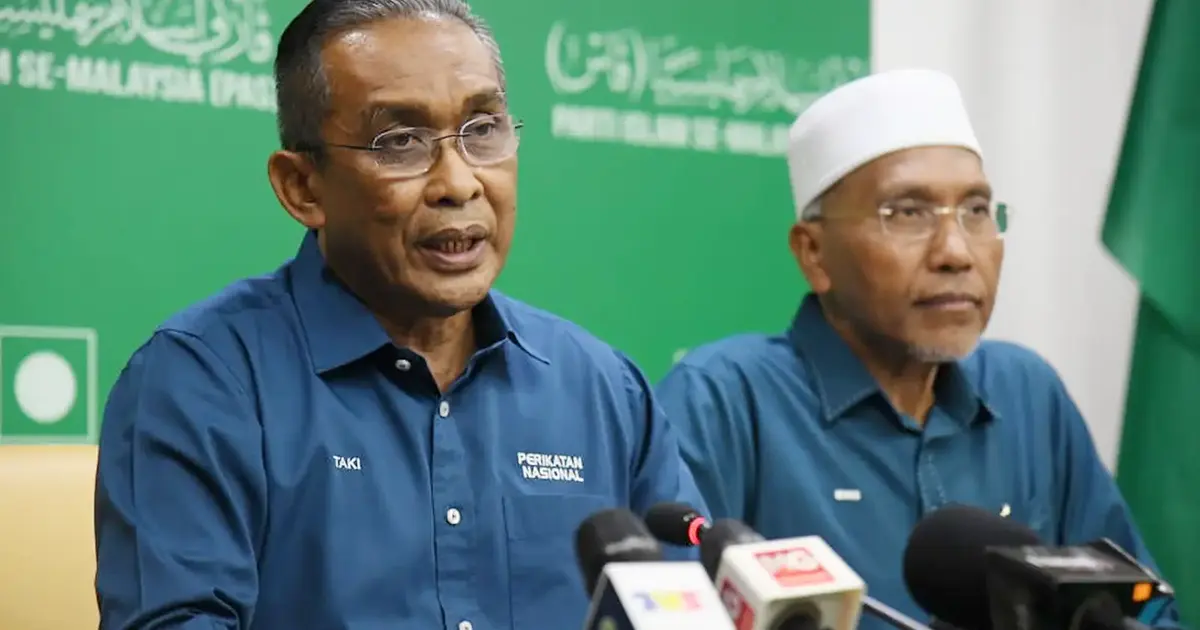
Perikatan Nasional has moved to strengthen its organizational discipline by establishing a clear requirement that all meetings and events held under the coalition's banner must receive explicit authorization from the chairman before proceeding. The announcement came from the coalition's secretary-general, Takiyuddin Hassan, who underscored the formal governance procedures that bind member parties within the PN framework.
The clarification emerged in response to reports that Bersatu president Muhyiddin Yassin had initiated steps to convene a PN Supreme Council session on a particular date. Rather than allowing such high-level gatherings to proceed unilaterally, the secretary-general's intervention highlights a hierarchical approval process designed to maintain centralized control over the coalition's decision-making machinery. This move reflects broader dynamics within PN, where multiple power centers and competing interests have occasionally created tension around who possesses authority to summon major gatherings.
For Malaysian political observers, the emphasis on formal approval procedures carries significance beyond mere administrative housekeeping. Coalition governance in Malaysian politics has historically proven fragile when internal protocols remain ambiguous or when senior figures operate without consensus on procedural authority. By codifying the requirement for chairman clearance, PN appears intent on preventing rogue actors—whether unilaterally ambitious party leaders or rival factions—from hijacking the coalition's institutional machinery for partisan advantage.
The timing of this clarification is particularly noteworthy given PN's recent trajectory. The coalition has struggled to maintain unity and coherence as a political force, with member parties sometimes pursuing conflicting strategies in various state assemblies and parliament. Tightening controls over when and how the Supreme Council convenes could serve multiple purposes: preventing embarrassing internal divisions from playing out publicly, ensuring that major policy pronouncements reflect genuine consensus rather than factional wishes, and reinforcing the chairman's authority as the coalition's ultimate arbiter.
Bersatu, as the coalition's largest component party and home to prominent figures like Muhyiddin, occupies a position of particular prominence within PN's structure. Any attempt by its leadership to independently summon a Supreme Council meeting without prior coordination effectively bypasses established chains of command. From the secretary-general's perspective, permitting such unilateral action would set a dangerous precedent, inviting other member parties to similarly ignore formal procedures and fracturing the coalition's operational unity.
This governance dispute also reflects deeper questions about PN's identity and direction. Is the coalition primarily a vehicle for Bersatu's political ambitions, or a genuinely collaborative enterprise where all member parties enjoy comparable standing and influence? By insisting on centralized approval procedures, PN's leadership appears to be asserting that the coalition constitutes an entity distinct from any single member party, with its own institutional logic and decision-making requirements that supersede individual parties' parochial interests.
For Malaysian politics more broadly, the incident illustrates how coalition management remains fraught with difficulty. Prime Minister Anwar Ibrahim's government in Putrajaya depends on maintaining support from various parliamentary groups, and opposition coalitions like PN face no less daunting coordination challenges. When multiple parties with separate organizational structures and political objectives attempt to function as a unified bloc, tensions inevitably arise around questions of governance, authority, and procedural legitimacy.
The secretary-general's pronouncement also carries implications for rank-and-file party members and supporters monitoring PN's internal health. A coalition that can enforce clear organizational discipline and prevent maverick behavior may present a more coherent face to voters. Conversely, if the approval requirement becomes weaponized to silence dissenting voices or prevent legitimate discussions within the Supreme Council, it could fuel perceptions of autocratic internal management and spark resentment among member parties feeling excluded from real decision-making.
State-level political dynamics add another layer to this governance question. PN controls several state governments and claims representation across Malaysia's federal parliament. Any ambiguity about how coalition decisions are made and communicated risks creating confusion across these multiple theaters of political action. If state-level party leaders receive contradictory signals about PN's policy direction because competing power centers within the coalition are operating without coordination, the coalition's effectiveness as a political force diminishes correspondingly.
Looking forward, Takiyuddin's clarification establishes a formal baseline for how PN will conduct its internal affairs. Whether this framework proves sustainable depends largely on whether member parties accept these governance constraints as legitimate rather than viewing them as illegitimate restrictions on their autonomy. The coming months will test whether PN's leadership can maintain internal discipline while simultaneously preserving the collaborative spirit necessary for a multi-party coalition to function effectively in Malaysia's competitive political environment.

