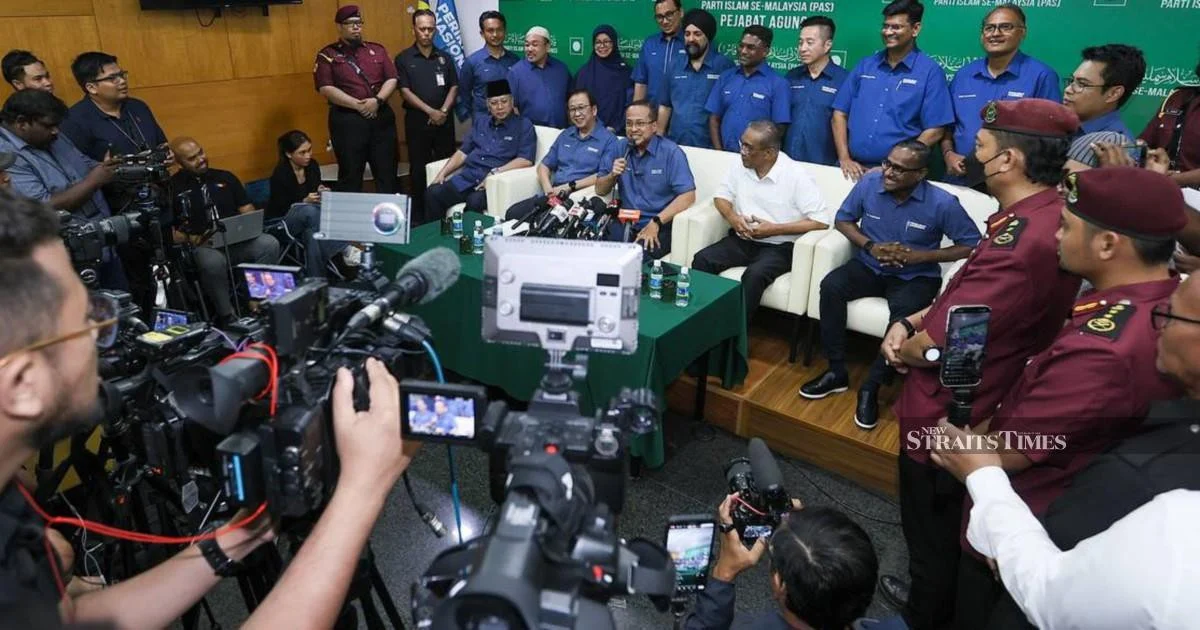
Perikatan Nasional (PN), Malaysia's primary opposition coalition, is preparing to lock in its seat distribution strategy for the upcoming Johor state election through a high-level meeting convened today in Kuala Lumpur. The decision represents a crucial juncture for the alliance as it consolidates its campaign machinery ahead of what promises to be a fiercely contested state poll in one of Malaysia's most politically significant territories.
The Johor election holds considerable weight within Malaysia's political landscape, given the state's substantial representation in federal politics and its historical importance as a stronghold for various political movements. PN's seat allocation process reflects the complex negotiations required when multiple parties must cooperate within a coalition framework, each seeking to maximise their respective share while maintaining unity for electoral purposes. The finalisation of seat assignments typically precedes candidate nominations and campaign launches, making today's decision a foundational step in the coalition's electoral calendar.
Seat allocation negotiations within multi-party coalitions frequently involve careful balancing of several considerations. Each member party brings its own organisational strength, grassroots networks, and regional influence to the coalition, factors that must be weighted when determining which party contests which constituencies. The diversity of interests within PN, encompassing parties with distinct ideological positions and geographical power bases, means such allocations require extensive deliberation and compromise to achieve consensus.
For PN, securing strong performance in Johor carries strategic significance beyond the state itself. Success in a major state election can provide momentum for subsequent federal campaigns, boost member parties' organisational confidence, and demonstrate coalition cohesion to voters across Malaysia. Conversely, a weak showing would raise questions about the coalition's viability and the effectiveness of its partnership arrangements, potentially influencing positioning ahead of future national elections.
The specific dynamics of Johor politics add another layer of complexity to PN's calculations. The state has experienced significant political fluidity in recent years, with voters demonstrating willingness to shift allegiances based on local issues, leadership perception, and national political currents. PN must therefore allocate seats not only based on internal party strength but also on sophisticated assessment of which candidates and parties might perform best in particular constituencies given current voter sentiment and local political configurations.
The meeting also signals that PN is moving into active campaign preparation mode. Once seat allocations are finalised, the coalition machinery can proceed with candidate selection, campaign planning, and resource deployment. This timing matters considerably in Malaysian electoral politics, where momentum, media attention, and public awareness are built progressively rather than intensifying only in the final weeks of campaigns.
For Malaysian observers and analysts, PN's seat allocation strategy offers insights into the coalition's self-assessment of electoral viability. The constituencies where PN concentrates resources and deploys its strongest political figures suggest where the coalition believes its best opportunities lie. Conversely, areas receiving fewer resources indicate either defensive positioning or conceded ground, revealing PN's strategic calculus regarding competitive dynamics across Johor's constituencies.
The broader Southeast Asian context enriches understanding of PN's position. Malaysian politics, as one of Southeast Asia's most established democracies, continues to demonstrate the challenges and opportunities that arise when multiple political forces must cooperate within coalition frameworks. PN's experiences offer lessons relevant to coalition politics elsewhere in the region, where similar arrangements are increasingly common as electoral competition fragments voter bases.
Today's decision will likely influence how the upcoming Johor campaign unfolds and how effectively PN can mobilise its supporters. Clear seat allocation removes ambiguity about which party contests where, allowing campaign teams to focus on voter engagement rather than internal coordination disputes. Transparent allocation also strengthens coalition unity by demonstrating that negotiations were conducted fairly and logically according to agreed principles rather than through opaque decision-making that might breed resentment.
The timing of the Johor election itself remains subject to the state ruler's discretion, though the convergence of seat allocation finalisation, candidate nomination processes, and campaign activities typically occurs within a compressed timeframe once coalitions move into active mode. This compression means that once today's allocation is confirmed, the pace of political activity in Johor will likely accelerate significantly.
For voters in Johor, the clarification of which PN members contest which seats will gradually become apparent as nominations proceed. This information will enable constituents to understand which coalition parties will represent their interests locally and to evaluate candidates accordingly. The seat allocation thus represents not merely an internal coalition matter but a public determination that directly affects how Johor voters encounter electoral choices.
PN's performance in Johor will contribute to broader narrative about coalition governance and opposition political viability in Malaysia. Successfully executing a coordinated campaign across multiple member parties requires not only strategic planning but also strong interpersonal relationships and institutional trust among coalition partners. The results will provide evidence about whether PN can maintain cohesion under electoral pressure, a factor that will influence political calculations well beyond the Johor state itself.

