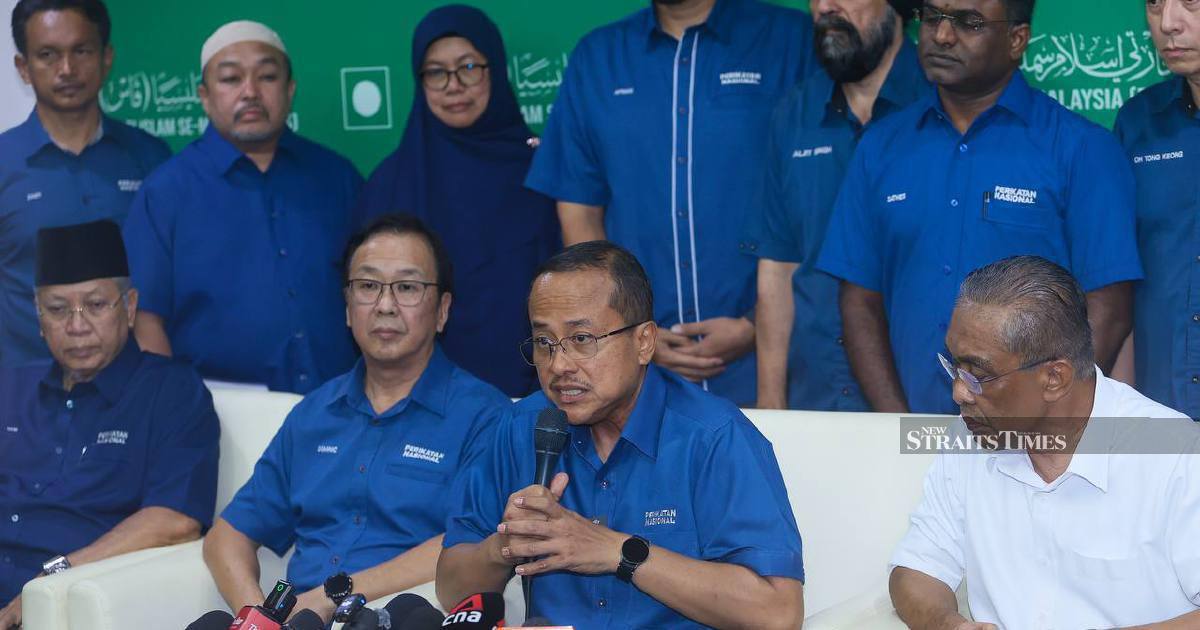
Perikatan Nasional (PN) has opened its doors to two additional political parties in what the coalition leadership describes as a strengthening of its membership base. The announcement came after an emergency Supreme Council session held in Kuala Lumpur, with PN chairman Datuk Seri Dr Ahmad Samsuri Mokhtar confirming the expansion during remarks to journalists following the closed-door gathering.
The decision to admit new members represents a significant strategic move by the opposition coalition, which has been positioning itself as an alternative governing force following its strong electoral performance in recent years. PN's leadership has consistently emphasized the importance of coalition building and member unity, and the addition of two parties signals continued confidence in the federation's long-term viability as a political force capable of challenging the current government.
While the coalition successfully resolved the membership question, deeper issues affecting PN's direction and identity appear to have been deliberately set aside. Notably absent from the evening's discussions were conversations regarding Wawasan, a topic that has generated considerable debate within coalition circles, and the contentious matter of the coalition's logo. These omissions suggest that PN's leadership opted to prioritize the expansion agenda while deferring more divisive internal matters to future deliberations.
The Wawasan issue, in particular, carries significance for understanding PN's ideological positioning and long-term strategic vision. For Malaysian political observers, the decision to exclude this from the agenda indicates either tactical postponement or deeper disagreement among coalition members about the direction the alliance should take. Given that PN comprises parties with varying political philosophies and regional power bases, such disagreements are not unexpected and reflect the inherent complexity of maintaining coalition cohesion.
Similarly, the logo controversy reflects practical concerns about coalition identity and branding. Political symbols carry weight in Malaysian electoral politics, where voter recognition and party differentiation play crucial roles in campaign effectiveness. Deferring resolution of such matters suggests the coalition may have encountered resistance from certain members or disagreement about the optimal direction, making immediate consensus impossible without risking further internal friction.
For Southeast Asia's broader political landscape, PN's expansion strategy underscores the region's propensity for coalition politics and the constant realignment of forces seeking governmental power. Malaysia's multiethnic and multi-party political system requires such strategic alliances, and PN's willingness to absorb new members demonstrates awareness of these electoral mathematics. However, the coalition's difficulty in resolving internal governance questions simultaneously raises questions about cohesion and decision-making capacity should PN assume federal power.
The timing of the emergency Supreme Council meeting itself warrants analysis. Emergency sessions typically convey urgency and importance, suggesting that leadership deemed the membership expansion matter sufficiently pressing to require immediate attention rather than waiting for a regular gathering. This tactical approach indicates PN's eagerness to finalize coalition membership while maintaining momentum, perhaps ahead of potential electoral contests or policy announcements.
From a Malaysian governance perspective, PN's continued evolution carries implications for legislative dynamics and opposition effectiveness in parliament. A larger, more diverse coalition could theoretically command greater parliamentary influence but might equally suffer from coordination challenges and policy disagreements. The balance between these factors will substantially determine whether PN can translate numerical growth into political capital.
The decision to accept new parties without simultaneously addressing Wawasan and logo questions may also reflect pragmatic sequencing. Leadership likely calculated that accepting new members first establishes the coalition's welcomingness and openness, creating positive momentum that facilitates subsequent negotiations over more contentious identity and vision matters. This staged approach allows PN to demonstrate expansion success before tackling thornnier issues that might complicate negotiations with prospective new members.
Observers monitoring Malaysian opposition politics will note that PN's maneuver positions the coalition as actively recruiting and consolidating strength at a time when government stability and governance effectiveness remain focal points of public attention. By expanding membership while deferring divisive debates, PN leadership has seized the initiative for coalition growth while buying time to address internal disagreements through quieter channels.
Looking ahead, the resolution of Wawasan's status and the logo controversy will prove telling indicators of PN's internal strength and capacity for democratic decision-making. How leadership navigates these deferred matters will reveal whether the coalition operates through consensus-building or hierarchical authority, and whether member parties possess genuine voice in shaping coalition direction or serve primarily as numerical additions to electoral calculations.

