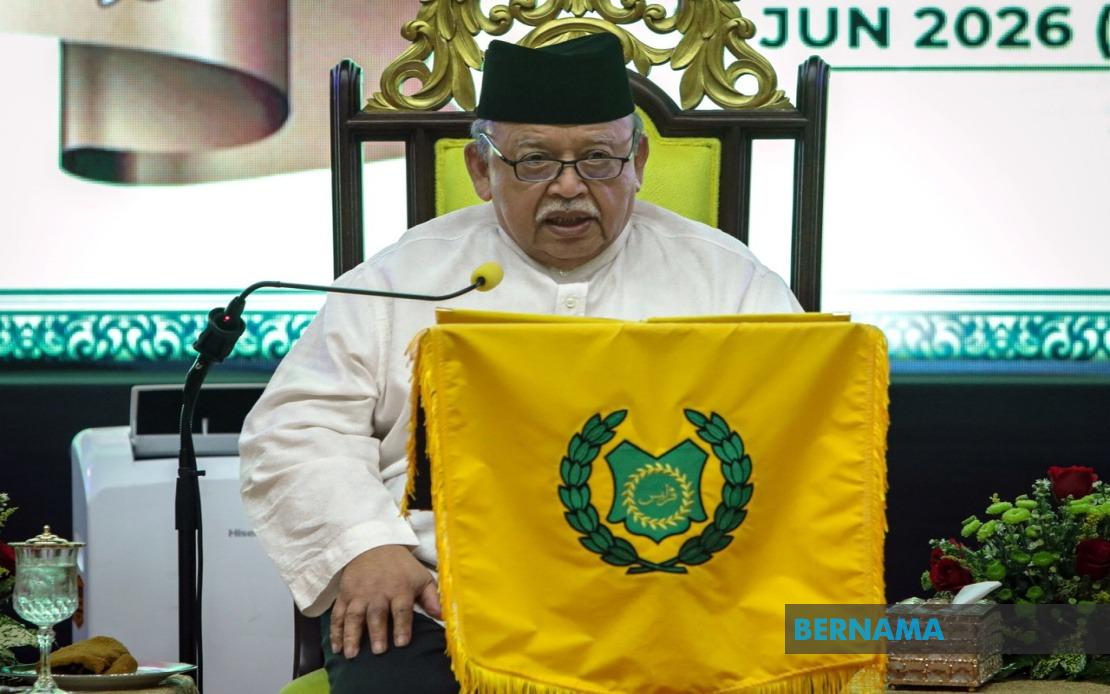
The Raja of Perlis, Tuanku Syed Sirajuddin Jamalullail, has delivered a pointed message about the foundations of national development, insisting that sustainable progress requires far more than bricks and mortar. Speaking at the state-level Maal Hijrah celebration in Kangar on June 18, the Ruler articulated a vision of advancement grounded in personal integrity, intellectual rigour and social cohesion. His emphasis on moral rectitude and the rejection of corruption speaks directly to longstanding concerns about governance and institutional trust across Malaysia, positioning character development as equally vital to economic growth.
In his address, Tuanku Syed Sirajuddin reframed what constitutes genuine progress for a nation, departing from narrow metrics that privilege physical infrastructure. The Ruler argued that true development emerges when communities are educated, demonstrate strong ethical standards, maintain civility and remain unified in purpose. This conceptual shift reflects growing recognition among Malaysia's leadership that the country's next phase of advancement must address deeper structural questions about public morality, professional standards and citizen engagement. The emphasis resonates particularly in Southeast Asia, where rapid urbanisation and technological change have sometimes outpaced institutional maturity and social cohesion.
Central to the Ruler's message was the characterisation of MADANI progress—a framework increasingly referenced in Malaysian governance discourse—as fundamentally different from conventional development paradigms. According to his articulation, MADANI progress transcends physical construction, encompassing instead the cultivation of knowledge, refinement of individual character, strengthening of cultural foundations, maturation of collective thought, and integrity embedded within societal systems. This holistic approach suggests that infrastructure investments without corresponding improvements in administrative ethics, professional conduct and public trust remain incomplete. For Malaysian stakeholders ranging from government agencies to private enterprises, the implication is clear: institutional reform and character education must accompany technical advancement.
The Ruler went further by prescribing specific values and behaviours that citizens should adopt in daily life. He urged the adoption of civilised conduct, reinforcement of national unity, pursuit of continuous learning, preservation of courtesy and courtesy, and the discharge of responsibilities with full accountability. These injunctions implicitly acknowledge that laws and regulations alone cannot ensure ethical governance; instead, internalised values and personal conscience must anchor professional behaviour. For Malaysian civil servants, political leaders and business executives, this represents both a challenge and an opportunity to model the standards the Ruler advocated.
Particularly significant was the Ruler's emphasis on combating corruption in all its forms. In a nation where anti-corruption efforts have become central to reform agendas and public discourse, his explicit call to reject graft underscores that governmental and institutional efforts must be complemented by grassroots moral commitment. The framing of corruption rejection as essential to building a prosperous society places ethical conduct within an economic context, suggesting that pervasive dishonesty undermines material prosperity as surely as it damages social trust. This argument carries weight across Southeast Asia, where researchers have documented the substantial costs corruption imposes on development.
The Ruler also stressed the importance of deepening authentic Islamic understanding based on the Quran and Sunnah, positioning this within a broader framework of civilisational maturity. He linked religious learning to political culture, economic competitiveness and social stability, suggesting that spiritual development and material progress are interconnected rather than separate domains. This approach reflects Malaysia's particular context as a Muslim-majority nation seeking to balance religious values with pluralistic governance and global economic participation. The emphasis on maintaining mature and civilised political culture indicates concern about the quality of civic discourse and leadership standards.
Addressing the contemporary challenges facing Malaysian society, Tuanku Syed Sirajuddin highlighted technological advancement, artificial intelligence, social transformation and global economic pressures as forces requiring proactive national response. Rather than positioning citizens as passive recipients of change, he urged them to become initiators, leaders and contributors to progress. This exhortation signals that in an era of rapid disruption, Malaysia's competitive advantage depends not only on infrastructure and capital but on the quality of thinking, adaptability and entrepreneurial spirit among its population. For younger generations particularly, the message frames their role as active architects of the nation's future rather than mere participants in inherited structures.
The Ruler's vision of Perlis' future emphasised cultivating courageous, intelligent and self-reliant values as defining characteristics of the state's identity. This emphasis on developing human capital reflects recognition that long-term competitive advantage rests with populations possessing both technical skills and resilience. The framing suggests that dependency, whether on government support, foreign expertise or inherited advantage, represents a vulnerability in an increasingly competitive regional environment. For Southeast Asia's development agenda more broadly, this aligns with expert consensus that human development—through education, institutional quality and value formation—constitutes a primary driver of sustainable prosperity.
The ceremony at which these remarks were delivered also honoured Datuk Izham Mahmud with the Perlis Tokoh Maal Hijrah award, presented through the Yayasan Tuanku Syed Putra. This recognition mechanism institutionalises the values the Ruler articulated, identifying individuals whose contributions exemplify the standards of integrity and service he advocated. The award system itself represents a practical mechanism for promoting role models and reinforcing behavioural norms within the state, complementing rhetorical appeals with concrete incentives and public recognition.
Beyond the immediate context of Perlis, the Ruler's remarks carry significance for the broader Malaysian governance landscape. At a time when institutional confidence requires rebuilding and anti-corruption campaigns compete with entrenched practices, the emphatic call from a traditional authority figure for integrity-based governance provides moral weight to reform efforts. For multinational companies operating in Malaysia, local businesses seeking to establish ethical standards, and government bodies pursuing modernisation, the Ruler's message creates conceptual space for arguing that institutional change and integrity standards serve national interests rather than representing external impositions. The integration of traditional authority with contemporary governance challenges positions Malaysia's monarchy as relevant to pressing modern dilemmas.
The Ruler's conceptualisation of progress ultimately challenges assumptions embedded in conventional development discourse. By insisting that knowledge, character, culture and values constitute progress equally with economic metrics, the statement redirects attention toward qualitative dimensions of national development often overlooked in policy discussions focused narrowly on GDP growth or infrastructure completion. This reframing suggests that Malaysia's development strategy should incorporate robust investments in education, institutional capacity-building, leadership development and civic engagement as strategic priorities alongside macroeconomic management. For Southeast Asian policymakers observing Malaysia's approach, the example demonstrates how traditional institutions can articulate contemporary governance imperatives within culturally resonant frameworks.