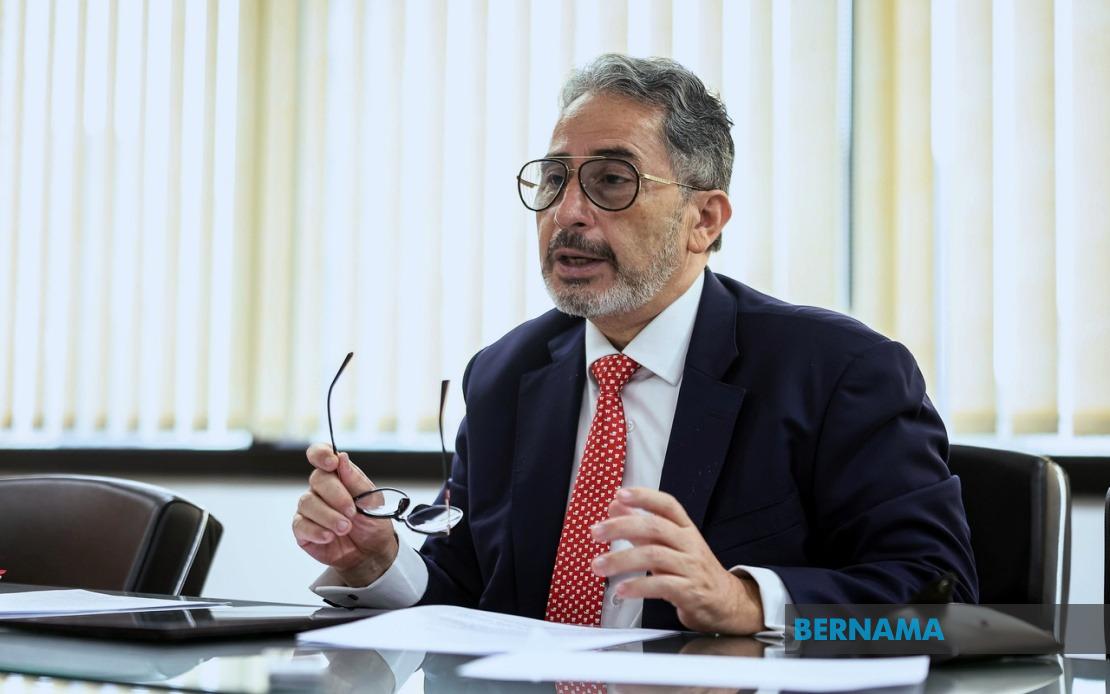
Peru and Malaysia are seizing the moment of their 40-year diplomatic milestone to reshape economic collaboration in ways that reflect both nations' evolving development strategies and regional ambitions. The South American and Southeast Asian countries have moved beyond ceremonial acknowledgement to chart concrete pathways for expanded engagement, according to Peru's ambassador in Kuala Lumpur, Ricardo Estanislao Morote Canales, who outlined an extensive agenda spanning agricultural innovation, clean energy infrastructure, and food security cooperation.
Despite steady progress over four decades, both nations recognise they have barely scratched the surface of what is commercially and strategically possible. The ambassador emphasised that untapped potential exists across sectors ranging from hydrogen energy development to tropical forest conservation—areas where Malaysia's advanced manufacturing capabilities and Peru's natural resource advantages can complement each other. This acknowledgement reflects a mature understanding that proximity to shared interests is insufficient; deliberate institutional frameworks and targeted investment are required to translate goodwill into measurable outcomes.
The relationship's trajectory reveals how diplomatic engagement at the highest political level catalyses substantive changes. When Peruvian President Alberto Fujimori visited Malaysia in 1996, his meeting with Prime Minister Tun Dr Mahathir Mohamad established foundational trust that would prove instrumental in Malaysia's support for Peru's accession to the Asia-Pacific Economic Cooperation forum in 1998. This backing exemplified how bilateral relationships can extend beyond bilateral benefit to regional architecture—Peru's APEC membership expanded the organisation's hemispheric reach and deepened connections between Asian and Latin American economies at a critical moment in global trade liberalisation.
The relationship entered a more structured phase following Prime Minister Datuk Seri Anwar Ibrahim's attendance at the 2024 APEC Leaders' Meeting in Peru, which was followed by his official visit to Lima in November 2024. These high-level visits served as catalysts for institutional agreements that translate political commitment into actionable cooperation frameworks. The Joint Declaration adopted during Anwar Ibrahim's visit functions as a strategic roadmap, explicitly committing both governments to expand trade and investment while strengthening economic ties across sectors of mutual interest. This document signals to private sector actors, research institutions, and development organisations that government backing exists for cross-border initiatives.
Three Memoranda of Understanding—covering halal standards, agriculture, and gastronomy plus hospitality—represent early harvests from this renewed diplomatic momentum. The agriculture MoU has already yielded tangible results through collaborative breeding programmes combining local and Peruvian chilli and tomato varieties, alongside cattle crossbreeding projects in Malaysia. These initiatives, while modest in scale, demonstrate the potential for agricultural knowledge transfer in both directions. Peru's expertise in cultivating crops suited to tropical and subtropical climates addresses Malaysia's food security concerns, while Malaysian agricultural technology and plantation management systems offer Peru pathways to enhance productivity and export quality.
The Comprehensive and Progressive Agreement for Trans-Pacific Partnership has provided both countries with a rules-based commercial framework that has yielded measurable growth. Peru's accession took effect in September 2021, with Malaysia joining in November 2022, creating a synchronised trading relationship within a standardised tariff and investment regime. Bilateral trade reached US$526 million in 2025, positioning Malaysia as Peru's ninth-largest Asian trading partner—a ranking that understates the relationship's potential given the respective economies' sizes and complementarities. Peruvian exports surged 32.84 per cent year-on-year to US$357.15 million, driven largely by primary commodities including minerals and agricultural products, while Malaysian exports of US$168.85 million—concentrated in manufactured and technology goods—reflect the pattern of resource-rich nations trading with industrialised partners.
Diversification of Peru's export basket holds particular significance for long-term partnership sustainability. Beyond traditional copper and mining products, Peruvian growers are developing markets for high-value fruits including avocados, mangoes and pomegranates in Malaysia. This expansion mirrors global trends toward premium agricultural products and reflects Peru's strategic attempt to reduce commodity export dependence. For Malaysian importers and consumers, access to Peruvian fruit varieties enhances supply chain resilience while offering differentiated products to Malaysia's increasingly sophisticated retail market.
The proposed Malaysia-Peru Specialised Halal Economic Zone at Peru's Port of Chancay represents perhaps the most innovative element of current cooperation. This initiative transforms Malaysia's halal certification and food standards expertise into infrastructure that serves broader commercial and diplomatic objectives. The port, positioned as a crucial Latin American logistics hub following its modernisation by Chinese investors, could function as a distribution centre for halal-certified Malaysian manufactured goods and food products destined for South American markets. Simultaneously, it creates a physical embodiment of economic partnership visible to stakeholders across the hemisphere, strengthening Peru's commercial ties to Southeast Asia while signalling Malaysia's willingness to extend its halal ecosystem eastward across the Pacific.
Institutional development supporting bilateral ties has progressed methodically since formal relations commenced on April 24, 1986. Peru's embassy opened in Kuala Lumpur in 1992, followed by Malaysia's establishment of diplomatic representation in Lima in 1996. These physical presences, often overlooked in discussions of digital communication and trade data, remain essential infrastructure for relationship management. Embassy staff facilitate visa processing, cultural exchanges, and informal problem-solving that sustains momentum between high-level visits. They also serve as information nodes connecting government agencies, business associations, and research institutions across both societies.
The ambassador's expression of optimism regarding a forthcoming visit by Peru's president signals that both governments view the relationship as still ascending rather than plateauing. The ambassador correctly identified such high-level engagement as an opportunity to strengthen political dialogue while expanding cooperation frameworks. Presidents' visits carry symbolic weight—they demonstrate that Southeast Asian nations view Latin American engagement as sufficiently important to warrant executive attention, a signal that counters decades of structural assumptions that Asia-Pacific trade and diplomacy primarily involve East Asian and Oceanic actors.
For Malaysian policymakers and businesses, the Peru relationship exemplifies how smaller bilateral partnerships can generate outsized returns when strategically managed. Malaysia has positioned itself as a halal standards setter, a manufacturing hub for technology-intensive products, and an agricultural innovator—precisely the capabilities Peru seeks as it diversifies beyond commodity export dependence. Conversely, Peru offers Malaysia reliable access to agricultural products it cannot easily produce domestically, natural resources supporting industrial supply chains, and a gateway to markets across Latin America where halal and Muslim-majority populations provide expanding consumer bases. The 40-year milestone thus marks not culmination but inflection point, where mature diplomatic foundations enable more ambitious commercial and development cooperation.

