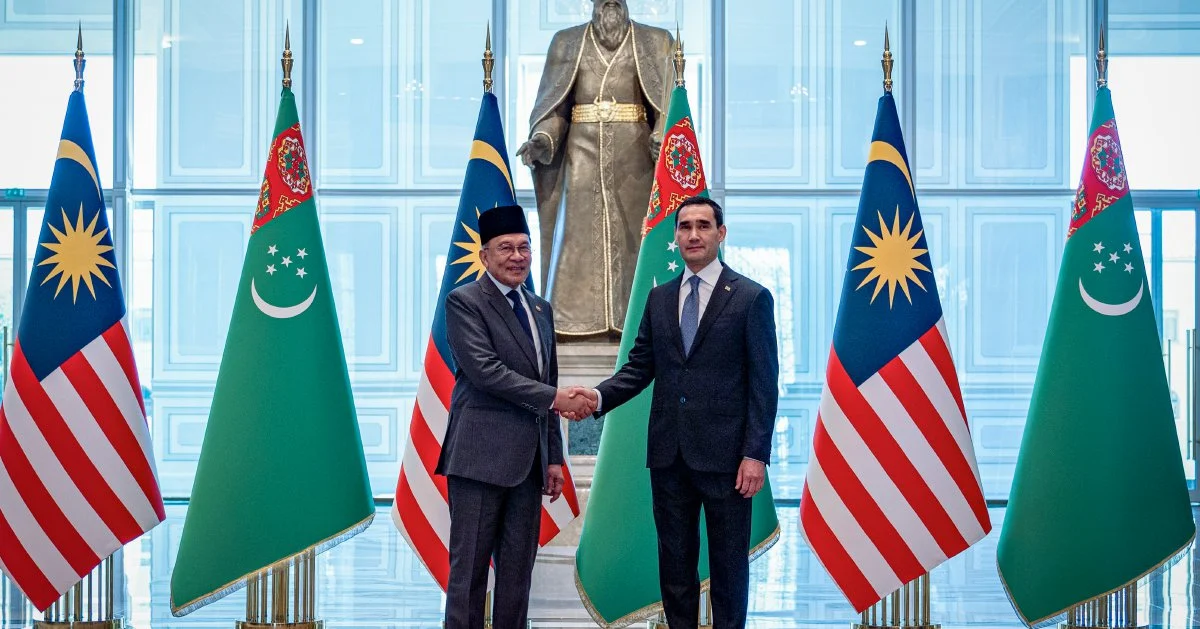
Petronas has positioned itself as a critical catalyst for advancing bilateral ties between Malaysia and Turkmenistan, capitalising on momentum generated by Prime Minister Datuk Seri Anwar Ibrahim's recent official visit to the resource-rich Central Asian nation. The national oil and gas corporation's long-term operational footprint in Turkmenistan provides a foundation upon which both countries are now building a more comprehensive strategic partnership that extends well beyond conventional energy sector engagement.
The timing of renewed diplomatic focus on Turkmenistan reflects Malaysia's broader strategic pivot towards diversifying its international relationships and securing long-term hydrocarbon supply chains. Turkmenistan's substantial natural gas reserves and its position along critical energy corridors make it an increasingly important counterpart for Malaysian interests, particularly as regional demand for cleaner energy sources continues to accelerate. Petronas's existing operations in the country provide tangible proof of concept that deeper commercial collaboration between the two nations is both feasible and mutually beneficial.
Petronas's involvement in Turkmenistan represents more than transactional business activity; it serves as a bridge facilitating broader engagement across government, regulatory, and private sector institutions. The company's technical expertise, operational track record, and integrated business model across upstream, downstream, and trading functions position it uniquely to identify and develop new opportunities that align with both Malaysian strategic interests and Turkmenistan's development priorities. This multi-layered engagement creates pathways for knowledge transfer, skill development, and institutional learning that strengthen the entire bilateral relationship.
The strategic value of this partnership extends into the realm of energy security for Malaysia and the broader Southeast Asian region. Turkmenistan's proven gas reserves represent a potential supplementary source for meeting regional energy demand, offering diversification benefits that reduce dependence on any single supplier or geographic region. For a nation-state like Malaysia with its own hydrocarbon resources but facing growing domestic consumption demands, access to reliable Central Asian supplies provides strategic flexibility in managing national energy portfolios and supporting industrial competitiveness.
Beyond energy considerations, the deepening Petronas-Turkmenistan nexus signals Malaysia's commitment to engaging with Central Asia in ways that transcend traditional geographic spheres of influence. The Malaysian government's interest in strengthening ties with Turkmenistan, evidenced by high-level diplomatic visits, reflects recognition that stability and prosperity in Central Asia carry implications for broader Asian geopolitics and regional economic integration. Petronas serves as both instrument and symbol of this engagement strategy.
The company's continued presence in Turkmenistan also generates valuable foreign direct investment flows, employment opportunities, and technology transfer that benefit both the host nation and Malaysian commercial interests. Petronas's operations require substantial local supply chains, workforce development, and infrastructure investment, creating multiplier effects throughout Turkmenistan's economy. Simultaneously, these activities generate returns and operational experience that strengthen Petronas's global competitive position and contribute to Malaysia's balance of payments and export revenues.
From a regulatory and governance perspective, the expanding Petronas footprint in Turkmenistan demonstrates the importance of maintaining stable, predictable investment frameworks in hydrocarbon-producing nations. Malaysia's diplomatic efforts to strengthen ties with Turkmenistan partly aim to reinforce legal protections, contract stability, and operational certainty for Malaysian companies operating within Turkmenistan's jurisdiction. Strong political relationships between capitals provide essential support for commercial operations in resource-rich but sometimes geopolitically volatile regions.
The partnership also reflects Petronas's own strategic evolution towards integrated energy solutions that encompass traditional oil and gas alongside emerging alternatives. Turkmenistan's energy resources include not only hydrocarbons but also significant wind and solar potential, opening possibilities for joint development of renewable energy projects that address global decarbonisation trends while maintaining compatibility with conventional energy operations. This positioning allows Petronas to present itself as a modern energy company capable of meeting diverse regional needs.
For Malaysian policymakers, the Petronas-Turkmenistan relationship offers a template for leveraging national oil and gas companies as instruments of foreign policy and strategic engagement. Unlike purely diplomatic channels, which sometimes face limitations in continuity or impact, commercial partnerships through entities like Petronas create sustained, institutionalised relationships that survive political transitions and generate tangible mutual benefits. This approach has proven effective for other resource-exporting nations and increasingly appeals to Malaysian strategic thinking.
Looking forward, the foundations laid through Petronas's current operations position both nations to explore additional collaborative opportunities, potentially including downstream partnerships, trading arrangements, and technology sharing initiatives. Prime Minister Datuk Seri Anwar Ibrahim's official visit signals that government support for deepening these commercial relationships remains at the highest political level, providing the institutional backing necessary for Petronas to pursue longer-term strategic investments in Turkmenistan that might otherwise involve excessive commercial or political risk.
The strengthening Malaysia-Turkmenistan partnership through Petronas ultimately reflects broader patterns of Asian economic integration and the increasingly prominent role that national oil and gas companies play in shaping bilateral relationships. As energy markets evolve and new geopolitical considerations emerge, the capacity of nations like Malaysia to cultivate diversified, resilient partnerships with resource-rich counterparts becomes ever more strategically significant. Petronas's expanding role in Turkmenistan exemplifies this evolution in action.

