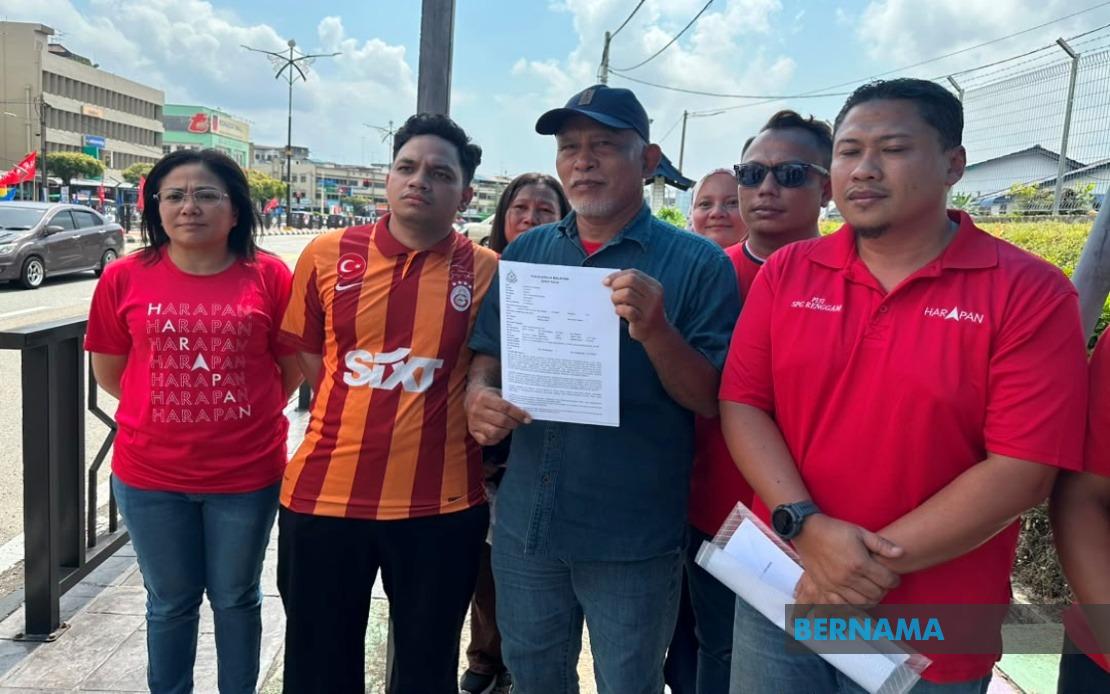
The Pakatan Harapan campaign apparatus has escalated electoral tensions in Johor by filing a formal police complaint against Menteri Besar Datuk Onn Hafiz Ghazi, alleging improper use of technical and vocational education institutions to mobilise student support for the ruling coalition during the state's competitive election cycle. The complaint, submitted at Simpang Renggam district police headquarters, centres on allegations that students from multiple TVET institutions were coordinated to participate in what organisers framed as educational programmes but which functioned as vehicles for political campaigning benefiting Barisan Nasional contenders.
Khiru Nasir Rohani, representing the PH candidate contesting the Machap seat whilst also serving as deputy division chief for Simpang Renggam Amanah, contended that a systematic pattern existed wherein vocational students faced pressure to attend gatherings designed to bolster opposition support. The complaint specifically references a July 4 event held in Kluang that reportedly deployed student attendees as implicit endorsers of BN campaign messaging, transforming what purported to be neutral educational activities into partisan political platforms.
The substance of the complaint rests on alleged violations of Malaysia's foundational electoral framework, particularly the Election Offences Act 1954. Khiru Nasir articulated concerns that the mobilisation strategy transgressed provisions expressly prohibiting undue influence upon voters and the weaponisation of official governmental or educational apparatus for partisan advantage. Such infractions, if substantiated, would represent a departure from established norms governing the conduct of state-level campaigns in Malaysia's competitive electoral environment.
The complaint targets a particularly sensitive dimension of campaign conduct: the instrumentalisation of educational institutions and their student populations for political ends. By channelling TVET students into politically charged gatherings under administrative or institutional auspices, the alleged scheme raised questions about institutional autonomy and the vulnerability of younger voters to systemic pressure. This aspect resonates throughout Southeast Asia, where the boundary between educational administration and partisan mobilisation remains contestable.
Khiru Nasir's formal request for coordinated investigative action explicitly encompassed not only the Royal Malaysian Police but also the Malaysian Anti-Corruption Commission and the Election Commission. This multi-agency invocation suggested that the complaint's architects sought to leverage institutional oversight mechanisms at the highest levels, anticipating that singular agency investigation might prove insufficient to establish accountability. The breadth of the complaint signalled serious intent to pursue the matter through every available bureaucratic channel.
The timing of the complaint carries significance within the election cycle's compressed timeline. With 172 candidates competing for 56 state seats and polling scheduled for imminent Saturday voting, the complaint represented a final-phase electoral intervention designed to cast reputational doubt upon the Menteri Besar's campaign conduct. Such late-stage accusations, whilst potentially impactful for voter sentiment, also face inherent constraints regarding investigative momentum before electoral outcomes become fixed.
The alleged July 4 Kluang event functioned as the evidentiary linchpin of the complaint. By identifying a specific date, location, and pattern of student attendance, Khiru Nasir provided investigators with concrete parameters for scrutiny. The framing of the event as ostensibly educational but functionally political created the legal opening necessary for alleged violations of campaign conduct codes.
The complaint reflects broader competitive dynamics within Johor's political landscape, where Barisan Nasional's traditional dominance faces sustained pressure from opposition coalitions seeking to consolidate anti-government sentiment. Accusations of institutional resource mobilisation carry particular weight in this context, as they suggest asymmetric campaign advantages flowing from governmental incumbency. Such allegations, whether substantiated or not, contribute to voter perceptions of fairness and democratic legitimacy.
For Malaysia's electoral integrity framework, the complaint illustrates both the mechanisms through which challenges to campaign conduct are formalised and the limitations of late-cycle accountability. The involvement of educational institutions in political mobilisation, whether deliberate or incidental, raises enduring questions about institutional neutrality that extend beyond this singular incident. The complaint therefore transcends partisan point-scoring to engage foundational questions about how Malaysian elections maintain procedural integrity.
The intersection of youth participation and campaign conduct merits particular attention. TVET students, as vocational trainees often dependent upon institutional resources and recommendations, occupy vulnerable positions relative to political persuasion. Systematic efforts to marshal their attendance at partisan gatherings implicate questions of genuine voluntary participation versus coercive institutional pressure, even when overt coercion remains undetectable.
The complaint's assertion of coordinated, system-wide effort rather than isolated incidents suggests a sophisticated organisational approach to student mobilisation. This framing necessitates investigation into communication chains, administrative directives, and resource allocation decisions across multiple institutions, potentially revealing patterns invisible within any singular event.
As election day approaches, the complaint enters a race against time. Investigative outcomes emerging after voting occurs will lack ability to influence electoral results but may shape post-election assessments of campaign legitimacy. This temporal mismatch reflects a fundamental challenge within compressed electoral cycles: the difficulty of conducting thorough institutional inquiries within weeks rather than months.

