Pakatan Harapan has reaffirmed its commitment to respecting the constitutional powers vested in the Sultan of Johor to select the state's chief minister, should the opposition coalition secure victory in upcoming state elections. The pledge represents PH's effort to sidestep a contentious issue that has dominated recent political discourse in Malaysia's southern stronghold, instead directing voter attention toward substantive governance platforms.
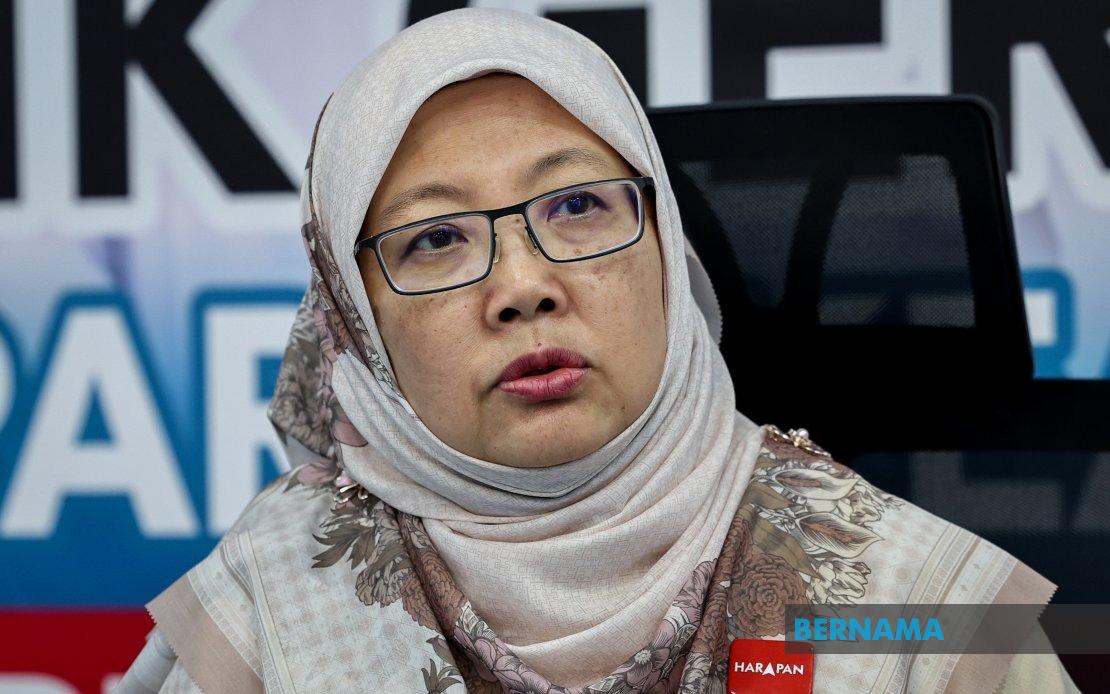
Johor PKR chairman Datuk Seri Dr Zaliha Mustafa made the statement in response to pressure from incumbent Menteri Besar Datuk Onn Hafiz Ghazi, who had publicly called on PH to name its preferred candidate for the position ahead of polling day. Such pre-election declarations have become commonplace in Malaysian politics, with both ruling and opposition coalitions attempting to signal stability and direction to voters anxious about continuity and leadership credibility.
The decision to prioritise constitutional propriety over campaign strategy reflects a broader calculation within PH's hierarchy. By explicitly deferring to the Sultan's prerogative under the Johor State Constitution 1895, the coalition seeks to avoid appearing presumptuous or disrespectful toward the institution of the monarchy—a particularly sensitive consideration in Johor, where the royal household commands deep cultural reverence and political significance.
Dr Zaliha emphasised that PH's campaign messaging would concentrate on practical governance rather than personality politics. The coalition intends to present detailed policy frameworks addressing livelihood pressures, employment creation, and economic expansion across the state. This pivot acknowledges research indicating that Malaysian voters increasingly prioritise tangible deliverables over symbolic leadership contests, particularly in an environment of heightened cost-of-living concerns.
The statement also implicitly concedes that PH possesses a bench of seasoned administrators capable of managing Johor's affairs competently. By noting the coalition's depth of talent, Dr Zaliha sought to reassure supporters that the organisation's capacity to govern remains unaffected by uncertainty over the chief minister's identity. This framing transforms a potential electoral vulnerability into a demonstration of institutional strength and institutional bench depth.
The timing of PH's clarification is strategically significant. Onn Hafiz's earlier challenge had threatened to dominate news cycles and distract from policy discussion, potentially forcing PH into either naming a candidate prematurely or appearing evasive. By responding with a principled statement rooted in constitutional law, PH has reclaimed narrative control while adopting the high ground of institutional respect.
For Malaysian observers, the exchange illustrates the enduring relevance of constitutional monarchy in steering political competition. Unlike Westminster systems where chief executive selection flows directly from electoral mathematics, Malaysia's state-level politics often requires post-election negotiation between winning coalitions and reigning monarchs. This institutional reality shapes campaign strategy in ways unfamiliar to democracies with purely parliamentary or presidential systems.
The implications for Johor voters merit consideration. PH's pledge means that irrespective of electoral outcomes, the Sultan retains ultimate authority over ministerial appointment. This arrangement theoretically insulates the monarchy from electoral cycles while preserving democratic accountability at the parliamentary level. However, it also creates potential friction if the Sultan's choice diverges from coalition expectations—a scenario that has previously complicated Malaysian state politics.
Onn Hafiz's push for advance candidate naming may have reflected BN's strategy to create uncertainty and undermine PH's electoral positioning. If voters perceive PH as indecisive or reluctant to identify leadership, turnout and enthusiasm could suffer. Conversely, if PH had prematurely announced a candidate and that individual subsequently faced scandals or rejection, the damage could prove decisive.
The broader context involves Johor's political trajectory. The state has historically favoured BN, but PH's 2022 federal breakthrough and subsequent state-level gains have intensified competition. A narrowing margin makes the Menteri Besar question genuinely consequential—tight elections might hinge on voter enthusiasm, where clear leadership messaging could prove pivotal.
Dr Zaliha's emphasis on listening to voter concerns and delivering solutions reflects PH's apparent confidence in its ability to win on substance. By declining to engage in the personality-driven contest Onn Hafiz initiated, PH signals maturity and focus on governance capacity rather than individual ambition. Whether Malaysian voters reward this principled approach remains to be determined at the ballot box.
The statement ultimately demonstrates how Malaysia's constitutional framework shapes electoral competition. Rather than voters directly selecting chief executives through proportional representation or plurality systems, state politics involves coalition arithmetic constrained by royal prerogative. PH's commitment to respecting this framework, while concentrating on policy excellence, reflects sophisticated understanding of both constitutional norms and voter expectations in a polity increasingly focused on delivery and competence.

