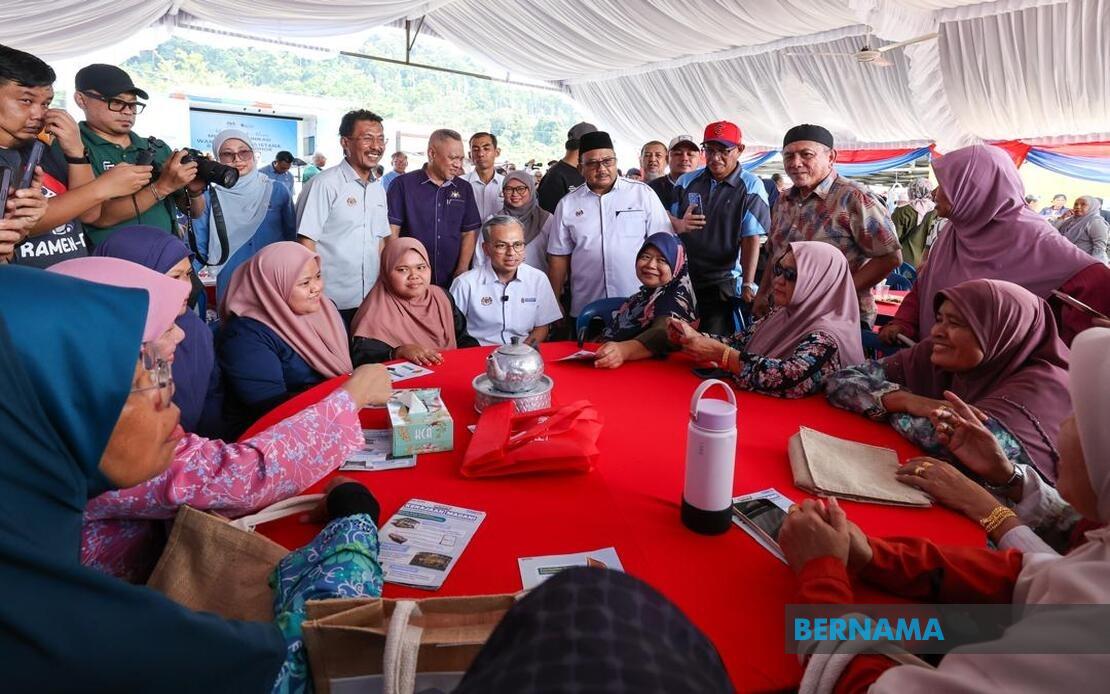
Pakatan Harapan's leadership has moved to counter growing criticism over the timing of its manifesto release for the Johor state election, with the coalition's Communications chief insisting the delay served a strategic purpose rather than weakening its electoral prospects. Speaking during a grassroots engagement session in Batu Pahat on July 4, Datuk Fahmi Fadzil, who also serves as Communications Minister, firmly rejected suggestions that holding back the manifesto had hampered PH's campaign narrative or momentum ahead of the July 11 polling date.
The manifesto rollout had triggered scrutiny from within the broader opposition bloc itself. Ong Kian Ming, the former Bangi MP and prominent political strategist, had publicly cautioned that the late unveiling of PH's policy platform could prove detrimental to the coalition's ground campaign, particularly given what he characterized as existing structural disadvantages. Ong had pointed to several factors he believed were already tilting the race toward Barisan Nasional, including PH's failure to announce a menteri besar candidate before the campaign commenced, the absence of senior leadership figures contesting seats, and what he perceived as a weak overarching campaign message. Against this backdrop, the delayed manifesto release loomed larger in his assessment.
Fahmi's rebuttal centred on the coalition's commitment to quality and consensus-building within its leadership structure. He explained that PH had deliberately chosen to withhold the manifesto's public presentation until its contents had been comprehensively refined and secured formal endorsement from the coalition's topmost officials, including Prime Minister Anwar Ibrahim. This deliberative approach, Fahmi argued, reflected PH's investment in substance over speed. By Friday, when the manifesto was finally unveiled, the coalition had reached the midpoint of the campaign window, positioning the release to coincide with what PH strategists apparently viewed as the optimal moment for voter engagement—a time when candidates had already been introduced to constituencies and the electoral conversation was naturally shifting toward policy platforms and competing visions.
The communications minister characterized Ong's warnings as disconnected from observable realities on the ground. In particular, Fahmi pointed to the substantial and enthusiastic turnout at PH campaign events throughout the campaign period as evidence of robust grassroots enthusiasm and organizational health. The strong attendance at public forums and meet-the-people sessions, he suggested, contradicted any notion that the coalition was floundering or losing momentum. Such engagement, in Fahmi's view, vindicated both the manifesto's content and the coalition's overall strategic positioning.
Beyond defending the manifesto timeline, Fahmi also responded to more pointed attacks from the government camp. Khairy Jamaluddin, the former UMNO Youth chief, had dismissed PH's manifesto as merely derivative—a "copy and paste" reproduction of Barisan Nasional's policy positions. Rather than engaging directly with Khairy's substance critique, Fahmi pivoted to questioning the former youth leader's role within the ruling coalition's campaign architecture. He observed that Khairy appeared to be campaigning far more visibly and aggressively than Johor Menteri Besar Datuk Onn Hafiz Ghazi, the sitting chief minister and ostensible face of BN's campaign in the state. The implication was pointed: if Onn Hafiz possessed Khairy's energy, stature, and communication prowess, BN's campaign might be considerably stronger. Fahmi even suggested, with evident sarcasm, that Onn Hafiz should "copy and paste" Khairy's campaigning vigour.
This observation carries particular weight given the structural dynamics within Johor's political landscape. The state has traditionally been UMNO's heartland, yet the menteri besar's apparent reliance on other senior figures to amplify the government's message may indicate internal fractures or a broader difficulty in generating excitement around the incumbent administration. The fact that a former youth wing leader is more visible than the sitting chief minister could signal organizational challenges or questions about Onn Hafiz's political standing within his own party.
Fahmi also sought to defuse concerns about internal DAP issues potentially damaging PH's collective campaign. Recent social media activity by Marina Ibrahim, a former Skudai assemblyman, had drawn attention to tensions within the Democratic Action Party over allegations regarding a party leader's stance on pardoning former Prime Minister Datuk Seri Najib Tun Razak. Marina had announced her retirement from politics, claiming disillusionment with what she termed a "charade" by DAP leadership on this pardon issue. Such public fracturing, even by a relatively lower-profile figure, carries risk in a tight electoral contest where coalition unity is paramount.
However, Fahmi dismissed fears that such divisions would materially affect PH's vote-getting capacity. He grounded his confidence in the robust turnout he had personally witnessed at campaign venues, suggesting that voters remained engaged and committed despite any internal party controversies. The fact that another DAP figure, Ng Yak Howe, was running as PH's candidate for the Bentayan state seat indicated that the party remained actively integrated into the broader coalition's campaign apparatus. Fahmi's implicit argument was that Marina Ibrahim's concerns, while noted, had not penetrated the broader electorate or significantly altered grassroots dynamics.
The Johor state election unfolds across 56 constituencies with 172 candidates in contention, representing a relatively concentrated battleground where momentum, messaging coherence, and grassroots mobilization can prove decisive. Early voting is scheduled for July 7, with the main poll three days later. For PH, the coming week represents a critical juncture in which the coalition must demonstrate not only that its manifesto represents a genuine alternative to Barisan Nasional's approach but also that internal differences remain manageable and secondary to the broader electoral contest.
Fahmi's remarks reflect broader PH strategy: maintaining message discipline while deflecting criticism through counterattacks on the government's campaign execution and internal dynamics. Whether this approach proves sufficient to overcome what analysts view as structural advantages held by the incumbent—including control of state machinery, financial resources, and traditional voter support networks—remains an open question. The coalition's gambit rests partly on the assumption that strong grassroots engagement and a comprehensive manifesto, whenever released, can offset these institutional disadvantages and mobilize sufficient voter appetite for change.
The coming days will test whether PH's confidence in its campaign positioning proves justified or whether Ong Kian Ming's earlier warnings about a potential BN landslide prove prescient. For broader Southeast Asian observers, the Johor contest offers a window into contemporary Malaysian electoral dynamics, including the tensions between incumbent entrenchment and opposition mobilization, the strategic importance of policy positioning, and the ongoing salience of leadership cohesion in multi-party coalitions navigating highly competitive political environments.

