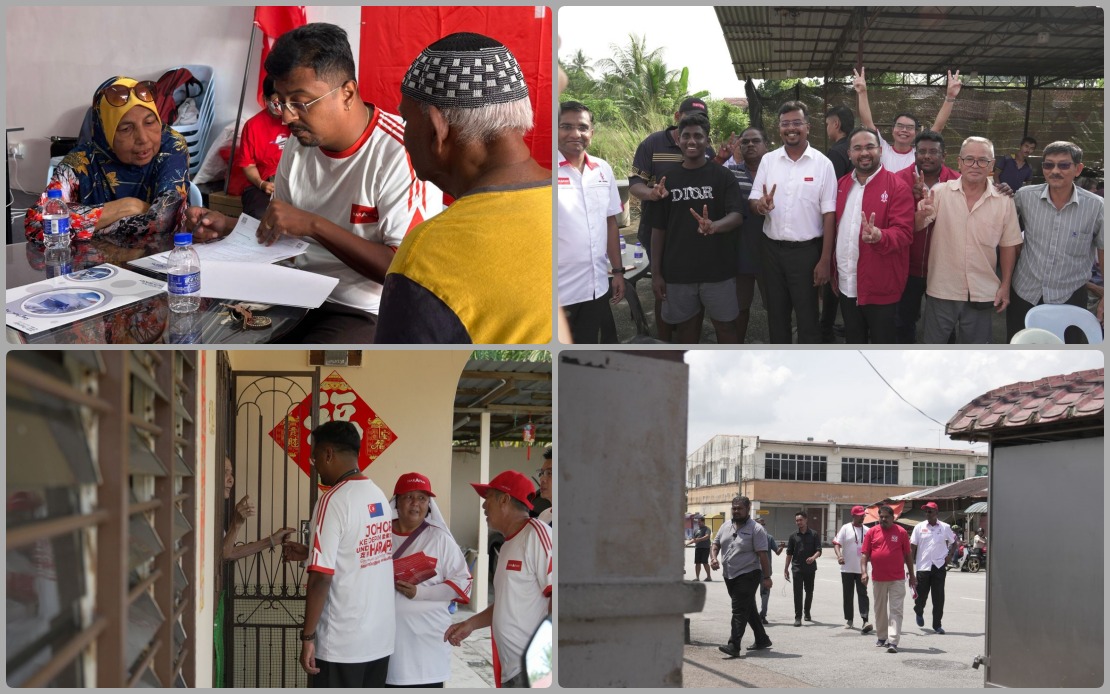
Pakatan Harapan's candidate for the Paloh state assembly seat, Dr. A. Ruban, has been admitted to a hospital in Batu Pahat for treatment of a recurring slipped disc condition that flared up during the intensive campaign period for Johor's state elections. The hospitalization comes at a critical juncture, with polling day scheduled for July 11 and early voting having already taken place on July 7.
The candidate's campaign manager, Abdul Majid Abd Aziz, disclosed that Dr. Ruban checked into the facility around midday after experiencing acute pain that severely restricted his mobility throughout the morning. While the diagnosis itself is not unexpected—Dr. Ruban has previously undergone spinal surgery and carries a documented history of vertebral complications—the timing raises questions about the physical toll of election campaigns on candidates, particularly in Malaysia where walkabouts and ground-level engagement with constituents remain central to political strategy.
Abdul Majid attributed the relapse to the grueling demands of the state election campaign, noting that the candidate had been conducting extensive field activities and community interactions. The campaign manager suggested that the combination of fatigue and a compressed schedule had exacerbated Dr. Ruban's pre-existing spinal condition, a common challenge faced by candidates in competitive electoral contests who must balance health considerations against the perceived necessity of visible, on-ground presence.
Despite the hospitalization, campaign officials have sought to project confidence about the candidate's prognosis. Abdul Majid stated that medical assessments indicate Dr. Ruban's condition is not critical and that discharge is anticipated within one to two days. This timeline, if accurate, would allow the candidate to resume limited campaigning before the July 11 vote, though it remains uncertain whether he will be able to fully participate in the final days of campaigning.
The PH campaign machinery has moved swiftly to address the operational vacuum created by Dr. Ruban's absence from the field. Campaign representatives have committed to maintaining voter engagement through alternative channels and surrogate campaigners, ensuring that the party's message and policy platform continue reaching Paloh constituents. This contingency approach reflects broader campaign management practices in Malaysia, where candidate health issues occasionally necessitate adjusted strategies without fundamentally derailing electoral efforts.
The Paloh contest represents a competitive four-way race that underscores the fragmented political landscape in several Malaysian constituencies. Dr. Ruban faces challenges from D. Jeevakumar, the Perikatan Nasional nominee; independent candidate G. Kamaleswaren; and incumbent Lee Ting Han of Barisan Nasional. The presence of an independent contender alongside three major party candidates suggests localized political dynamics and potentially disaffected voters seeking alternatives beyond the established coalitions.
The Paloh seat's configuration reflects broader patterns in the 16th Johor state election, where the once-dominant Barisan Nasional has encountered intensified competition from resurgent opposition coalitions and occasional independent candidates. Lee Ting Han's incumbent status may provide some organizational and name-recognition advantages, though defending state seats has proven challenging for BN in several constituencies across Malaysia in recent electoral cycles.
For Pakatan Harapan, the situation in Paloh carries strategic importance as the coalition seeks to consolidate gains in Johor state assembly seats. The party's performance in this state has become increasingly significant within the broader national political context, particularly as PH works to rebuild its positioning following the formation of the Madani coalition government at federal level. Each state assembly seat carries symbolic weight in demonstrating coalition strength and voter appeal.
Dr. Ruban's health setback also raises broader questions about candidate welfare and campaign practices in Malaysian politics. Election seasons frequently demand punishing schedules that test the physical endurance of candidates across all parties, particularly in competitive constituencies where every public appearance and voter interaction is deemed strategically vital. While such demands reflect political realities, they occasionally result in medical emergencies that disrupt campaign momentum.
The hospitalization occurred on the same day that early voting took place, meaning a portion of Paloh's electorate had already cast ballots before Dr. Ruban's admission. The timing suggests that while the candidate's active campaigning may be curtailed, the electoral process itself continues regardless of individual candidate health circumstances. Early voting participation rates, where available, may provide preliminary indicators of electoral dynamics in the constituency.
As the Johor state election enters its final countdown, all candidates must now focus on maximizing their impact during the remaining campaign period. For Dr. Ruban and his team, recovery and strategic repositioning will be paramount, balancing the candidate's health requirements against the pressure to maintain visible campaign presence in the days immediately preceding the ballot.

