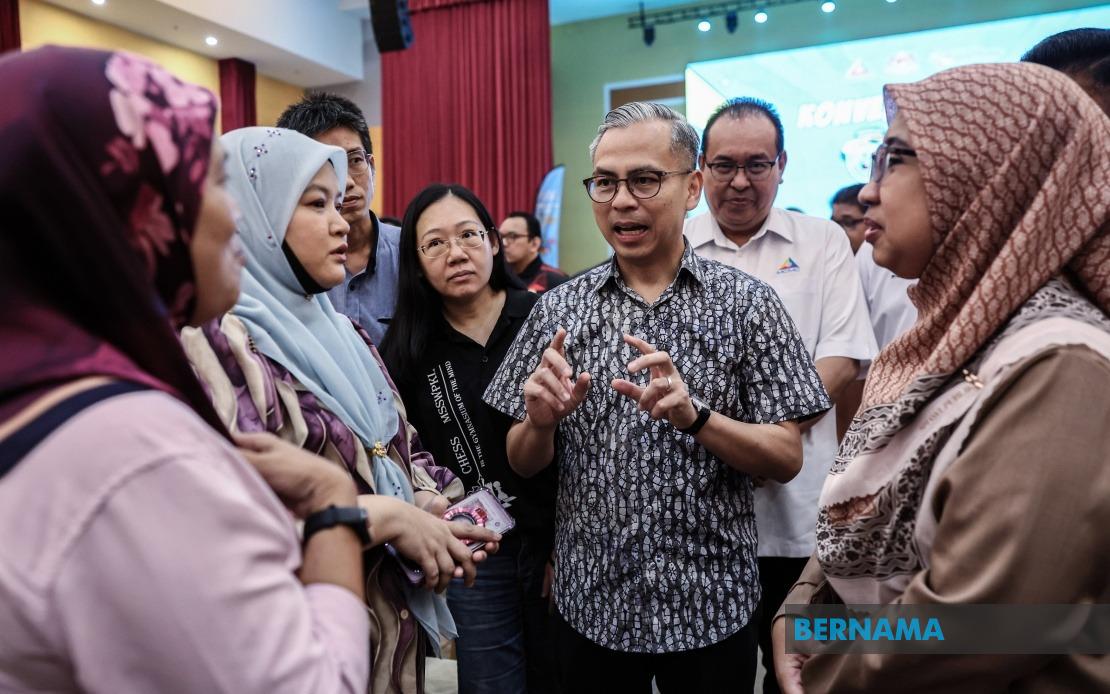
The People's Justice Party (PKR) has moved to reassure its members and political observers that the temporary absence of deputy president Nurul Izzah Anwar will not create any vacuum in the party's leadership structure or hamper its organisational capacity. Speaking at a press conference in Kuala Lumpur on Thursday, PKR Information Chief Datuk Seri Fahmi Fadzil stressed that the party's core functions and administrative machinery will operate without interruption, addressing concerns that may have arisen following the decision to grant her leave from the position.
The party's Central Leadership Council made the decision to approve Anwar's request for temporary leave rather than accept her resignation, signalling an effort to retain her within the party fold despite her stepping back from the deputy president role. Under the arrangement, Vice-President Datuk Seri Saifuddin Nasution Ismail will assume the responsibilities and functions associated with the deputy presidency during this period. This succession mechanism appears designed to ensure continuity in PKR's governance structure and prevent any perception of organisational disruption at a sensitive time for Malaysian politics.
Anwar's decision to take leave stems from her desire to focus on personal matters and pursue doctoral studies, according to Fahmi's statement. The move reflects the reality that senior political figures in Malaysia sometimes need to balance their parliamentary and party duties with personal development and family commitments. This particular case has drawn attention precisely because Anwar is the daughter of Prime Minister Datuk Seri Anwar Ibrahim and holds a prominent position within the ruling coalition's largest component party. The party's acceptance of her leave request rather than her resignation suggests a desire to maintain flexibility in her future political involvement.
Fahmi emphasised that Nurul Izzah's status as a PKR member remains unchanged and that she will continue to contribute to the party's broader political mission despite her reduced formal responsibilities. This framing appears designed to prevent any narrative of her complete withdrawal from party affairs or positioning her as a lame duck in Malaysian political circles. For party members and the broader public, the distinction between a resignation and a leave of absence carries symbolic weight, suggesting that Anwar's step back is temporary rather than permanent.
On a separate matter, Fahmi addressed speculation about whether Subang Member of Parliament Wong Chen might vacate his parliamentary seat. He indicated that no official information has been communicated to him regarding this possibility and that any such development would require formal announcement by Dewan Rakyat Speaker Tan Sri Johari Abdul. This cautious response reflects the established protocol in Malaysian parliamentary practice, where seat vacancies and related matters fall within the Speaker's remit and must be handled through official channels.
The Communications Minister also tackled rumours regarding the timing of the next general election, firmly denying suggestions that an early election might be called. He stated that the government has no current plans for an accelerated electoral timetable and anticipates that the general election will take place by the end of next year at the latest. This timeline aligns with Malaysia's constitutional framework, which requires general elections to be held within five years of the previous polling day. The government's apparent desire to maintain this timeline suggests confidence in its ability to manage the current parliamentary configuration and deliver on its policy agenda.
Fahmi highlighted that the Federal Government's immediate priority remains ensuring the effective administration of the country rather than focusing on electoral considerations. He praised the commitment demonstrated by coalition partners within the Unity Government in continuing to support Prime Minister Anwar Ibrahim's leadership throughout the remainder of the current parliamentary term. This emphasis on governmental stability and coalition cohesion reflects the delicate balance required to maintain the current political arrangement, which brings together diverse parties united primarily by their support for the Prime Minister.
The PKR information chief reiterated the shared commitment across Pakatan Harapan and the wider Unity Government to pursue reforms and improvements that benefit the Malaysian population. He identified several priority areas requiring ongoing attention, including the implementation of recommendations arising from the Royal Commission of Inquiry into Lembaga Tabung Haji's operations between 2014 and 2020. This RCI represents one of the government's key accountability mechanisms and its recommendations carry significant implications for public confidence in religious financial institutions.
Looking ahead, Fahmi hinted that Prime Minister Anwar Ibrahim would soon make several important announcements expected to have positive implications for the country and its citizens. While he provided no specifics regarding the nature or timing of these announcements, the suggestion of imminent policy developments or initiatives suggests that the government continues to advance its reform agenda despite the complex dynamics of managing a multi-party coalition. For Malaysian readers and regional observers, such signals typically precede significant policy shifts or administrative changes within government.

