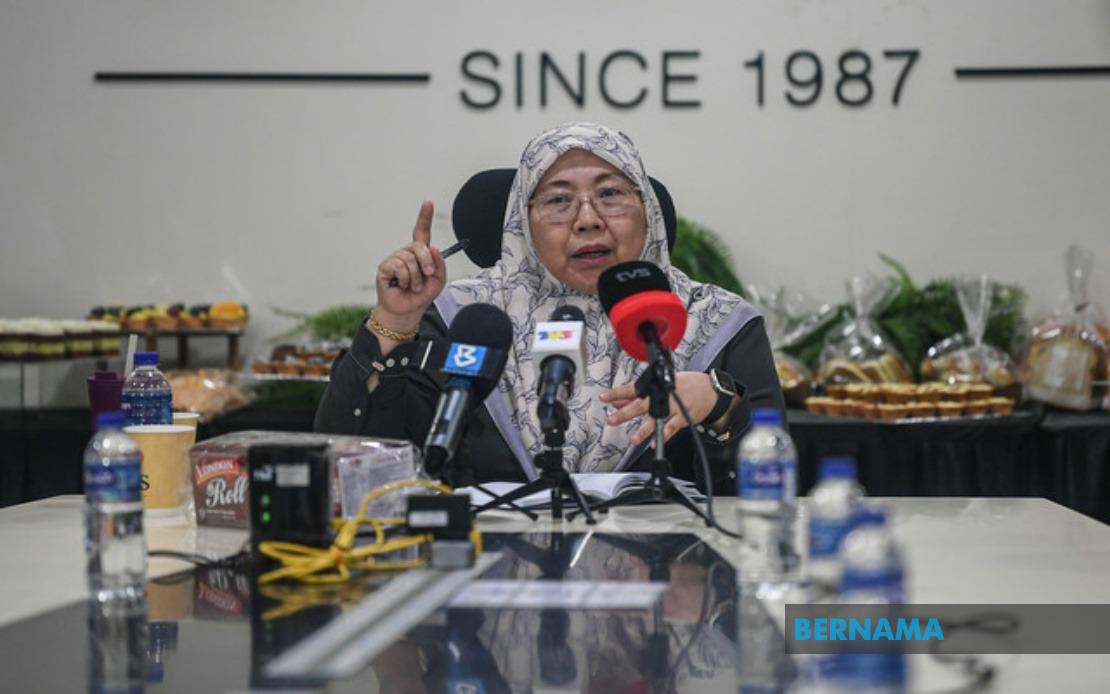
The departure of a sizeable group from PKR to join the Malaysian Indian Congress represents a setback the ruling coalition party is attributing squarely to internal grievances rather than principled political disagreement. PKR secretary-general Datuk Dr Fuziah Salleh characterised the exodus as "rather strange" during a working visit to Johor Bahru on June 30, suggesting that party investigations had identified the root cause as members' frustration over remaining unselected for positions within PKR's organizational structure. This explanation, while straightforward, underscores tensions within Malaysia's largest coalition component as it prepares for crucial state-level contests.
The timing of these departures carries particular significance given that they occurred mere days before the Johor state election. On June 28, M. Murugan, who previously held the position of vice-chairman on the Johor PKR State Leadership Council, announced that approximately 200 followers had joined him in switching to the MIC's Iskandar Puteri division. The scale of the movement—roughly 200 members relocating en masse—suggests this was no isolated incident but rather a coordinated transition of a reasonably organized faction. Yet Fuziah's characterization of the departures as stemming from disappointment over appointment vacancies presents a particularly blunt assessment of what she views as opportunistic rather than ideologically motivated party-switching.
The secretary-general's public handling of the defections demonstrates a calculated political response. Rather than expressing anger or casting the departing members as traitors, Fuziah adopted a somewhat dismissive tone, wishing them success in finding "significant positions" in their new political home. This approach serves multiple purposes: it frames PKR as unbothered by their departure, suggests that MIC may prove more accommodating to power-seekers than PKR, and subtly questions whether the departing members will actually achieve greater influence elsewhere. Such messaging is important for party morale and for signalling to remaining members that leaving the party out of personal ambition carries reputational costs.
The departure to MIC rather than a Barisan Nasional or Perikatan Nasional component party is itself noteworthy. As a recognized BN member, MIC provides a legitimate alternative within the broader coalition ecosystem. For members leaving PKR, joining MIC allowed them to transition to another established coalition partner without fully abandoning the existing power structure. This choice suggests the departures were less about fundamental disagreement with coalition politics and more about maximizing individual advancement opportunities—a reality that validates Fuziah's interpretation that position-seeking rather than principle motivated the exodus.
Fuziah's broader strategic commentary on the Johor election reveals PKR's concern about the complex competitive landscape. She pointed specifically to recent statements by PAS president Tan Sri Abdul Hadi Awang calling on voters to reject Pakatan Harapan, interpreting this as evidence of renewed backroom negotiations between Barisan Nasional and the Islamist party. Such developments threaten to fractionalise the opposition and create confusion among voters who might otherwise align with the PH coalition. In Johor specifically, these crosscurrents carry enormous weight given the state's historical importance in Malaysian politics and its symbolic significance to federal power calculations.
The PKR leader offered a striking assessment of Perikatan Nasional's electoral strategy, arguing that PN's apparent effort to court BN supporters may ultimately damage PN more severely than it harms the coalition. She reasoned that PAS's public opposition to PH—ostensibly an attempt to present themselves as distinct from the ruling coalition—actually represented an own-goal for PN itself. By publicly distancing themselves from PH support, PAS was simultaneously demonstrating discord within the PN alliance structure, potentially exposing fault lines that voters might exploit. This analysis suggests PKR's strategists believe that voter uncertainty about their opponents' internal cohesion could actually benefit PH at the ballot box.
Fuziah's logic rested on a critical observation about Malaysian electoral dynamics: voters increasingly respond to signals of internal coalition stability and trustworthiness. When PN components engage in public disagreement about electoral strategy, they inadvertently advertise their dysfunction to swing voters. By contrast, despite the defections to MIC, PKR and its broader PH alliance have maintained relatively consistent messaging and collaborative structures. This organizational coherence, the party apparently hopes, will prove more attractive to voters than the fractious posturing visible within PN and BN as they vie for power in Johor.
The Johor state election remains a contest of genuinely uncertain outcome. The balloting involves 172 candidates competing for 56 state seats, with early voting scheduled for July 7 and main polling set for July 11. These numbers underscore the scale of the competition and the genuine stakes involved. For PKR and PH, maintaining voter support across a field of 56 races requires not just statewide messaging but granular local organization—precisely the kind of capacity that departures like Murugan's can temporarily disrupt in particular constituencies.
The broader pattern evident in Fuziah's comments reflects PKR's strategic positioning: the party frames itself as the stable, inclusion-focused option within PH while characterizing opponents as either position-hungry (in the case of departing PKR members) or internally fractious (in the case of PN and its components). Whether this messaging proves persuasive to Johor voters will become apparent only after July 11, but the party's willingness to publicly discuss the defections as position-seeking rather than ideologically driven suggests confidence that the issue will not significantly damage its electoral prospects.
The defection episode also illuminates persistent structural challenges within Malaysian political parties. The practice of joining or departing based primarily on appointment prospects reflects the continued centrality of patronage networks and resource distribution in determining political affiliation. For PKR specifically, as a party that has historically positioned itself as reformist and relatively meritocratic, the suggestion that position-seeking motivates departures carries particular sting. Yet the party's leadership has chosen to treat the matter matter-of-factly, implying that such dynamics are inevitable features of Malaysian politics rather than symptoms of internal PKR dysfunction.

